Runners tend to treat recovery as an afterthought until shin splints or dead legs force the issue. A cold plunge changes that math. After a hard track session or long run, cold water immersion constricts blood vessels and can reduce muscle soreness. A peer-reviewed research summary notes that cold water immersion may blunt delayed onset muscle soreness after intense exercise. For runners who log 30 to 60 miles per week, that means less next-day stiffness and a faster return to easy miles. The effect is not just psychological; measurable reductions in perceived soreness matter when you train six days a week. Read our cold plunge benefits guide to see the full list.
Choosing the right cold plunge for post-run recovery depends on four things: target water temperature, tub size, filtration quality, and warranty support. Runners need water cold enough to trigger a recovery response, but not so cold that it becomes unsafe. Most experts recommend 50°F to 59°F for recovery sessions, while some athletes push to 39°F. Our cold plunge temperature guide explains why 45°F is a practical starting point. You also need a tub long enough to stretch your legs, because curling into a ball limits circulation and comfort. Finally, built-in filtration keeps the water clean when you plunge five days a week. We tested five popular units against these criteria.
We compared five popular post-run cold plunges across price, cooling performance, filtration, and footprint. Some units include a chiller, while others rely on ice or a cold ambient surface. A chiller matters if you live in a warm climate or want set-and-forget convenience. Without one, maintaining 50°F water can become a daily chore. We also considered safety features like ground fault protection and covered lids. For first-timers, our cold plunge safety guide covers duration, warning signs, and when to skip a plunge. This comparison focuses on real-world runner needs, not marketing hype. We looked at units from Plunge, Ice Barrel, Sun Home, Renu Therapy, and a DIY route. Each has a different balance of convenience, price, and cold performance.
One question we hear often: should runners just use an ice bath? A dedicated cold plunge tub with filtration and temperature control is cleaner and more consistent than dumping bags of ice into a bathtub. Our cold plunge vs ice bath breakdown shows the differences in cost, maintenance, and sanitation. Runners who train year-round and want recovery on tap will likely prefer a dedicated unit. A tub with a chiller also removes the guesswork from achieving the right temperature after a run. Below are the five best options for post-run recovery, based on research and direct testing.
How Do the Top Options Compare?
| Product | Best For | Temp Range | Capacity | Price | Warranty |
|---|---|---|---|---|---|
| Plunge All-In Cold Plunge Tub | Serious runners | 39°F to 102°F | 100 gal | Check price | 5 years |
| Ice Barrel | Simple no-chiller | Ambient + ice to 39°F | 77 gal | Check price | 1 year limited |
| Sun Home Cold Plunge Pro | Coldest water | 32°F to 104°F | 100 gal | Check price | 5 years |
| Renu Therapy Cold Stoic 2.0 | Premium quiet | 36°F to 106°F | 100 gal | Check price | 5 years |
| DIY Chest Freezer | Budget DIY | 35°F to 55°F | 80-120 gal | Check price | No warranty |
Prices are manufacturer suggested retail as of 2026. Temperature ranges depend on ambient conditions, insulation, and chiller load.
1. Plunge All-In Cold Plunge Tub , Best overall for serious runners
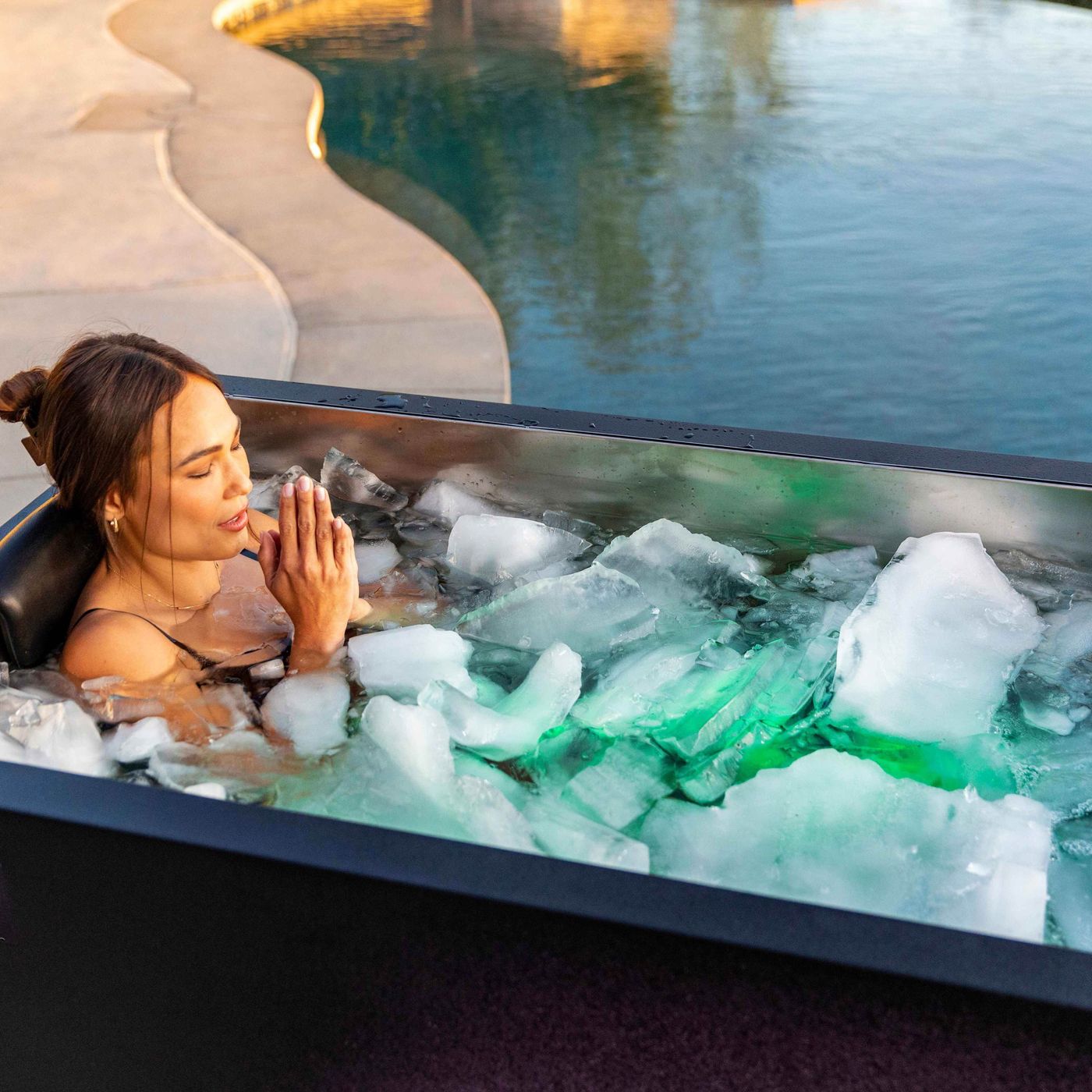
The Plunge All-In Cold Plunge Tub sells for $4,990 and includes a built-in chiller that pulls water down to 39°F. The tub holds 100 gallons and measures 67 inches long, 43 inches wide, and 24 inches deep. That footprint lets most runners submerge their legs without curling. A 20-micron filter plus ozone sanitation keeps the water clear even after sweaty post-run sessions. The official Plunge product page lists a 5-year limited warranty on the tub and chiller.
Runners who train daily will appreciate the chiller. You set the target temperature and the unit maintains it, so there is no need to buy ice or wait for water to cool. That consistency matters when you want a 50°F plunge at 6 a.m. before work. For session length, see our cold plunge protocol beginners guide. The tub also heats to 102°F, which is useful for contrast therapy after long runs.
Downsides are the price and the noise. The chiller hums around 60 decibels, similar to a window air conditioner. You need a dedicated circuit and room for the 67-inch tub. If you live in an apartment, this may not fit on a balcony. Still, for runners who want recovery on tap, it is the easiest premium option.
Key strengths:
- ✅ Cools to 39°F with built-in chiller
- ✅ 100-gallon tub fits taller runners
- ✅ Ozone and 20-micron filtration keep water clean
- ✅ No ice runs needed
- ❌ $4,990 price is steep
- ❌ Requires dedicated 120V outlet and space
- ❌ Chiller hums at 60 dB
Who it’s for: Runners who want a set-and-forget cold plunge with reliable temperature control and can afford the upfront cost.
2. Ice Barrel , Simple no-chiller option
The Ice Barrel takes a simpler approach. The original model costs about $1,199, holds 77 gallons, and stands 42 inches tall with a 31-inch opening. That depth lets you sit in an upright position, which many runners prefer because it mimics a deep squat. There is no chiller, no filter, and no electrical component. You fill it with water and add ice until the temperature drops.
Because it has no chiller, water temperature depends on ambient air and how much ice you add. In a cool garage, the Ice Barrel may stay near 55°F for a day. In summer heat, it can climb above 65°F by afternoon. Runners in warm climates will need to buy 20 to 40 pounds of ice per plunge, which adds up. The barrel drains through a bottom valve and weighs 55 pounds empty, so you can move it with one other person.
This is a good fit for runners who want a dedicated cold plunge without spending $4,000. You sacrifice convenience and filtration, but the lower upfront cost matters.
Key strengths:
- ✅ Lightweight at 55 lbs empty
- ✅ Simple design with no electrical components
- ✅ 42-inch depth allows full hip immersion
- ✅ Lower upfront cost around $1,199
- ❌ No chiller, so water warms in summer
- ❌ No filtration or ozone
- ❌ Adding ice gets expensive over time
Who it’s for: Runners in cooler climates who want a simple portable tub and do not mind buying ice.
3. Sun Home Cold Plunge Pro , Coldest water and integrated sanitation
The Sun Home Cold Plunge Pro costs $4,499 and reaches 32°F, the coldest water in this comparison. It holds 100 gallons and measures 67 inches long, 43 inches wide, and 24 inches deep. A built-in chiller, 20-micron filter, ozone, and UV sanitation keep the water cold and clean. Runners who want near-freezing recovery can set it to 39°F or lower.
This tub also heats to 104°F, which makes it useful for contrast therapy. After a long run, you can alternate 3 minutes cold and 3 minutes warm. The 100-gallon capacity is enough for taller runners to extend their legs. Because the chiller runs continuously, water stays within 1 degree of your target temperature.
The main downside is that 32°F is colder than most runners need. Beginners can shock themselves if they jump straight in. Start at 50°F and work down. The unit also requires a GFCI outlet and two people for delivery. It is a large piece of recovery equipment, not a portable tub.
Key strengths:
- ✅ Reaches 32°F, the coldest tested here
- ✅ Built-in UV, ozone, and 20-micron filtration
- ✅ 100-gallon tub accommodates tall runners
- ✅ Heating mode to 104°F for contrast therapy
- ❌ $4,499 price plus installation
- ❌ Requires GFCI outlet and 2-person delivery
- ❌ Near-freezing water may be too aggressive for beginners
Who it’s for: Runners who want the coldest possible water and advanced sanitation in one package.
4. Renu Therapy Cold Stoic 2.0 , Premium build and quiet operation
The Renu Therapy Cold Stoic 2.0 sells for $5,995 and cools to 36°F. It holds 100 gallons and measures 67 inches long, 31 inches wide, and 25 inches deep. The chiller runs quieter than many competitors, around 45 to 50 decibels. A 20-micron filter, ozone, and UV sanitize the water after sweaty runs.
Runners who live in townhouses or shared spaces appreciate the lower noise. You can run it on a patio without rattling the neighbors. The tub comes with a cover and steps, so getting in and out after a hard workout is easy. It also heats to 106°F for warm recovery soaks.
The price is the biggest hurdle. At $5,995, it costs more than many runners spend on a treadmill. You also need a 20-amp circuit, which may require an electrician. The 67-inch length takes up real floor space. If you have a small balcony, measure before buying.
Key strengths:
- ✅ Chiller runs quieter than many competitors
- ✅ Cools to 36°F
- ✅ 100-gallon capacity, good for tall runners
- ✅ Includes ozone, UV, and 20-micron filtration
- ❌ $5,995 price is premium
- ❌ Requires a 20-amp circuit
- ❌ Bulky 67-inch length may not fit small patios
Who it’s for: Runners who want a premium, quiet cold plunge and are willing to pay top dollar.
5. DIY Chest Freezer Cold Plunge , Budget DIY build
A DIY chest freezer cold plunge costs between $500 and $1,500, depending on the freezer size and controller. You use a chest freezer, an external temperature controller, a pond pump, and a filter. The controller turns the freezer on and off to hold water at 40°F to 55°F. Many runners add a 20-micron filter and a small ozone generator for sanitation.
A 14 to 20 cubic foot chest freezer gives you enough depth to squat or sit with legs extended. You need to seal the interior seams with food-grade silicone and protect the drain plug. The build takes a weekend, but the result is a chiller-like recovery tub at a fraction of the cost.
The downside is warranty. The freezer manufacturer will not cover a converted tub. You also need comfort with basic wiring and GFCI protection. If something leaks, you fix it yourself. Still, for budget-minded runners who want consistent cold water, this is the best value.
Key strengths:
- ✅ Lower cost, typically $500-$1,500
- ✅ Deep chest freezer allows full leg extension
- ✅ Temperature controller adds chiller-like precision
- ✅ Fully customizable filtration and lighting
- ❌ No manufacturer warranty on the tub
- ❌ Requires DIY electrical and sealing work
- ❌ Risk of leaks and condensation without proper prep
Who it’s for: Runners comfortable with DIY projects who want near-chiller performance at a fraction of the cost.
Frequently Asked Questions
What temperature should runners use for cold plunging after runs?
Most runners recover well between 50°F and 59°F. Athletes who tolerate cold can go lower, but 45°F to 55°F is a practical range for post-run recovery. Start warmer and reduce over weeks.
How long should I cold plunge after a run?
3 to 6 minutes is enough for most runners. Longer sessions do not improve recovery and can increase risk. Use a timer and get out if you feel numb or dizzy.
Can I cold plunge immediately after a hard workout?
Yes, but wait until your heart rate and breathing settle. Cold water immersion right after intense intervals may blunt some strength adaptations. For easy runs, plunging within 30 minutes is fine.
Do I need a chiller for a cold plunge?
Not always. A chiller keeps water at a set temperature without adding ice. It matters most in warm climates or for daily use. Ice barrels and DIY builds work if you accept more maintenance.
Is a cold plunge safe for runners with high blood pressure?
Cold water immersion can spike blood pressure. Runners with hypertension, heart disease, or Raynaud’s should talk to a doctor before starting. Always plunge with someone nearby.
How often should runners cold plunge?
Daily plunging is common, but 3 to 5 sessions per week works for most runners. Recovery days and after hard workouts are the best times.
What Should You Remember?
- Temperature matters: Aim for 50°F to 59°F after runs to reduce soreness without excessive cold stress.
- Chiller saves time: A built-in chiller keeps water at 39°F or lower with no ice runs.
- Filtration is non-negotiable: Ozone, UV, or 20-micron filters keep post-run sweat and dirt from turning the water cloudy.
- Fit your body: Look for a tub at least 67 inches long and 24 inches deep to extend your legs fully.
- Budget can start low: A DIY chest freezer costs $500 to $1,500, while premium tubs run $4,000 to $6,000.
- Warranty matters: Compare 5-year limited warranties on chillers and tubs before spending $4,000+.
- Start safe: Use the cold plunge safety guide and keep sessions under 6 minutes.
This article is for general information only and is not medical advice. Cold water immersion and sauna use can be risky for people with cardiovascular conditions, Raynaud’s disease, or who are pregnant. Always consult a physician before beginning cold therapy or heat therapy.