Infrared saunas warm the body with light panels instead of heating the air around you. This allows a lower air temperature, often between 110 and 140 degrees Fahrenheit. Many people find that more comfortable than a traditional sauna. But comfort is only part of the appeal. You may have heard claims about detoxing, heart health, pain relief, and faster recovery. Some claims are stronger than others. Some come from small infrared studies. Some are borrowed from traditional sauna research. We reviewed the evidence to separate what is promising from what is still preliminary.
This article focuses on peer-reviewed studies, clinical guidance, and cautious interpretation. It is not medical advice. The research base for infrared saunas is smaller than the body of evidence for traditional Finnish saunas. That matters because many bold marketing claims borrow from studies that did not test infrared heat at all. We will note when a finding comes from conventional sauna research and when it comes from infrared-specific trials. You can use this guide before choosing one of the best infrared saunas or planning sauna sessions alongside cold plunges. That is the best way to match your setup to your goals.
If you alternate heat and cold as part of recovery, that conversation overlaps with sauna routines. But the physiological responses are not identical. Heat exposure broadly stresses the body in a controlled way. Infrared exposure may offer a milder entry point. That can appeal to beginners and to people who dislike the intense air of a traditional sauna. It can also pair well with a gradual cold routine. We will cover how infrared differs, what heart health data show, and where recovery claims stand. We will also explain safety and the most common myths. Let’s look at the question-based evidence review, section by section.
| Feature | Traditional Sauna | Infrared Sauna | Steam Room |
|---|---|---|---|
| Air temperature | 170 to 200 F | 120 to 140 F | 100 to 120 F |
| Heat source | Air convection or heated rocks | Infrared light panels | Water vapor |
| Humidity | Low | Low | Very high |
| Research volume | Largest | Small but growing | Moderate |
| Perceived intensity | High | Mild to moderate | Moderate to high |
| Typical session | 10 to 20 minutes | 20 to 40 minutes | 15 to 20 minutes |
How Does an Infrared Sauna Differ from a Traditional Sauna?
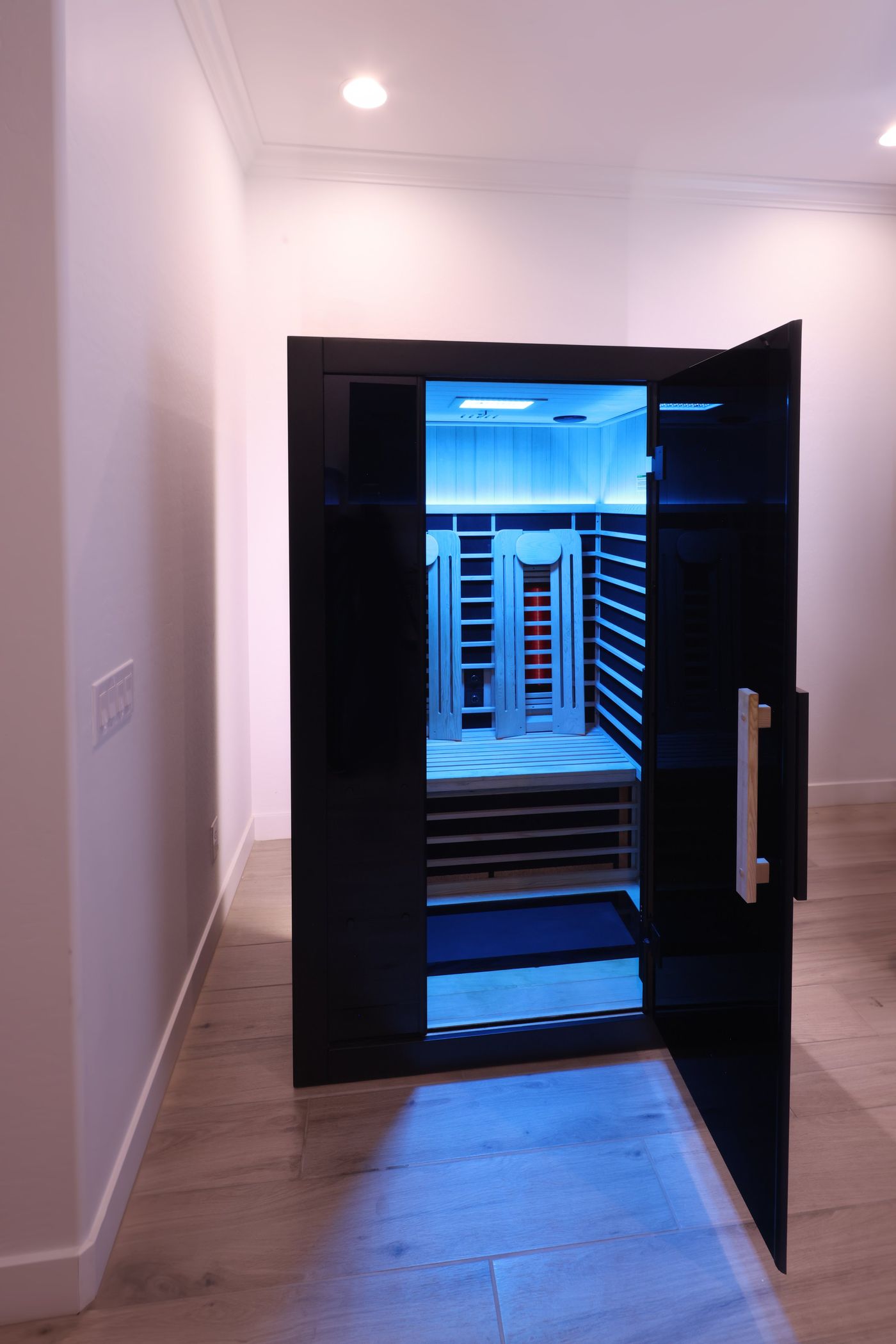
Infrared saunas use ceramic or carbon panels that emit infrared light. This light penetrates the skin and heats tissue more directly. The air temperature stays lower, often around 120 to 140 degrees Fahrenheit. A traditional Finnish sauna typically heats the air to 170 to 200 degrees Fahrenheit. That higher air heat causes intense sweating and a strong heart rate response. Infrared heat can feel less aggressive while still producing a sustained sweat.
The direct heat of an infrared unit may be more tolerable. That makes it a practical option if you dislike steam or very hot air. You still sweat, but the session may be easier to finish. Some users can stay in longer. That does not mean it is automatically safer or more effective. The physiological differences matter for research interpretation. Many large cardiovascular studies looked at traditional sauna bathing. Those results may not transfer directly to infrared saunas. For a broader comparison, see our sauna vs steam room guide.
What Does the Research Say About Cardiovascular Benefits?
The strongest cardiovascular evidence is from traditional sauna studies, not infrared. The Kuopio Ischemic Heart Disease study followed middle-aged Finnish men for about 20 years. Men who used a sauna four to seven times a week had a 50 percent lower risk of cardiovascular mortality compared with men who used one once a week. They also had a 40 percent lower risk of all-cause mortality. That is an observational association, not proof that sauna alone caused the lower risk. You can review the data on PubMed. Still, the pattern is consistent and supported by other cohort data.
Infrared-specific cardiovascular research is smaller and more clinical. Many of those studies use Waon therapy from Japan. In this protocol, patients sit in a 60 degree Celsius infrared sauna for 15 minutes, then rest under blankets for 30 minutes. A small trial of people with chronic heart failure found that two weeks of daily Waon therapy improved walking distance and reduced brain natriuretic peptide, a marker of heart strain. Another pilot study reported better endothelial function after infrared sauna sessions. These results are promising. But most enrolled small groups and followed them for short periods.
What about blood pressure? Some infrared sauna studies show modest drops in systolic and diastolic blood pressure after sessions. One 2018 systematic review noted that regular infrared sauna use may reduce blood pressure and improve vascular function. The authors also cautioned that many studies had small sample sizes and different protocols. The Mayo Clinic notes that sauna use can lower blood pressure in some people but should not replace medical care. People with unstable heart disease should get clearance first.
Can Infrared Sauna Sessions Support Muscle Recovery and Pain Relief?
Infrared heat can increase local blood flow and reduce muscle stiffness. This is a physiological response that researchers have measured. In one small study, infrared sauna use improved recovery from strength training and reduced delayed-onset muscle soreness. But the effect size was modest. A 2015 review of heat therapy for exercise recovery found that heat can improve muscle flexibility and reduce soreness. The findings were not specific to infrared, but the mechanism is similar.
Pain relief is one of the more studied infrared outcomes. A randomized controlled trial in patients with rheumatoid arthritis and ankylosing spondylitis found that four weeks of infrared sauna reduced pain and stiffness. Participants also reported less fatigue. A separate pilot study in people with fibromyalgia found that eight weeks of far-infrared sauna sessions reduced pain scores by about 31 percent. That sounds encouraging. But the study had no placebo control and only a small number of participants.
For everyday recovery, pairing heat with cold exposure is popular. Heat increases blood flow and relaxes tissue. Cold reduces swelling and perceived soreness. This contrast is a core reason people combine saunas with cold plunges. If you are new to temperature work, start with a conservative cold plunge protocol and monitor how your body responds. Also consider how often you cold plunge if you are stacking heat and cold in the same day.
What Evidence Exists for Sleep, Stress, and Mental Well-Being?
Sauna users often report better sleep and lower stress. The evidence for this is mostly subjective. Heat exposure activates the parasympathetic nervous system after the session ends. Your core temperature rises, then falls. That cooling phase can promote drowsiness. This is one reason many people use saunas in the evening. But research on infrared saunas and sleep is limited. One small survey of sauna users reported higher relaxation and improved sleep quality. Observational studies cannot rule out placebo or expectations.
A 2018 review of sauna bathing and mental health found associations between frequent sauna use and lower odds of depression. Again, those data came mostly from traditional Finnish sauna cohorts. Regular heat exposure may influence endorphin release and other neurochemical pathways. But the link is not fully understood. Harvard Health describes sauna use as a relaxing ritual that may support well-being, though it is not a treatment for clinical anxiety or depression. If you feel calmer after a session, that is a real benefit. Just separate that experience from stronger medical claims.
Consider using a sauna as a downshift. You can pair it with slow breathing or a Wim Hof breathing guide. Do not force intense sessions if you are already exhausted. Heat stress is still stress. A shorter 15 to 20 minute infrared session at a moderate temperature may support relaxation without overtaxing you. Track how you sleep. Then adjust the timing.
Are There Risks or Who Should Avoid Infrared Saunas?
Infrared saunas are generally safe for healthy adults. The lower air temperature can make sessions feel easier. But you can still overheat, get dehydrated, or feel lightheaded. Common side effects include dry mouth, dizziness, and headache. Drink water before and after. Limit early sessions to 15 to 20 minutes. Watch for warning signs like nausea or a rapid heart rate. Cleveland Clinic recommends speaking with a doctor if you have cardiovascular disease, are pregnant, or have a condition that affects heat tolerance.
The idea that infrared saunas detox the body is not well supported. Sweat contains trace amounts of some metals. But the liver and kidneys are the body’s primary detox organs. Heavy sweating does not meaningfully remove toxins. This is a common overclaim in sauna marketing. You can still enjoy the sauna for relaxation and recovery. Just do not rely on it for detoxing.
If you plan to alternate infrared heat with cold plunging, build both habits gradually. Check our cold plunge temperature guide before you drop the water temperature too low. Heat and cold both stress the cardiovascular system. People with unstable blood pressure should get medical clearance. The combination can feel great when done safely. But it is not a substitute for medical treatment or a balanced recovery plan.
Frequently Asked Questions
How does an infrared sauna differ from a traditional sauna?
Infrared saunas use light panels to heat the body directly at lower air temperatures, usually 120 to 140 degrees Fahrenheit. Traditional saunas heat the air to 170 to 200 degrees. The infrared version can feel more tolerable but has a smaller research base.
Does infrared sauna use lower blood pressure?
Small infrared studies show modest drops in blood pressure after sessions. Larger observational reductions in heart risk come mostly from traditional Finnish sauna research. Speak with a doctor before relying on sauna for blood pressure.
Can infrared saunas help with muscle soreness?
Some small trials suggest infrared heat can reduce delayed-onset muscle soreness and improve flexibility. The effect is modest and may depend on session length and temperature.
How often should I use an infrared sauna?
Many protocols use 3 to 4 sessions per week for 15 to 30 minutes. Start with 15 minutes at a lower temperature. Adjust based on hydration, sleep, and how you feel.
Are infrared saunas safe for everyone?
Healthy adults tolerate short sessions well. People with cardiovascular disease, pregnancy, or heat sensitivity should get medical clearance. Avoid alcohol and stay hydrated.
Does infrared sauna detox the body?
Sweat contains trace amounts of some metals, but the liver and kidneys do the main detox work. There is no strong evidence that infrared saunas remove meaningful toxins.
What Should You Remember?
- Evidence: Strong heart mortality data comes from traditional sauna studies, not infrared-specific trials.
- Cardiovascular: Small infrared studies show modest blood pressure and vascular function improvements.
- Pain relief: Preliminary trials suggest infrared sauna may reduce pain in arthritis and fibromyalgia.
- Recovery: Infrared heat can reduce muscle soreness, but the effect size is modest.
- Safety: Start with 15 to 20 minute sessions, hydrate, and get medical clearance if you have heart disease.
- Myth: Infrared saunas do not meaningfully detox the body, despite common marketing claims.
This article is for general information only and is not medical advice. Cold water immersion and sauna use can be risky for people with cardiovascular conditions, Raynaud’s disease, or who are pregnant. Always consult a physician before beginning cold therapy or heat therapy.