
Cold plunging has moved from ice-filled livestock troughs to polished indoor recovery tools. In 2026, home cold plunge options are more varied, more efficient, and easier to maintain than ever. You can run a chilled tub in a basement, garage, spare bathroom, or even a large laundry room if you plan for water, power, and ventilation. Before you commit to a unit, read our full cold plunge benefits breakdown and the cold plunge temperature guide to understand what 39°F feels like on a Tuesday morning. The right indoor setup protects your floors, keeps the water clean, and fits a daily routine without turning your home into a wet cave. That balance matters more than marketing claims.
We evaluated top home cold plunge options based on footprint, temperature stability, filtration, noise, warranty, and real indoor usability. Manufacturer specifications were checked against Plunge, Ice Barrel, and Sun Home Saunas where available. We did not rank units on looks alone. A cold plunge that drips condensation onto hardwood or trips a 15-amp circuit is a problem, not a recovery tool. Indoor humidity and floor protection often get ignored in online reviews, so we flagged them for every option.
Why focus on indoor setups in 2026? Because more people live in climates where an outdoor tub freezes solid or becomes a mosquito pond. Indoor installations let you control the environment, avoid weather delays, and use the plunge right after a sauna session. If you pair a cold plunge with heat, check our best home saunas guide. The downside is real: you must manage condensation, drainage, and floor load. A 100-gallon tub weighs over 830 pounds filled. A 50-gallon tub still adds over 400 pounds. That is not a second-floor decision to make lightly.
We considered four broad paths: plug-and-play chiller tubs, barrel-style ice tubs, DIY chest freezers, and high-end insulated tubs. Each has a different relationship with space, water, and electrical circuits. The best cold plunge for your home might not be the most expensive one. It might be the one that fits through a 32-inch door and plugs into a standard outlet. Use our cold plunge safety guide for beginners before your first session. We also looked at how often you will actually use it, because a cheap tub that sits empty saves nobody. Moisture and mildew do not care about branding.
How Do the Top Options Compare?
| Model | Best For | Price Range | Temperature | Indoor Footprint | Warranty |
|---|---|---|---|---|---|
| Plunge All-In | Plug-and-play indoor setups | Check price | 39°F to 103°F | 67 x 43 x 24 in | 1 year |
| Sun Home Cold Plunge Pro | Built-in chiller and filtration | Check price | 37°F to 104°F | 78 x 42 x 33 in | 1 year limited |
| Ice Barrel 500 | Low-cost ice bath indoors | Check price | Ice-dependent | 42 x 31 x 42 in | 1 year |
| DIY Chest Freezer | Budget custom build | Check price | 34°F to 40°F | 32 x 22 x 34 in | Varies |
Prices reflect manufacturer list or common retail range in early 2026. Indoor footprints do not include clearance for chillers or dehumidifiers. Check floor load before filling any tub over 50 gallons.
1. Plunge All-In , Plug-and-play indoor cold plunge

Plunge makes the most recognizable self-contained cold plunge for home use. The All-In model combines a 100-gallon tub, a chiller, a heater, 20-micron filtration, and ozone sanitation into one footprint. It measures 67 inches long, 43 inches wide, and 24 inches high. That size fits through most standard doorways and works in a basement corner or a large bathroom. The tub cools to 39°F and heats to 103°F. That wide range is useful for contrast therapy. Price starts at $4,990 for the basic setup. Indoor buyers like the All-In because the chiller lives in a separate housing that can sit next to the tub or up to 10 feet away. You need a standard 120-volt outlet, but check the circuit load. Do not run a dehumidifier on the same line. The tub drains from the bottom and uses a 20-micron filter plus ozone to keep water clear. You can find the Plunge All-In Cold Plunge Tub online. Expect a 1-year warranty on the tub and chilling system. The main drawback is weight. A filled 100-gallon tub puts about 830 pounds on your floor. That does not include the chiller or a person. Most basements on concrete handle it fine. Main floors need a structural check. Condensation also forms on the outside of the tub in humid rooms. A rubber mat and a small dehumidifier solve most problems. The Plunge All-In is a strong indoor choice if you want stable cold water without daily ice.
Key strengths:
- ✅ Cools to 39°F with no ice
- ✅ Integrated 20-micron filter and ozone sanitation
- ✅ Fits through a standard 32-inch door
- ✅ Heats to 103°F for contrast therapy
- ✅ Separate chiller can be placed up to 10 feet away
- ❌ Expensive at $4,990 to $5,990
- ❌ 100 gallons of water adds roughly 830 pounds to your floor
- ❌ 1-year warranty is short for a high-priced unit
Who it’s for: Choose the Plunge All-In if you want a turnkey indoor cold plunge with stable 39°F water and no ice runs.
2. Sun Home Cold Plunge Pro , Built-in chiller and filtration in a sleek indoor tub
Sun Home took a different path. The Cold Plunge Pro hides the chiller inside the tub cabinet, so you do not need a separate chiller box taking up floor space. It cools to 37°F, slightly colder than the Plunge All-In, and heats to 104°F. The tub holds 110 gallons and measures 78 inches long, 42 inches wide, and 33 inches high. That larger volume means the water temperature shifts more slowly. It also means you need more floor reinforcement. Price sits between $5,999 and $6,999. Sanitation comes from a 5-micron filter, UV, and ozone. The system pulls water through the filter and returns it through jets. You can set a schedule and walk away. One catch: the built-in chiller pushes warm exhaust air out the side. You must leave at least 12 inches of clearance around the tub. If you tuck it into a tight closet, the compressor will overheat. The Sun Home Cold Plunge Pro carries a 1-year limited warranty. That built-in chiller makes service easier and harder. Easier because you have one unit. Harder because if the compressor fails, the whole tub is down. The filter access sits behind a side panel, so keep that side clear. For indoor spaces where a separate chiller looks messy, the Sun Home Cold Plunge Pro is the cleanest option. It just costs more and needs more clearance than the spec sheet suggests.
Key strengths:
- ✅ Built-in chiller saves floor space
- ✅ Cools to 37°F without ice
- ✅ 5-micron filter with UV and ozone
- ✅ Heats to 104°F
- ✅ Holds 110 gallons for two-person use
- ❌ High price starts near $6,000
- ❌ Needs 12 inches of clearance around all sides
- ❌ Heavy filled weight makes upper-floor install risky
Who it’s for: Choose the Sun Home Cold Plunge Pro if you want a clean, cabinet-style tub with built-in chilling and have the floor space for a large footprint.
3. Ice Barrel 500 , Budget-friendly indoor ice bath
The Ice Barrel 500 is not a mechanical chiller. It is an insulated barrel you fill with water and cool with ice. That simplicity keeps the price at $1,499 to $1,799. There is no compressor, no filter, and no electrical circuit to overload. The barrel stands 42 inches high and has a 31-inch footprint. It holds 105 gallons. Ice melt is your temperature control. In a cool basement, a 20-pound bag of ice might bring the water from 60°F to 45°F. In summer, expect to use more. Indoor users must plan for water changes. The Ice Barrel 500 has a drain at the base, but most owners lift the water out with a sump pump or siphon. You will change the water more often because there is no built-in filtration. The cold plunge vs ice bath article explains the real trade-off: ice barrels are less convenient but far less expensive. You can find the Ice Barrel 500 with a step stool and cover online. The barrel itself carries a 1-year warranty. The vertical barrel design is great for small rooms. You can slide it into a corner near a floor drain. The insulated walls slow temperature rise, but the water will still climb to room temperature overnight. If you want 50°F water every morning, budget for 40 to 60 pounds of ice per week in summer. That cost narrows the gap between an ice barrel and a chiller tub over two years. Still, for renters or small homes, the Ice Barrel 500 is the easiest way to start.
Key strengths:
- ✅ Low upfront cost at $1,499 to $1,799
- ✅ No electrical requirements or compressor noise
- ✅ 31-inch footprint fits tight indoor spaces
- ✅ Insulated walls slow temperature rise
- ❌ No chiller, so ice costs add up
- ❌ No built-in filtration; water changes needed
- ❌ Lifting 105 gallons of water indoors is awkward
Who it’s for: Choose the Ice Barrel 500 if you want a simple, affordable cold plunge and do not mind buying bags of ice.
4. DIY Chest Freezer Cold Plunge , Custom budget build with exact temperature control
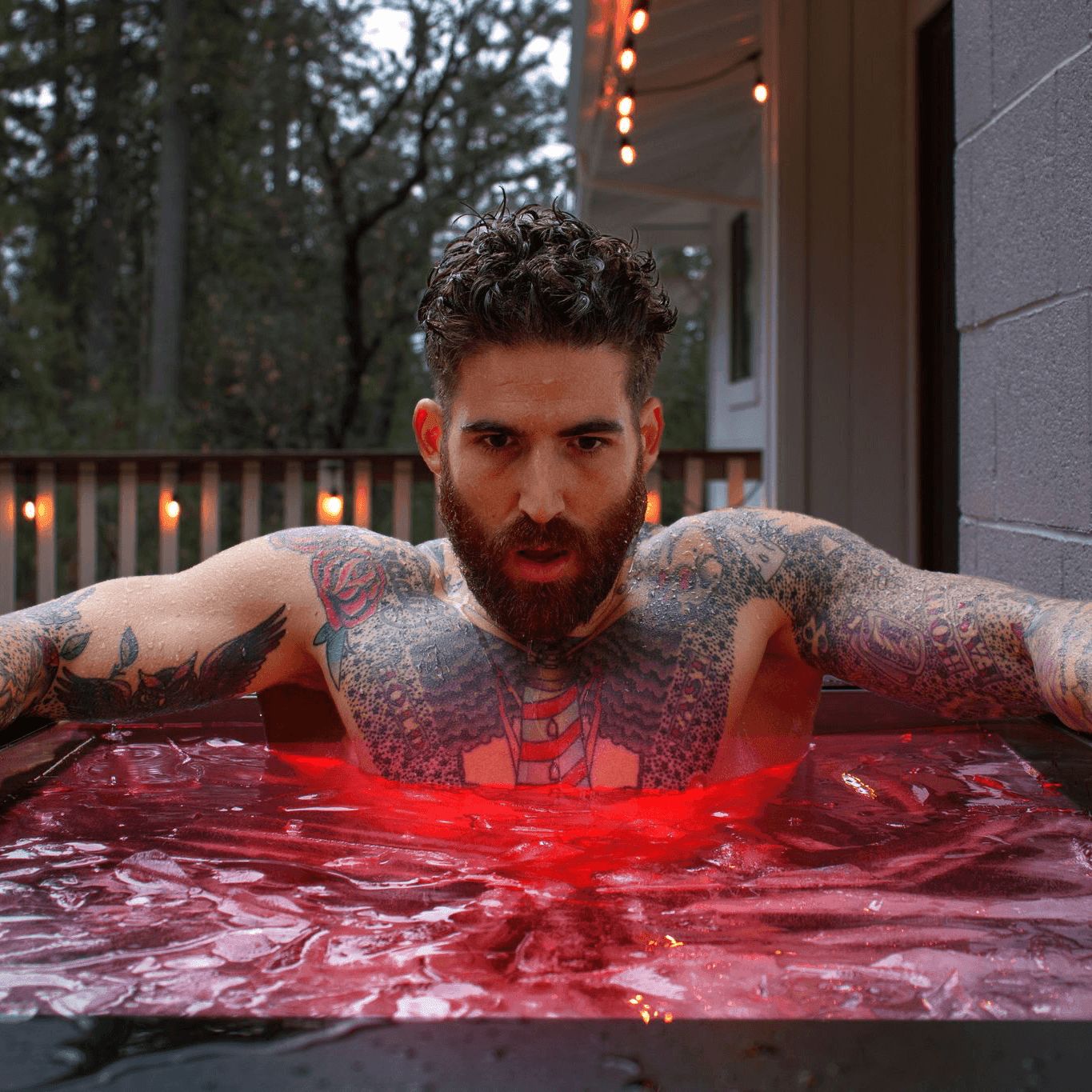
A chest freezer conversion is the most flexible indoor option if you are willing to do some assembly. Buy a 7-cubic-foot chest freezer, add a water temperature controller, a small circulation pump, and an external canister filter. The whole build often lands between $700 and $1,200. A typical 7-cubic-foot freezer measures 32 inches deep, 22 inches wide, and 34 inches tall. That footprint is smaller than the Plunge All-In, but the tub is deeper and narrower. You set the controller to 37°F and it turns the freezer on and off to hold water temperature. Check the DIY cold plunge chest freezer guide for exact steps. The main work is sealing the freezer seams, protecting the interior from water damage, and adding a GFCI outlet. You must unplug the freezer before every entry as a safety habit. You also need to build or buy a lid support so the lid does not close on you. Filtration is separate. Many DIY owners use a 500-GPH pond pump and a 5-micron filter. You can find chest freezers on Amazon, along with temperature controllers and 500 GPH pond pumps. No manufacturer warranty covers this use, because a freezer is not designed to hold water. The savings are real. A DIY chest freezer keeps water at 34°F to 40°F for under $1,200. But the interior width of about 20 inches feels narrow for broad shoulders. The water height is around 24 inches when filled to a safe level. That is less than a barrel but enough to submerge to your chest if you sit. You will spend an afternoon sealing seams and another afternoon testing for leaks. If that sounds like a project you would enjoy, this is the best value indoor cold plunge. If it sounds like a chore, pay more for a turnkey tub.
Key strengths:
- ✅ Lowest total cost at $700 to $1,200
- ✅ Small footprint for a 7-cubic-foot tub
- ✅ Holds 34°F to 40°F precisely with a controller
- ✅ Easy to repair with off-the-shelf parts
- ❌ No warranty for water immersion
- ❌ Requires sealing and electrical work
- ❌ Interior width of about 20 inches can feel cramped
Who it’s for: Choose a DIY chest freezer cold plunge if you are handy, want 37°F water under $1,200, and accept that the warranty is void.
Frequently Asked Questions
Can I put a cold plunge indoors without damaging my floors?
Yes, but you need a waterproof tray, a rubber mat, or a drain pan under the tub. Condensation and splash-out will damage hardwood and laminate. A 100-gallon tub adds over 800 pounds, so check floor joists and avoid upper floors unless a contractor approves it.
How much space do I need for a home cold plunge?
Most plug-and-play tubs need a footprint of at least 5 feet by 3.5 feet plus 12 inches of clearance around the chiller. Ice barrels can fit in a 3-foot by 3-foot corner. Leave room to step in, sit, and drain the tub without moving it.
What temperature should an indoor cold plunge be?
Most beginners start at 50°F to 55°F and work down to 39°F over weeks. Holding 45°F to 50°F is enough for many recovery goals and places less load on the chiller.
Do indoor cold plunges need drainage?
Yes. Even tubs with built-in filtration need water changes every 4 to 8 weeks. A nearby floor drain, slop sink, or outdoor drain makes this easier. Some owners use a submersible pump to move water through a garden hose.
Are cold plunge chillers loud indoors?
They produce about 45 to 60 decibels, similar to a window air conditioner. Built-in chiller tubs can be louder because the compressor sits inside the cabinet. Place the chiller in a ventilated area or use a timer to avoid nighttime cycling if noise bothers you.
How often should you use a home cold plunge?
Research suggests 2 to 4 sessions per week for recovery, but daily use is common for athletes. Start with 2 to 3 minutes and follow a beginner protocol. Your body and schedule matter more than a fixed number.
What Should You Remember?
- Space first: Measure your doorway and floor load before buying a 100-gallon tub.
- Temperature range: Look for 37°F to 39°F cooling if you want ice bath intensity without ice.
- Filtration matters: Built-in filters and ozone reduce maintenance but raise price.
- Electrical load: Chiller tubs need a standard 120-volt outlet and ventilation clearance.
- Ice barrels save money: The Ice Barrel 500 costs under $1,800 but requires ice and water changes.
- DIY is cheapest: A chest freezer build can hit 37°F for $700 to $1,200, but the warranty is void.
- Floor protection: Use a drain pan and mat under any indoor cold plunge.
This article is for general information only and is not medical advice. Cold water immersion and sauna use can be risky for people with cardiovascular conditions, Raynaud’s disease, or who are pregnant. Always consult a physician before beginning cold therapy or heat therapy.