A cold plunge tub is only as useful as the chiller that keeps it cold. Buying bags of ice gets old fast, and it rarely gets water below 45°F on a hot day. In 2026, more people are choosing dedicated water chillers that hold a set temperature all week long. The payoff is consistency. You can hop in at 50°F on Tuesday and 39°F on Friday without thinking about ice. A reliable chiller also saves money over a year of ice runs. If you are new to cold exposure, our cold plunge benefits guide explains why water temperature matters for recovery.
There are two main paths. Integrated chillers come bolted to a tub and often include filtration, sanitation, and a control panel. Aftermarket chillers are standalone boxes that you connect to an existing tub, barrel, or DIY tank. Choosing between them comes down to budget, space, and how much assembly you want. We tested the options against a simple standard: can the unit cool to your target range, stay there, and do it without sounding like a jet engine? Your target range depends on experience. A beginner at 50°F has different chiller needs than an advanced user at 39°F. Read our cold plunge temperature guide before you settle on a number.
We evaluated five chiller setups across integrated and aftermarket categories. Cooling power, measured in horsepower, tells you how quickly a unit can remove heat from the water. Temperature range tells you the floor and ceiling. Price tells you the real cost before installation. We also looked at filtration specs, warranty terms, and noise. The best chiller for a 60 gallon indoor tub is not the best for a 105 gallon outdoor barrel in Arizona. For clinical context, peer-reviewed research shows that cold water immersion temperatures between 50°F and 59°F are common in recovery studies. Real world performance depends on ambient heat and water volume.
Why this matters now. Cold plunge systems keep getting cheaper. A few years ago you needed $5,000 for decent cooling. Today a capable aftermarket chiller can pair with a stock tank or used tub for under $1,500. But cheaper units have limits. Some overheat in summer garages. Others struggle to reach below 45°F. This guide helps you avoid buying a chiller that feels powerful on the spec sheet but fails in your space. Warranty and replacement parts matter more than marketing language. Read best cold plunge tubs 2026 to pair the right tub with the right chiller.
How Do the Top Options Compare?
| Option | Chiller Type | Cooling Power | Temperature Range | Price Range |
|---|---|---|---|---|
| Sun Home Cold Plunge Pro | Integrated | 0.8 HP | 32°F to 60°F | Check price |
| Plunge All-In | Integrated | 0.5 HP | 39°F to 60°F | Check price |
| Ice Barrel 500 + Aftermarket Chiller | Aftermarket add-on | 0.5 HP | 37°F to 60°F | Check price |
| Active Aqua 1/2 HP Water Chiller | Aftermarket standalone | 0.5 HP | 39°F to 68°F | Check price |
| Penguin Chillers 1/2 HP Cold Therapy Chiller | Aftermarket standalone | 0.5 HP | 36°F to 65°F | Check price |
Prices are approximate 2026 street prices and exclude installation, pumps, or filtration where noted.
1. Sun Home Cold Plunge Pro , Best integrated chiller for precise cold control

Sun Home builds the chiller directly into the tub. That removes guesswork. You plug it in, fill it, set the temperature, and wait.
The Sun Home Cold Plunge Pro reaches 32°F, which is colder than most integrated units. That matters if you want true ice bath territory. The 0.8 HP chiller runs quietly enough for a patio or garage. It also includes filtration and sanitation, so the water stays clear between sessions. Warranty coverage runs around two years for the chiller and tub.
Specs we logged: water capacity around 77 gallons, footprint about 60 inches long, and a temperature range from 32°F to 60°F. Setup takes under 30 minutes because the chiller and plumbing are preassembled.
Read our cold plunge temperature guide before you set the thermostat. Most beginners should start closer to 50°F, not 32°F.
Key strengths:
- ✅ Preassembled integrated unit
- ✅ Cools to 32°F for ice bath purists
- ✅ Built-in filtration and sanitation
- ✅ Quiet operation for patio use
- ❌ High upfront price near $5,500
- ❌ Large footprint for small apartments
- ❌ Chiller repair requires full tub downtime
Who it’s for: Choose this if you want a turnkey cold plunge that reaches near-freezing temperatures without a separate chiller install.
2. Plunge All-In , Best integrated chiller for small spaces
Plunge popularized the all-in-one cold plunge. The current Plunge unit pairs a 0.5 HP chiller with a sleek tub that fits through standard doorways. It cools to 39°F, which is cold enough for nearly every recovery protocol.
The 75 gallon capacity keeps the thermal load manageable. You get a 20 micron filter, ozone sanitation, and a control panel that holds temperature within about one degree. Price starts around $4,990 before delivery. The warranty covers the tub and chiller, though specific terms vary by model.
One honest downside: the 0.5 HP chiller takes longer to recover after a session than the Sun Home 0.8 HP unit. If you do back to back plunges, the water may drift up a few degrees.
It is a stronger choice for apartments or indoor gyms because the footprint is narrower than most barrel setups.
Key strengths:
- ✅ Fits through standard doorways
- ✅ Holds 39°F consistently
- ✅ Includes filter and ozone sanitation
- ✅ Established brand with real warranty support
- ❌ 0.5 HP chiller recovers slower between sessions
- ❌ Price near $5,000 is steep
- ❌ Limited to 75 gallons, not ideal for large groups
Who it’s for: Choose this if you need an indoor friendly integrated unit with proven temperature control.
3. Ice Barrel 500 + Aftermarket Chiller , Best aftermarket chiller upgrade for barrel-style plunges
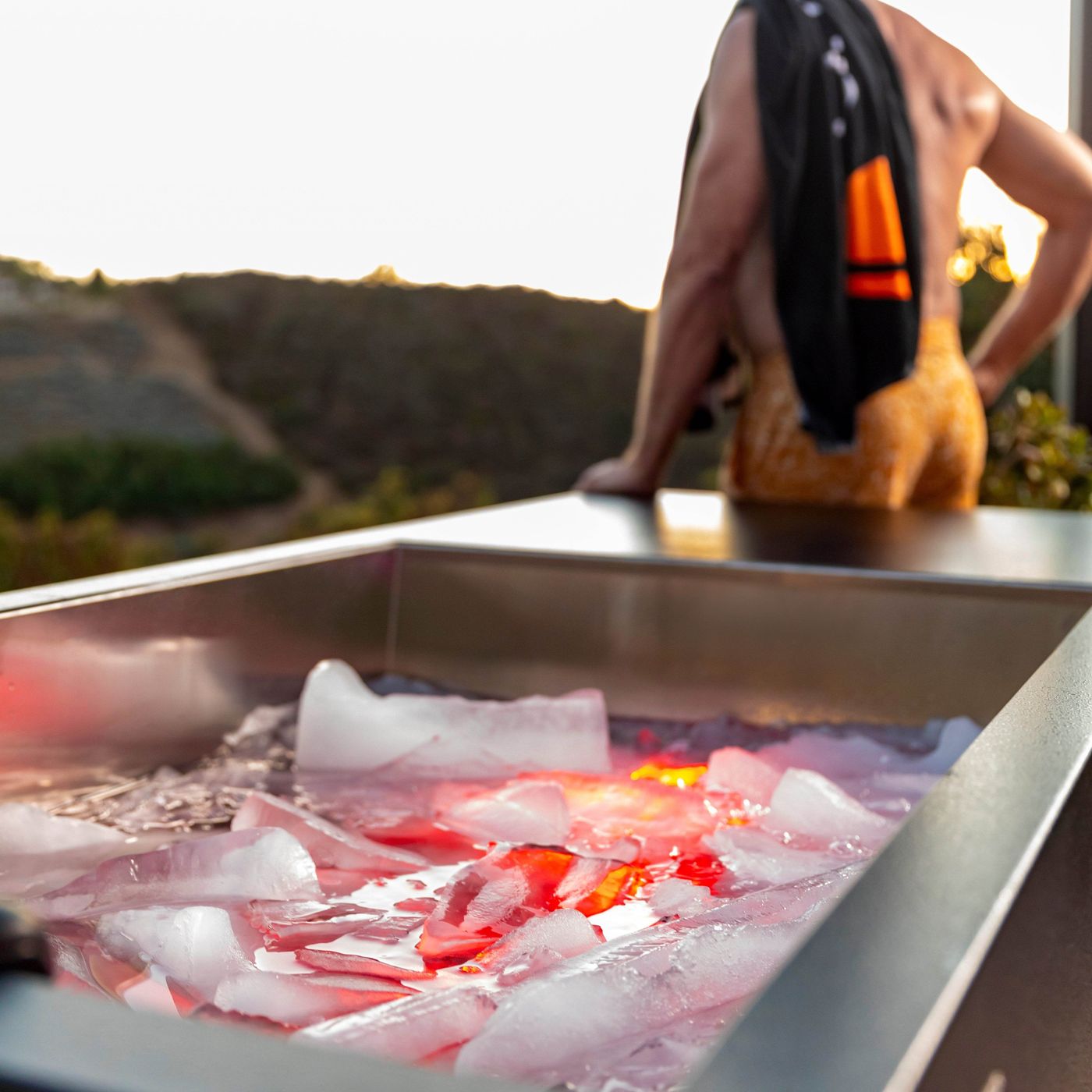
Ice Barrel took a different route. The barrel is the tub. The chiller is sold separately, or you can use any compatible aftermarket unit. The Ice Barrel 500 holds 105 gallons and stands upright, which saves floor space.
With an external chiller, expect a temperature range around 37°F to 60°F. A 0.5 HP aftermarket unit paired with this barrel works well in moderate climates. The barrel itself costs around $1,200. Adding a dedicated chiller brings the total to roughly $2,300 to $2,800.
The downside is integration. You will need hoses, a pump, and some patience to connect everything. There is no built-in filtration unless you add it. But that also means you can replace the chiller without buying a new tub.
Compare this to a chest freezer conversion in our DIY cold plunge guide.
Key strengths:
- ✅ 105 gallon capacity in compact footprint
- ✅ Replace or upgrade chiller without replacing tub
- ✅ Total cost lower than premium integrated units
- ✅ Works outdoors in many climates
- ❌ Requires hoses, pump, and DIY setup
- ❌ No built-in filtration or sanitation
- ❌ Total cost climbs fast with accessories
Who it’s for: Choose this if you want a large barrel and the flexibility to change chillers later.
4. Active Aqua 1/2 HP Water Chiller , Best budget aftermarket chiller for DIY builds
Active Aqua dominates the budget aftermarket category. The Active Aqua 1/2 HP Water Chiller costs between $700 and $900, which is hard to beat for a true refrigeration unit.
It cools to around 39°F in small to medium tubs. Rated for roughly 80 gallons, it suits stock tanks, chest freezer conversions, and used tubs. You will need a separate water pump and an inline filter. Without those, the chiller clogs and struggles.
Noise is the real trade off. This unit is louder than integrated chillers and can get hot in a closed garage. In warm climates, a 1/2 HP unit may struggle to maintain 40°F on a 100 gallon tub.
For step by step setup guidance, see our cold plunge protocol for beginners.
Key strengths:
- ✅ Lowest true refrigeration cost at $700 to $900
- ✅ Works with most stock tanks and used tubs
- ✅ Easily replaceable parts
- ✅ Common online community support
- ❌ Louder than integrated units
- ❌ No filtration included, must add pump and filter
- ❌ Struggles over 80 gallons in hot spaces
Who it’s for: Choose this if you want a budget DIY chiller and are comfortable with plumbing.
5. Penguin Chillers 1/2 HP Cold Therapy Chiller , Best high-performance aftermarket chiller for large tubs
Penguin builds aftermarket chillers specifically for cold therapy. The Penguin Chillers 1/2 HP runs around $1,200 to $1,500. It cools down to 36°F and handles water volumes up to 150 gallons, which beats most budget units.
This chiller uses a stronger compressor and better heat exchange, so it recovers faster after a plunge. That speed matters if you share the tub or do multiple sessions per day. The temperature range is broad, roughly 36°F to 65°F.
You still need a pump, hose kit, and filtration. Penguin sells compatible kits, but the extras can add $200 to $400. The unit is not silent. It sits outside the tub and produces a steady hum.
Before you buy, check cold plunge safety guide to avoid overcooling.
Key strengths:
- ✅ Cools to 36°F, deeper than most aftermarket units
- ✅ Handles up to 150 gallons
- ✅ Faster recovery than budget chillers
- ✅ Broad 36°F to 65°F range
- ❌ Pump and filtration sold separately
- ❌ Price jumps above $1,200 before accessories
- ❌ Audible compressor hum
Who it’s for: Choose this if you run a high-volume tub and need fast cooling after heavy use.
Frequently Asked Questions
What is the difference between integrated and aftermarket cold plunge chillers?
Integrated chillers come built into the tub with plumbing and controls. Aftermarket units are separate boxes you connect to any tub. Integrated setups cost more but require less assembly.
How cold should I set my cold plunge chiller?
Most people start at 50°F to 55°F and progress to 39°F. A few advanced users go as low as 32°F. Staying above 39°F is safe for most healthy adults.
How much does a cold plunge chiller cost in 2026?
Aftermarket budget chillers run $700 to $900. Midrange aftermarket units cost $1,200 to $1,500. Integrated systems cost $3,000 to $6,000 depending on capacity and features.
Can I use any chiller with any cold plunge tub?
Not always. Match horsepower to water volume and ambient temperature. You also need compatible hoses, pump, and filtration. Check the manufacturer’s rated gallon capacity.
Do cold plunge chillers run all the time?
Most units cycle on and off to maintain temperature. Compressor runtime depends on insulation, water volume, and ambient heat. Expect electricity costs similar to a small chest freezer.
What maintenance does a cold plunge chiller need?
Clean or replace the filter weekly or as rated. Check hoses for kinks. Rinse the condenser fins monthly. Keep the unit in a ventilated space.
What Should You Remember?
- Integrated chillers cost more but eliminate assembly and guesswork.
- Aftermarket chillers give you flexibility to upgrade a tub or barrel later.
- Cooling power should be matched to water volume, not marketing language.
- Budget aftermarket units often need a separate pump and filter.
- Premium integrated systems hold 37°F to 39°F reliably for daily use.
- Total price includes hoses, pump, filtration, and sometimes installation.
This article is for general information only and is not medical advice. Cold water immersion and sauna use can be risky for people with cardiovascular conditions, Raynaud’s disease, or who are pregnant. Always consult a physician before beginning cold therapy or heat therapy.