⚡ Quick Answer
For home wellness, sauna wins — by a meaningful margin. The Finnish research on traditional sauna is extraordinary (40% lower cardiovascular mortality, 65% lower dementia risk for frequent users). Saunas are easier to install at any budget, require almost no maintenance, and pair far better with cold plunge for contrast therapy. Steam rooms are better for respiratory health and skin hydration — and are the right pick if dry heat genuinely doesn't suit you. But if you're choosing one for a home wellness setup, pick sauna.
The Physiology: Why Dry and Moist Heat Affect You Differently
Most comparison articles say "sauna uses dry heat, steam rooms use moist heat" and leave it there. That's not enough to understand why the two modalities produce meaningfully different effects on your body.
Why High Humidity Changes Everything
Your body's primary cooling mechanism is sweat evaporation. When sweat evaporates from your skin, it carries heat away and keeps your core temperature from rising too fast. This process is driven by the humidity differential between your skin and the surrounding air — the drier the air, the faster evaporation occurs.
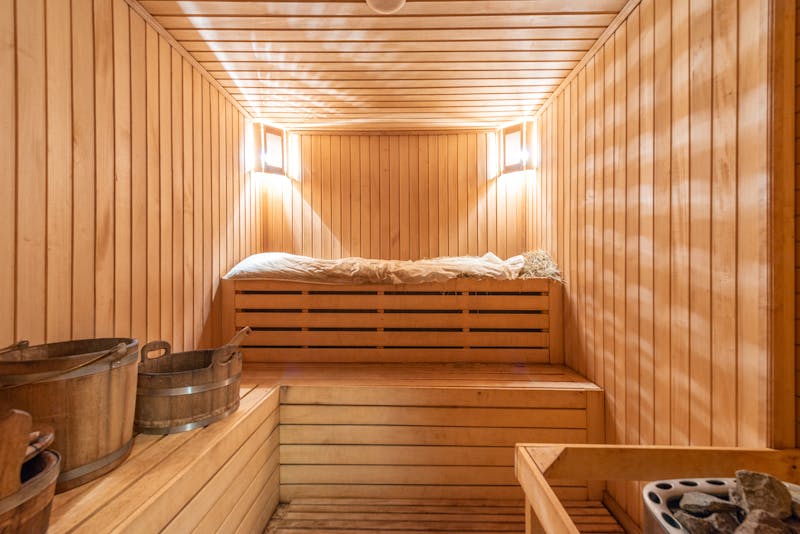
In a traditional sauna at 170–190°F (77–88°C) with 10–20% humidity, sweat evaporates efficiently. Your body handles the heat load well enough that you can comfortably sit for 10–20 minutes. The air feels hot but manageable.
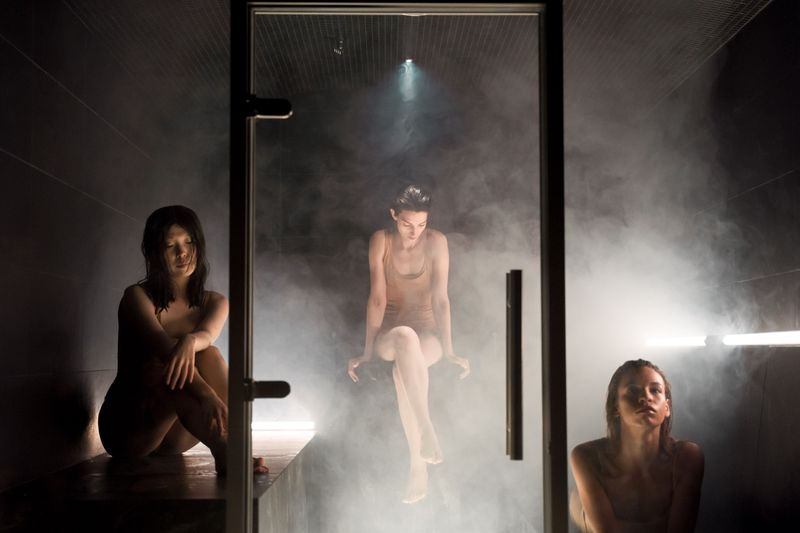
In a steam room at 110–120°F (43–49°C) with 95–100% humidity, the opposite happens. Sweat cannot evaporate — the air is already saturated with moisture. Your body's cooling mechanism essentially stalls. Heat accumulates in your skin and, progressively, your core. This is why 115°F in a steam room often feels more intense than 170°F in a sauna: your core temperature is actually rising faster despite the much lower air temperature.
What This Means Physiologically
In a sauna: Higher air temperatures are tolerable because the body can shed heat through evaporation. You achieve a robust cardiovascular response — heart rate climbs to 120–150 bpm in a typical session, mimicking moderate aerobic exercise. Core temperature rises 1–2°C over a session. The skin becomes intensely red from vasodilation. Profuse sweating occurs (up to 500ml per 15-minute session in experienced users).
In a steam room: Lower air temperatures, but core temperature rises more rapidly per unit of time in session because cooling is impaired. The respiratory tract also directly contacts warm, humid air — which loosens mucus, soothes inflamed airways, and opens bronchi. Blood vessels near the skin dilate strongly. Sweating occurs but sweat doesn't feel "wet" in the same way — it clings rather than drips.
These differences in physiology explain why the two have overlapping but distinct health benefit profiles.
Side-by-Side Comparison
| Factor | Sauna (Traditional/Infrared) | Steam Room |
|---|---|---|
| Air Temperature | 150–195°F (traditional), 120–150°F (infrared) | 110–120°F |
| Humidity | 10–20% | 95–100% |
| Perceived Intensity | High (hot air) | High (no sweat evaporation) |
| Cardiovascular Research | Extensive — 30+ years, KIHD cohort | Limited but promising |
| Dementia/Brain Health | Strong evidence (Laukkanen 2017) | No specific research |
| Respiratory Benefits | Indirect (via cardiovascular health) | Direct — opens airways, loosens mucus |
| Skin Benefits | Good — pore-opening, sweating | Better — hydrating, steam softens skin |
| Heat Shock Proteins | Strongly activated | Activated (lower temps may reduce response) |
| Home Installation | Easy to very easy (infrared = plug-in) | Requires waterproofed room or prefab unit |
| Installation Cost | $700–$15,000 (wide range by type) | $3,000–$15,000 installed |
| Ongoing Maintenance | Low — occasional wood treatment | High — mold risk, descaling, waterproofing |
| Contrast Therapy Pairing | Excellent — higher temps = stronger response | Good, but lower thermal delta |
| Best For | Overall health, longevity, recovery | Respiratory health, skin, dry-heat intolerance |
The Research: Sauna's Extraordinary Evidence Base
No other passive wellness modality has as much long-term human data as Finnish sauna. This isn't a trend backed by a handful of small studies — it's a decades-long body of research on thousands of people with hard endpoints like death, dementia, and cardiovascular disease.
The Landmark KIHD Study (Laukkanen et al., 2015)
The foundational paper in sauna research is: Laukkanen T, Khan H, Zaccardi F, Laukkanen JA. "Association between sauna bathing and fatal cardiovascular and all-cause mortality events." JAMA Internal Medicine. 2015;175(4):542–548.
The study tracked 2,315 middle-aged Finnish men over 20 years as part of the Kuopio Ischemic Heart Disease Risk Factor (KIHD) study — a prospective cohort study with clean endpoints (death records). Key findings:
- Men who saunaed 4–7 times per week had a 40% lower risk of fatal cardiovascular disease compared to 1x/week users
- The same high-frequency group had a 40% lower risk of all-cause mortality
- Risk reduction was dose-dependent — 2–3x/week was better than 1x/week, 4–7x/week was better still
- Results held after adjusting for smoking, alcohol, BMI, physical activity, and existing cardiovascular conditions
These are not small associations found in a poorly-controlled study. A 40% reduction in cardiovascular mortality from a passive activity, replicated across a 20-year cohort of over 2,300 people, is remarkable by any epidemiological standard.
The proposed mechanisms include: reduced arterial stiffness from repeated heat exposure, lowered blood pressure, improved endothelial function, heat shock protein activation, and the simple aerobic cardiovascular stimulus that elevated heart rate provides.
Dementia and Brain Health (Laukkanen et al., 2017)
Laukkanen T, Kunutsor S, Kauhanen J, Laukkanen JA. "Sauna bathing is inversely associated with dementia and Alzheimer's disease in middle-aged Finnish men." Age and Ageing. 2017;46(2):245–249.
From the same KIHD cohort, researchers examined dementia incidence over 20 years. Men who saunaed 4–7 times per week had a 65% lower risk of dementia and a 65% lower risk of Alzheimer's disease compared to 1x/week users. The 2–3x/week group had 22% lower dementia risk.
Proposed mechanisms include improved cerebrovascular function, reduced inflammation, and lower blood pressure — all of which are protective against dementia independently. The finding is observational (not interventional RCT), but the effect size is large enough to take seriously.
More Recent Research: Heat Shock Proteins and Cellular Protection
A 2023 study published in PLOS ONE (Gryka et al., PubMed ID 36813265) examined HSP70 levels in trained and untrained men across 10 sauna sessions. Repeated sauna exposure elevated HSP70 — a key cytoprotective protein — and modulated immune markers. Heat shock proteins act as molecular chaperones: they help cells handle stress, repair damaged proteins, and reduce inflammation.
This is one mechanism explaining why sauna appears to produce benefits that go beyond what you'd expect from the cardiovascular stimulus alone. The repeated hormetic stress of sauna sessions triggers cellular protective responses at a molecular level — the same general pathway as cold water immersion and exercise, but through thermal stress rather than mechanical or cold stress.
Blood Pressure and Arterial Stiffness
A 2018 study (Laukkanen JA et al., American Journal of Hypertension) followed 1,621 men from the KIHD cohort and found that frequent sauna use was independently associated with lower risk of hypertension over a 25-year follow-up. The mechanism is straightforward: heat causes vasodilation, repeated vasodilation improves arterial compliance, and better arterial compliance means lower resting blood pressure over time.
Steam Room Research: Respiratory and Skin Benefits
Steam room research is thinner than sauna research — there's no equivalent of the KIHD study tracking steam room users over 20 years. But the respiratory evidence is genuinely interesting.
Respiratory Benefits
A 2024 controlled clinical study (Kuronen et al., Clinical Physiology and Functional Imaging) examined low-workload respiratory training combined with steam inhalation in stable asthma patients. Participants showed measurable improvement in forced expiratory time and respiratory muscle power. This aligns with decades of clinical use of steam inhalation for upper respiratory conditions.
The mechanism is direct: warm, humid air at 100–115°F loosens mucus secretions, reduces mucociliary transit time, and soothes the bronchial lining. For people with chronic congestion, sinusitis, or mild asthma, this is a real, practical benefit — and one that a dry sauna cannot provide.
Note: acute asthma attacks or severe COPD are contraindications for steam room use. Consult a physician if you have active respiratory disease.
Skin and Dermatological Benefits
Both sauna and steam room improve circulation to the skin and increase sweating, which helps clear pores. The advantage for steam rooms is hydration: humid air at skin-saturation temperature maintains — and in some cases slightly increases — skin moisture content. Traditional saunas are actually drying to skin at the extremes.
For conditions like mild eczema or dry skin, steam room sessions may be preferable — though for eczema specifically, consult a dermatologist, as heat can sometimes trigger flares.
Installation Comparison: What It Actually Takes
This is where most purchase decisions are made, and where the gap between sauna and steam room is widest. Here's what each option realistically requires:
Sauna Installation Options
1-Person Infrared Sauna Cabin ($700–$2,000 installed)
The easiest home sauna option by far. Pre-built panels arrive flat-packed and assemble in 30–60 minutes. They plug into a standard 110V outlet — no electrician required. No dedicated room needed; a basement corner or bedroom works fine. The tradeoff: infrared saunas run cooler (120–140°F) and produce a different heat experience than traditional. They're real saunas, but not the same as a Finnish experience.
Barrel Sauna — Outdoor ($1,500–$5,000)
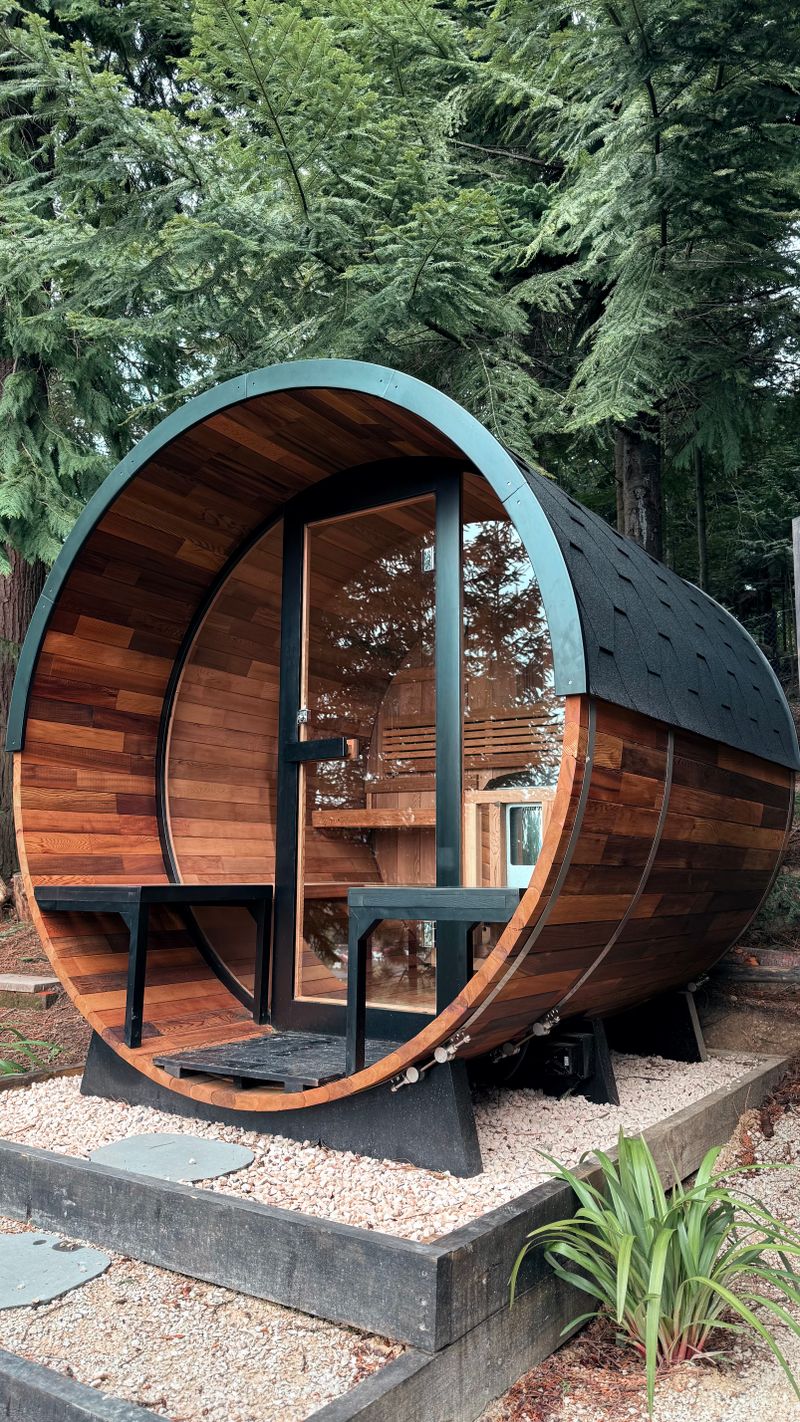
Pre-built barrels ship in sections and assemble in 3–5 hours on a level surface (concrete, gravel, or deck). No construction permit required in most jurisdictions for a standalone outdoor structure under a certain size. Requires 240V electrical service — you'll need an electrician for the heater hookup, which adds $200–$600. The result is an authentic traditional sauna experience outdoors, year-round.
Traditional Indoor Sauna — Dedicated Room ($3,000–$15,000)
Requires a dedicated room with cedar or hemlock interior, a 240V 40–60 amp circuit, and ventilation. If you're converting an existing room, budget for cedar cladding, sauna door, vapor barrier, and professional heater installation. High-end custom builds go well above $15,000. Once built, they're extremely durable — expect 20+ years from a well-constructed indoor sauna.
Steam Room Installation Options
Converting an Existing Shower ($3,000–$8,000)
A shower can become a steam room if the enclosure is fully waterproof (floor to ceiling), the door seals, and you install a steam generator. This requires a plumber (for the generator water line), an electrician (generator draws 6–15 kW — needs a dedicated 240V circuit), and waterproofing work. Any grout, gaps, or imperfect sealing will become a mold problem within months.
Prefab Steam Shower Enclosure ($4,000–$10,000 installed)
Factory-built steam shower enclosures come with integrated steam functions, seating, and sealed construction. Professional installation is still required for plumbing and electrical connections. Simpler than a full conversion, but expensive for what you get.
Purpose-Built Steam Room ($8,000–$20,000+)
A dedicated tiled steam room with proper drainage, 100% waterproof surfaces, proper vapor barriers behind every wall, a commercial-grade steam generator, and well-sealed door. This is expensive, requires significant construction, and demands ongoing maintenance.
Maintenance Reality Check
Sauna maintenance is almost non-existent. You sand or oil the wood benches every year or two, wipe down the interior, and occasionally check the heater elements. A well-built traditional or barrel sauna can run for 20–30 years with almost no intervention. Infrared saunas have even less to do — wipe the panels and that's it.
Steam rooms are a different story, and sellers don't always advertise this upfront:
- Mold and mildew: Steam rooms run at 100% humidity. Any surface imperfection — cracked grout, failing caulk, a compromised vapor barrier — becomes a mold vector. Grout needs re-sealing annually. Even with diligent maintenance, steam rooms develop mold problems, particularly behind walls if the vapor barrier isn't perfect.
- Generator descaling: Steam generators accumulate mineral deposits from water. Depending on your water hardness, the generator may need descaling every 3–6 months. Neglected, the heating element corrodes and the generator fails — replacements cost $500–$2,000.
- Seals and drainage: Door seals need regular inspection; a leaking seal admits ambient air that disrupts the steam environment and can cause condensation damage outside the enclosure. Drains must be kept clear.
- Long-term cost: Budget $200–$500/year in realistic steam room maintenance — sealing, descaling products, replacement parts. This adds up to $1,000–$2,500 over 5 years on top of your initial investment.
If you're comparing a $2,000 barrel sauna to a $6,000 steam room conversion, the long-term cost gap widens significantly once you factor in maintenance.
Can You Have Both? The Contrast Therapy Angle
Contrast therapy — alternating between heat and cold — is one of the most evidence-backed recovery and wellness protocols. It drives rapid shifts in cardiovascular dynamics, reduces inflammation, improves mood via endorphin release, and provides a hormetic stress that the body adapts to over time.
The ideal contrast therapy setup is: traditional or infrared sauna + cold plunge. The reasoning:
- Sauna reaches 150–195°F, producing strong vasodilation and a significant cardiovascular stimulus
- Cold plunge at 45–55°F produces immediate vasoconstriction, norepinephrine release, and a sharp physiological contrast
- The thermal delta — the gap between your peak heat exposure and cold exposure — drives the size of the physiological response
Steam rooms can pair with cold water for contrast therapy, but the lower operating temperatures mean a smaller thermal delta and a somewhat blunted response. It still works — just not as powerfully.
Combination Units
Some manufacturers sell combination sauna/steam units — typically an infrared cabin with a steam injection feature. These exist and work, but they're a compromise. The sauna function is real; the steam function is usually weaker than a dedicated steam room because the enclosure isn't fully sealed or tiled. If you want both, a purpose-built unit for each is better than a combo at the same price.
The most underrated setup: a 1-person infrared sauna in a corner of your space, paired with an entry-level cold plunge ($500–$1,500). Total cost: $1,200–$3,500. Total daily wellness routine: world-class.
5-Year Cost of Ownership
| Option | Upfront Cost | Installation | Electricity (5yr) | Maintenance (5yr) | Expected Lifespan | Total 5-Year Cost |
|---|---|---|---|---|---|---|
| Infrared Sauna (1-person) | $700–$2,000 | DIY / $0 | $200–$400 | $50–$150 | 8–15 years | $950–$2,550 |
| Barrel Sauna (outdoor) | $1,500–$5,000 | $200–$600 | $300–$600 | $100–$300 | 15–25 years | $2,100–$6,500 |
| Traditional Indoor Sauna | $3,000–$15,000 | Included above | $400–$800 | $100–$400 | 20–30 years | $3,500–$16,200 |
| Steam Shower Conversion | $3,000–$8,000 | Included above | $600–$1,500 | $1,000–$2,500 | 10–15 years | $4,600–$12,000 |
| Prefab Steam Room | $4,000–$10,000 | $500–$2,000 | $600–$1,500 | $1,000–$2,500 | 10–15 years | $6,100–$16,000 |
The takeaway: a barrel sauna or infrared cabin is not just cheaper upfront — it's cheaper over its entire operational life. The steam room's maintenance costs eat into the value proposition continuously.
🛒 Top Picks: Home Sauna & Steam Gear
Our readers' most-bought sauna and steam room products this month.
As an Amazon Associate we earn from qualifying purchases.
Frequently Asked Questions
Sources & Further Reading
- Laukkanen T et al. (2015). Association between sauna bathing and fatal cardiovascular and all-cause mortality events. JAMA Internal Medicine, 175(4):542–548.
- Laukkanen T et al. (2017). Sauna bathing is inversely associated with dementia and Alzheimer's disease in middle-aged Finnish men. Age and Ageing, 46(2):245–249.
- Gryka D et al. (2023). The effects of Finnish sauna sessions on immune response and HSP-70 levels. PLOS ONE.
- Kuronen et al. (2024). Effects of low workload respiratory training with steam inhalation on lung function in stable asthma. Clinical Physiology and Functional Imaging.
- Laukkanen JA et al. (2018). Sauna bathing is associated with reduced cardiovascular mortality and improves risk prediction. European Journal of Preventive Cardiology.
Recommended Products
Get weekly guides from PlungeHQ
No spam. Unsubscribe anytime.