⚡ Quick Answer
Best by budget tier: Tier 1 (~$1,200–$2,350) — Radiant Saunas 1-Person Infrared + Cold Pod inflatable. Tier 2 (~$4,100–$4,400) — Almost Heaven Pinnacle barrel sauna + Ice Barrel 400 + chiller. Tier 3 (~$9,000–$10,000) — Dundalk Canadian Timber Harmony + Plunge Original. Tier 4 (no limit) — custom Finnish sauna + Morozko Forge or Plunge Pro. The contrast therapy benefits are real at every tier — the upgrade is convenience, aesthetics, and maintenance reduction.
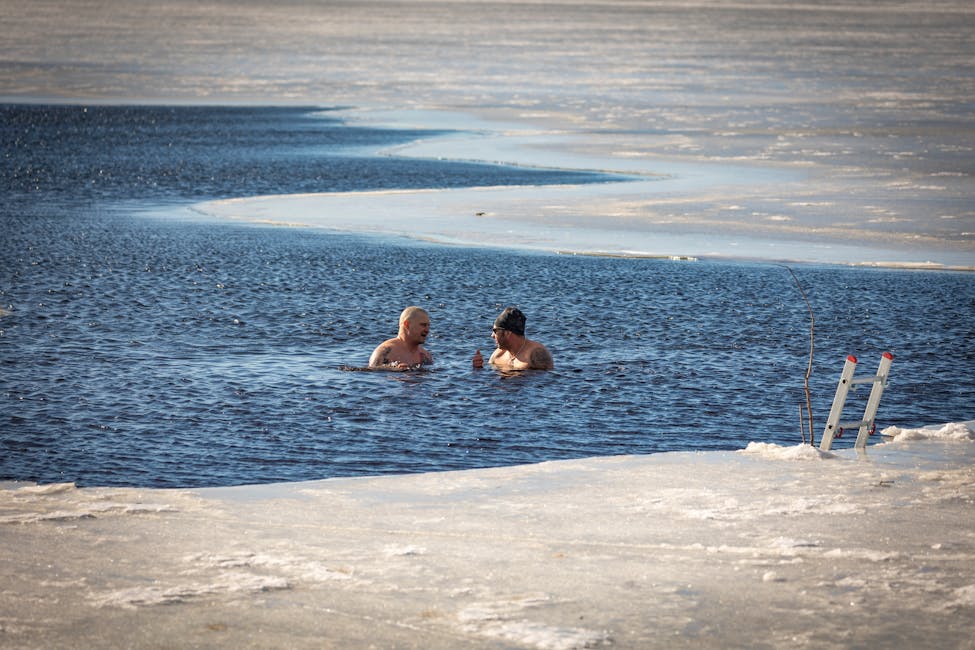
Why Sauna + Cold Plunge Is the Elite Recovery Combo
Sauna and cold plunge alone are both powerful. Together, they produce something qualitatively different — and the neurochemistry explains why.
Heat does this: A traditional sauna at 170–185°F raises your core temperature by 2–3°F. Your body responds by releasing endorphins and producing heat shock proteins (HSPs), which repair cellular damage, improve protein folding, and increase resilience to physiological stress. Your heart rate climbs to 100–150 bpm — a passive cardiovascular workout. Blood vessels dilate massively. Blood flow to the skin increases by up to 300%.
Cold does this: Immersion in 50–59°F water triggers one of the most dramatic neurochemical responses your body can produce without drugs. Norepinephrine surges by approximately 300%. Dopamine rises by 250% and stays elevated for hours — not minutes, like most pleasure-response chemicals. Your nervous system shifts into an alert, focused state. Vasoconstriction reverses the vasodilation of the sauna, compressing blood back toward your organs.
The contrast effect: Rapid alternation between vasodilation (sauna) and vasoconstriction (cold) creates a "pumping" effect throughout your vascular system. Blood is driven forcefully in and out of muscle tissue, accelerating the removal of metabolic waste products — lactic acid, inflammatory cytokines — while flooding tissue with oxygen-rich blood. This is why athletes recover faster and why Nordic populations have practiced contrast bathing for centuries. Finnish sauna culture isn't just tradition; it's empirically validated biology.
Elite sports teams — NFL, NBA, Olympic programs — have used contrast therapy for decades. Home setups have now made it accessible to anyone with a deck and a budget. This guide breaks down exactly how to build one at four different price points, with real product numbers, space requirements, and maintenance costs.
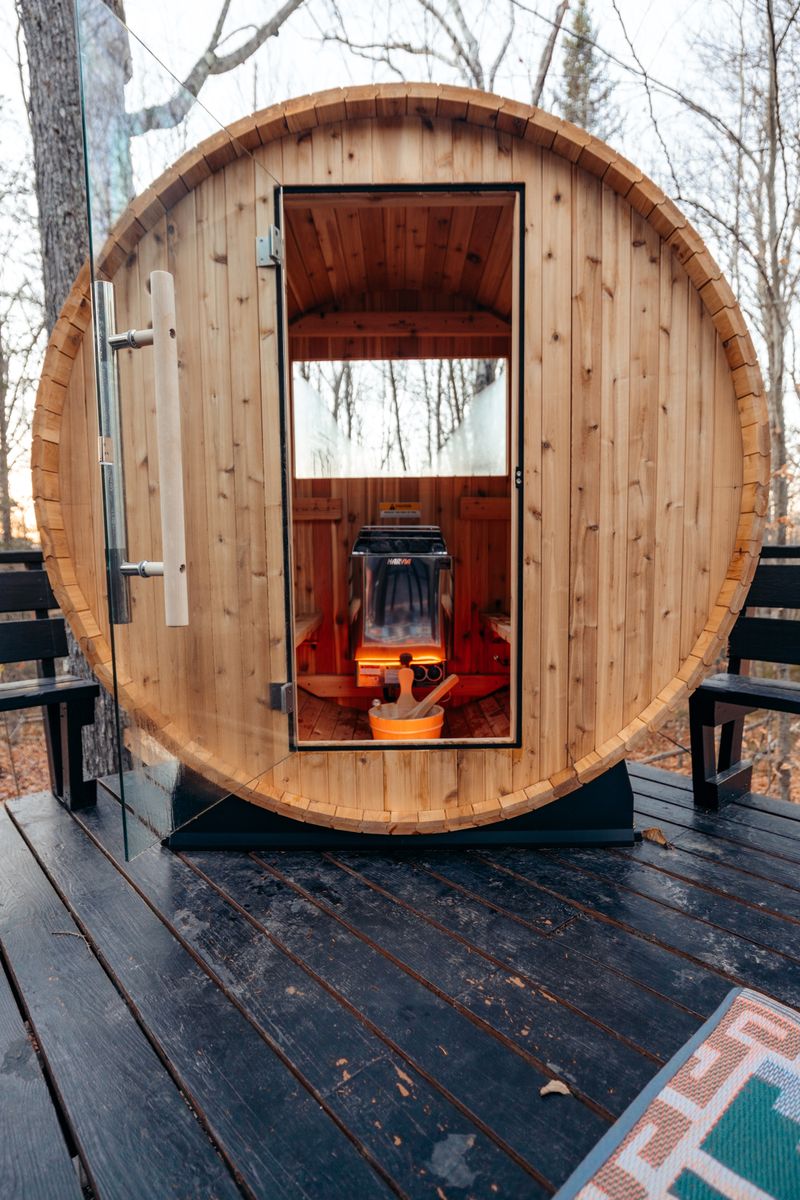
Infrared vs. Traditional Sauna: Which Is Better for Contrast Therapy?
This question matters more for contrast therapy specifically than for sauna use in general. Here's why:
Traditional saunas (Finnish-style, wood-fired or electric heater) operate at 150–195°F with 10–20% humidity. This is the environment used in virtually all sauna cardiovascular research — the Laukkanen studies, the Finnish cohort data, all of it. When research shows "sauna use reduces cardiovascular disease risk by 50% in heavy users," they mean traditional sauna. They also get your core temperature substantially higher and faster than infrared.
Infrared saunas operate at 120–140°F — considerably cooler. They use electromagnetic radiation to heat the body directly rather than the air. The advantage: they're easier to install (most plug into 110V), heat up in 10–15 minutes instead of 30–45, and cost less to buy. The limitation for contrast therapy: the thermal delta is smaller. Going from 130°F infrared to 50°F cold plunge is a 80°F contrast. Going from 185°F traditional sauna to 50°F cold is a 135°F contrast — nearly twice the thermal shock, and that magnitude of contrast is where the vascular pumping effect is most pronounced.
For contrast therapy, the verdict: Traditional sauna is superior if you can manage the installation (240V circuit, weight-bearing floor, proper ventilation). If you're constrained by space, electrical capacity, or budget, an infrared cabin is absolutely worth using — the benefits are real, just less intense. Think of it as the difference between a vigorous workout and a moderate one. Both beat nothing by a wide margin.
One more variable: barrel saunas are traditional-style (wood or electric heater), so the budget-tier barrel sauna options in this guide all deliver the higher-intensity thermal contrast. See our best barrel saunas guide and best infrared saunas guide for detailed breakdowns of each type.
Budget Tiers: Complete Setups for Every Price Point
Tier 1: The Starter Setup — Under $2,500
Starter Contrast Therapy Setup
- Sauna: Radiant Saunas 1-Person Infrared Cabin ($899) or Aleko barrel sauna (~$1,200)
- Cold: Cold Pod inflatable tub ($169) — ice-filled, no chiller needed
- Accessories: Non-slip mat, microfiber towels, waterproof thermometer (~$150)
- Total: $1,218 (infrared + Cold Pod) to $1,519 (Aleko barrel + Cold Pod)
Trade-offs: No temperature control on the cold side — you're filling with ice every session, which costs $3–8 per bag and requires discipline. The inflatable Cold Pod is durable but not insulated, so ice melts faster in warm weather. The infrared sauna runs at 120–140°F rather than traditional heat, meaning a softer thermal contrast. If you go the Aleko barrel route, budget $300–500 for a 240V circuit installation. That said, this is a legitimate contrast therapy setup. The biology works. Elite athletes have done contrast therapy in rivers and frozen ponds for centuries — you don't need a $3,000 chiller to get the benefit.
See Radiant Saunas → Check similar on Amazon →Tier 2: The Sweet Spot — Under $5,000
Best Value Contrast Therapy Setup
- Sauna: Almost Heaven Pinnacle Barrel Sauna ($1,899) — real cedar, outdoor, 1–2 person, electric or wood-fired
- Cold: Ice Barrel 400 ($1,199) — purpose-built cold plunge tub, 105-gallon, durable polyethylene
- Chiller: Compatible standalone chiller for Ice Barrel ($800–900) — eliminates ice dependency entirely
- Accessories: Mat, robe, thermometer, cover for Ice Barrel (~$200)
- Total: $4,098–$4,398
Trade-offs: The Almost Heaven Pinnacle requires a 240V/30A dedicated circuit for the electric heater — budget $200–500 for electrical work if you don't already have one. If you go wood-fired, no electrical work needed beyond a GFCI for the chiller. The Ice Barrel chiller adds maintenance: cleaning the chiller filter monthly, checking coolant levels annually. The barrel sauna itself needs teak oil or similar treatment on the exterior every 1–2 years. This is the sweet spot most serious buyers land at: all the real-wood traditional sauna benefits, a proper cold plunge that's always ready, and a setup that looks and feels like a proper wellness space.
See Almost Heaven Pinnacle → Check similar on Amazon →Tier 3: The Premium Setup — Under $10,000
Premium Contrast Therapy Setup
- Sauna: Dundalk Canadian Timber Harmony Barrel Sauna ($4,999) — best-in-class barrel construction, Canadian cedar, premium hardware
- Cold: Plunge Original ($3,490) — integrated chiller, ozone sanitation, always at target temp, plug-and-plunge setup
- Accessories + outdoor deck prep: $500–1,000 (weatherproof mat, towel hooks, outdoor cover, windbreak panels)
- Total: $8,989–$9,489
Trade-offs: This is a significant investment — roughly the cost of a used car. You're paying for best-in-class at both ends. The Dundalk Harmony is Canadian-made with thicker walls, better insulation, and hardware that lasts decades. The Plunge Original maintains water at your exact target temp 24/7, runs ozone sanitation automatically, and requires nothing more than occasional filter changes ($40 every 3 months) and a UV bulb replacement annually (~$30). At this tier, daily maintenance is under 5 minutes per week. The ROI calculation: if you'd pay $30–60 for a contrast therapy session at a spa, three sessions per week at this setup pays for itself in about 3 years.
See Plunge Original → Check similar on Amazon →Tier 4: The Dream Setup — No Budget Limit
Ultimate Contrast Therapy Wellness Space
- Sauna: Sun Home Luminar Full-Spectrum Infrared ($4,000+) OR custom Finnish sauna build (varies widely, $10,000–$30,000+)
- Cold: Plunge Pro ($5,990) or Morozko Forge ($8,000–10,000) — pharmaceutical-grade chillers, whisper-quiet, stainless steel, precise to 1°F
- Space: Dedicated outdoor wellness pavilion with drainage, cedar decking, privacy screen, lounge chairs
Custom Finnish sauna builds from local craftspeople or specialty companies (Saunaspace, Thermory) create a permanent structure that adds real estate value. The Morozko Forge is used by some of the most serious biohackers and researchers in the space — it can hit 34°F (near-freezing), making it qualitatively different from any chiller-based tub. At this tier, you're not buying a wellness tool — you're building a lifestyle space.

Space Planning by Tier
One of the most common questions before buying: do I actually have room for this? The short answer is that most people do. Here's a realistic breakdown by tier:
Tier 1 — 20–25 sq ft (indoor or small outdoor)
A 1-person infrared cabin has a typical footprint of roughly 36" × 36" — less than 10 sq ft. The Cold Pod inflatable sits at about 6 sq ft when filled. You need clearance for the sauna door (opens outward, typically 24–30"), space to stand while transitioning, and somewhere to set a towel. A spare bedroom corner, finished basement, or covered porch all work. This is the tier where you can keep everything indoors year-round without weather-proofing considerations.
Tier 2 — 35–50 sq ft (outdoor deck or patio)
The Almost Heaven Pinnacle barrel sauna has a 7'L × 4.5'W footprint — about 31 sq ft — plus you need 3–4 feet of clearance in front of the door. The Ice Barrel 400 is compact at roughly 4 sq ft of floor space, though you want 3 feet of clear access on the entry side. A 12×4 deck accommodates this comfortably. Most suburban backyard decks or patios can handle a Tier 2 setup without expansion. Keep them within 10 feet of each other to minimize heat loss during the transition.
Tier 3 — 50–80 sq ft (dedicated outdoor space)
The Dundalk Harmony is a larger barrel at 8'L × 5'W, plus door clearance. The Plunge Original needs 56" × 28" of floor space, plus service access from at least one side for filter changes. A 10×8 dedicated area gives you space for both units, towel hooks, a rubber mat between them, and room to move freely. At this tier, consider adding a windbreak (lattice panels, privacy screen) to reduce cold exposure during the transition walk. A covered pergola over the area makes year-round use far more comfortable.
Electrical Requirements
| Equipment | Electrical Need | Notes |
|---|---|---|
| 1-person infrared sauna | 110V / 15A standard outlet | Most plug-in models, no electrician needed |
| Barrel sauna (electric heater) | 240V / 30A dedicated circuit | Requires licensed electrician; $200–500 typical |
| Barrel sauna (wood-fired) | No electrical needed | Chimney clearance required; check local codes |
| Cold plunge chiller (Ice Barrel / standalone) | 110V / 15A GFCI outlet | Must be GFCI for outdoor/wet area use |
| Plunge Original / Plunge Pro | 110V / 20A GFCI outlet | Dedicated circuit recommended |
| Morozko Forge | 240V / 20A dedicated circuit | More powerful compressor requires higher draw |
Rule of thumb: if you're staying with a 1-person infrared sauna and a standard chiller, you might need nothing more than two GFCI outlets — a $0–200 job for an electrician to add if you don't have them. Once you move to a traditional barrel sauna with electric heater, budget $300–600 for electrical work.
The Contrast Therapy Protocol
The protocol is simple. The discipline is the hard part.
- Sauna: 15–20 minutes at 150–185°F (traditional) or 120–140°F (infrared)
- Cold plunge: 2–4 minutes at 50–59°F — exit when your breathing is fully controlled and calm
- Passive rest: 10 minutes — let your body normalize at room temperature; resist the urge to re-enter heat immediately
- Repeat 2–3 rounds
- Finish with cold for alertness and a longer norepinephrine/dopamine effect; finish with heat for deep relaxation and better sleep
Total session time: 60–90 minutes. Frequency: 3–5 times per week for ongoing benefits. For the complete protocol breakdown — timing variations, cold temperature progressions, and what the research shows about frequency — see our dedicated sauna and cold plunge contrast therapy guide.
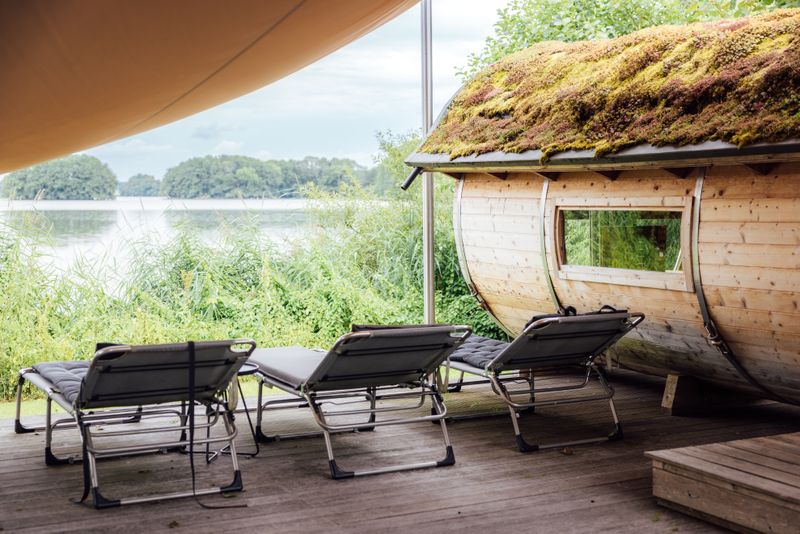
Maintenance Overhead: What You're Actually Signing Up For
The sticker price is only half the ownership story. Here's what maintenance actually looks like at each tier — in time, money, and hassle.
Tier 1: High time, low cost
The inflatable cold tub requires ice every session — budget $3–10 per session depending on your location and bag size (a 10-bag session is typical in summer to get to 50°F). At three sessions per week, that's $450–1,500/year in ice costs alone. You'll also need to drain and refill the tub weekly if it's not insulated or covered, and scrub it monthly to prevent biofilm. The infrared sauna needs its interior wiped down after sessions (sweat is corrosive to wood over time) and a gentle cleaning with diluted white vinegar monthly. Time commitment: 20–30 minutes per week.
Tier 2: Moderate time, moderate cost
If you pair the Ice Barrel with a standalone chiller, ice costs disappear. Chiller maintenance: clean the filter screen monthly (5 minutes), check coolant level annually, drain and disinfect the Ice Barrel quarterly (20–30 minutes). The barrel sauna exterior needs teak oil or cedar-specific oil treatment once per year ($20–40 in materials, 1–2 hours). Interior: wipe down after sessions, replace sauna rocks every 3–5 years (~$50). Time commitment: 30–45 minutes per month ongoing.
Tier 3: Low time, moderate cost
The Plunge Original is the most low-maintenance dedicated cold plunge available. Its ozone sanitation system handles water quality automatically. You'll replace the filter every 3 months ($40/filter) and the UV-C bulb annually (~$30). Full water change every 3–4 months (30 minutes). The Dundalk sauna is similar to Tier 2 for wood maintenance but higher quality materials means less frequent attention. Total ongoing annual cost: approximately $200–300 in consumables. Time commitment: under 15 minutes per week.
The maintenance calculus matters for consistency. The number one reason people stop using cold plunge setups is friction — if you have to buy ice every session, you'll skip sessions. At Tier 2 and above with a chiller, the setup is always ready. That dramatically changes the "just do it" equation in favor of actually doing it.
Frequently Asked Questions
Do I need both a sauna and a cold plunge?
No — you can get benefits from each individually. But if your goal is the full neurochemical and cardiovascular effect of contrast therapy, you need both. The "pumping" effect on your vascular system only happens when you rapidly alternate between heat and cold. A sauna alone raises heat shock proteins and endorphins. Cold alone spikes norepinephrine and dopamine. Together, those effects are compounded in a way neither achieves solo. If budget forces a choice, cold plunge delivers more bang per dollar for recovery and mood — but the combination is what the elite practitioners are doing.
Can I use a hot shower instead of a sauna?
A hot shower is a weak substitute. Your core body temperature barely rises in a shower because the water cools as it hits your skin and you're not in an enclosed heat environment. A sauna at 150–185°F raises your core temperature by 2–3°F over 15–20 minutes, which is what triggers heat shock proteins, cardiovascular adaptation, and the full neurochemical response. If a sauna isn't accessible yet, a hot bath at 104°F+ for 20 minutes is the closest practical alternative — it raises core temp meaningfully and the research on hot bath benefits is reasonably supportive.
What order should I do sauna and cold plunge?
Sauna first, cold plunge after — every time. This is the traditional Nordic protocol and what the research supports. Heat primes the cardiovascular system, raises your core temperature, and maximizes the contrast effect when you enter cold water. End with cold for maximum alertness and a longer dopamine/norepinephrine effect (useful for morning sessions). End with heat if you want deep relaxation and better sleep (useful for evening sessions). See our full contrast therapy protocol guide for detailed timing and variations.
Is the Plunge worth the price over a chest freezer?
If you'll use it consistently, yes. A chest freezer hack costs $150–400 to set up but requires manual temperature management, no circulation pump, no filtration, and regular draining and cleaning every 2–4 weeks (unless you add expensive additives). The Plunge ($3,490) maintains your exact target temperature 24/7, circulates and filters the water continuously, runs ozone sanitation automatically, and requires nothing more than a filter change every 3 months. The real comparison is convenience and consistency. Most chest freezer setups see declining use over time because of the friction. The Plunge removes that friction. At 4 sessions per week for 3 years, your cost per session is about $5.60 — comparable to a cold brew coffee.
Can I set up a contrast therapy space in a garage?
Yes, and a garage is one of the best locations. You get protection from weather year-round, a concrete floor that handles splashing and drainage, typically enough space (a 1-car garage is 200+ sq ft), and the ability to run proper electrical easily. You'll need a 240V circuit for a traditional sauna (or use an infrared sauna on 110V), a GFCI outlet for the cold plunge chiller, and ideally a floor drain or slop sink for water changes. Budget $300–800 for electrical work if you need new circuits. A 1-car garage corner comfortably fits a complete Tier 2 or Tier 3 setup with space to spare.
Get weekly guides from PlungeHQ
No spam. Unsubscribe anytime.