
Contrast therapy — alternating hot and cold exposure in structured cycles — is not a wellness trend. It has a documented history spanning over a thousand years, from Nordic ice plunges after sauna to Japanese sentō hot-cold bathing. What's changed is the science: we now understand the specific physiological mechanisms driving the benefits, and those mechanisms explain why the combination is more powerful than either modality used alone.
This guide covers everything you need to set up and execute a proper contrast therapy practice: the physiology, the research, the protocol by experience level, equipment pairings at every budget, space and electrical requirements, and the safety considerations that are often glossed over. If you're considering buying a sauna and cold plunge together — or optimizing a setup you already have — this is the resource you need.
How Contrast Therapy Actually Works
Understanding the physiology matters, because it tells you why the protocol is structured the way it is — and what you're actually doing to your body with each transition.
The Vascular Pumping Mechanism
When you enter a hot sauna, your body's primary goal is to dissipate heat. Your hypothalamus signals the peripheral blood vessels to dilate — a process called vasodilation. Blood flow to the skin increases dramatically: up to 50–70% of total cardiac output can be redirected to the skin surface for cooling. Your heart rate rises to compensate, often reaching 100–150 bpm in a 175°F sauna — equivalent to moderate cardiovascular exercise.
When you exit the sauna and enter cold water, the opposite happens instantly. Your body detects the temperature drop and signals peripheral vessels to constrict — vasoconstriction — pushing blood rapidly back toward the core organs. The cold also activates the dive reflex, briefly slowing the heart rate even as the sympathetic nervous system fires intensely.
Here's the key insight: each hot-to-cold transition creates a circulatory flush. Metabolic byproducts that accumulated in peripheral tissues during the sauna phase — lactic acid, inflammatory cytokines, cellular debris — get swept back toward the lymphatic system and core circulation. Multiple cycles amplify this effect. Two or three rounds produce more of this flushing than a single very long sauna or cold plunge session would.
This vascular "pump" mechanism is why contrast therapy is particularly effective for recovery from intense exercise. It's not just about reducing soreness — it's actively accelerating the clearance of the waste products that cause soreness.
The Neurochemical Cocktail
The heat and cold phases each trigger distinct neurochemical responses. Together they produce a mood and cognitive effect that neither creates on its own.
From the sauna (heat phase):
- Heat shock proteins (HSPs): Thermal stress causes cells to produce protective proteins — primarily HSP70 — that help repair damaged proteins, reduce oxidative stress, and prime cells to handle future stress more efficiently. Research published in Experimental Physiology (Pilch et al., 2013) confirmed that even a single Finnish sauna session significantly elevates HSP70 expression. These proteins are part of why regular sauna use improves exercise adaptation over time.
- Endorphins: Heat stress triggers β-endorphin release, contributing to the relaxed, euphoric feeling after a sauna.
- Growth hormone: Sauna-induced heat stress causes significant growth hormone spikes — in some studies, as much as two-fold — which contributes to cellular repair and muscle recovery.
From the cold plunge (cold phase):
- Norepinephrine: A landmark study (Šrámek et al., 2000, published in European Journal of Applied Physiology) found that cold water immersion at 14°C (57°F) caused plasma noradrenaline (norepinephrine) to increase by 530% from baseline. This is the neurochemical most responsible for the alertness, focus, and mood elevation people report after cold plunging.
- Dopamine: The same study found dopamine concentrations increased by 250%. Unlike the acute spike of norepinephrine, dopamine elevation from cold exposure tends to be sustained for several hours — this is why people report sustained mood elevation and motivation after a cold plunge, not just an immediate rush.
The combination means you're getting both the calming endorphin/HSP effect of heat and the sharp alertness of norepinephrine/dopamine from cold. The result is a state most practitioners describe as "calm focus" — relaxed but mentally sharp. It's distinctly different from either modality alone.
The Research: What Studies Actually Show
The evidence base for contrast therapy spans cardiovascular health, sports recovery, mood, and longevity. Here are the key studies and what they actually found.
Sauna and Cardiovascular Mortality (Laukkanen et al., 2015)
The most cited sauna study followed 2,315 Finnish men for 20 years. Published in JAMA Internal Medicine (Laukkanen T, Khan H, Zaccardi F, et al., 2015;175(4):542–548), it found dramatic dose-dependent cardiovascular benefits:
- Men using sauna 2–3 times per week had a 27% lower risk of fatal cardiovascular events compared to once-weekly users
- Men using sauna 4–7 times per week had a 50% lower risk of fatal cardiovascular events
- All-cause mortality was also significantly reduced with higher frequency
The study design was observational — it can't prove causality — but the dose-response relationship, combined with known mechanisms (improved endothelial function, reduced blood pressure, cardiovascular conditioning), supports a genuine effect.
Cold Water Immersion and Muscle Recovery
A systematic review and meta-analysis published in the British Journal of Sports Medicine analyzed the effect of cold water immersion on post-exercise recovery. Key findings:
- CWI significantly reduced delayed onset muscle soreness (DOMS) compared to passive recovery
- Muscle soreness biomarkers (creatine kinase, interleukin-6) were reduced
- Effects were most pronounced in the 24–48 hour window post-exercise — exactly when DOMS peaks
Separately, a review in the Journal of Strength and Conditioning Research found that contrast water therapy (alternating hot and cold immersion) reduces muscle soreness by up to 30% in trained individuals after intense exercise — outperforming cold-only or heat-only protocols.
Heat Shock Proteins and Training Adaptation
Research on heat shock proteins adds another dimension. When heat is applied after exercise — as in contrast therapy — it amplifies the HSP70 response beyond what exercise alone produces. A study cited in European Journal of Applied Physiology found the combination of exercise followed by heat exposure resulted in more profound HSP70 upregulation than either stimulus alone. HSPs play a direct role in muscle repair, cellular resilience, and long-term adaptation to training stress.
What the Research Doesn't Show
One important caveat: cold water immersion immediately after resistance training blunts muscle hypertrophy. A 2024 meta-analysis by Piñero et al. in the European Journal of Sport Science confirmed that post-exercise CWI attenuates anabolic signaling and reduces muscle fiber growth with resistance training. The cold suppresses the inflammatory signals that drive hypertrophic adaptation. This means contrast therapy is best timed for cardio/endurance recovery days, or at least 4–6 hours after strength training sessions. We cover this in the FAQ below.
The Contrast Therapy Protocol
The most common failure in contrast therapy is underdosing. Too many people do one round of 5 minutes in the sauna followed by a 30-second cold shower and wonder why they don't feel the effects. The protocol matters.
The Classic Nordic Protocol
The traditional Finnish approach: 15–20 minutes sauna (150–185°F / 65–85°C) → 2–4 minutes cold plunge (50–59°F / 10–15°C) → 10 minutes passive rest → repeat 2–3 rounds.
The passive rest phase is not optional. Your cardiovascular system needs time to stabilize between rounds — this is also when much of the parasympathetic recovery occurs, and when heat shock protein synthesis is actively underway.
Protocol by Experience Level
| Level | Sauna Duration | Sauna Temp | Cold Plunge | Water Temp | Rest | Rounds | Total Time |
|---|---|---|---|---|---|---|---|
| Beginner (weeks 1–2) | 10 min | 150–160°F | 60–90 sec | 60–65°F | 8–10 min | 2 | ~40 min |
| Intermediate (weeks 3–8) | 15 min | 160–175°F | 2–3 min | 55–60°F | 8–10 min | 3 | ~75 min |
| Advanced | 20 min | 175–185°F | 3–5 min | 50–55°F | 10 min | 3–5 | 90–120 min |
Beginner notes: The most common beginner mistake is starting with water that's too cold. 60–65°F is genuinely cold — it will feel cold and trigger the neurochemical response — but it won't cause the hyperventilation and shock response that 50°F water can produce in someone who has never done this before. Build tolerance over several weeks before dropping the water temperature.
Advanced protocol variation: Experienced practitioners sometimes extend sauna rounds (20+ minutes) while shortening cold plunge duration (2–3 min) and increasing round count (4–5 rounds). This prioritizes the HSP and cardiovascular adaptation over the acute norepinephrine spike. The opposite — shorter sauna, longer cold — prioritizes recovery from athletic exertion. Match the approach to your goal.
Between-Round Transitions
Don't rush the sauna-to-cold transition. After exiting the sauna, allow 30–60 seconds for your heart rate to begin settling before entering the cold plunge — this is especially important in the first session and for anyone with any cardiovascular history. The cold shock while heart rate is still at 150 bpm is a more significant cardiovascular event than cold entry at 90–100 bpm.
End Hot or Cold? The Finishing Protocol
Which modality you end on changes the downstream physiological effect significantly — and most people don't realize this.
End with cold: Your sympathetic nervous system remains activated. Norepinephrine stays elevated. You'll feel alert, sharp, and energized. Core temperature will be slightly suppressed. This is ideal for morning sessions, pre-workout use, or any session where you need to be mentally on afterward. Do not end with cold and immediately try to sleep — the norepinephrine activation will work against you.
End with heat: Parasympathetic recovery dominates. Blood returns to the periphery. Core temperature stays elevated briefly before dropping, which triggers natural sleep onset. Growth hormone levels are elevated. This finishing protocol mirrors what elite athletes use for post-competition recovery, and it aligns with the mechanism behind sauna's documented sleep improvement effects. For evening sessions, or any time deep recovery and sleep quality is the goal, end with heat.
Practical rule: morning session = end cold; evening session = end warm.
Equipment Pairing Guide (Every Budget)
The biggest purchase decision in contrast therapy is the equipment. You need both a heat source and a cold source — and the options at each budget tier are meaningfully different in quality, longevity, and experience. Here's an honest breakdown.
Under $2,000 — Entry-Level Setup
Sauna: Radiant Saunas 1-person portable infrared sauna (~$400–600). Heats to 140°F, which is on the lower end for contrast therapy (you want 150°F minimum for meaningful vasodilation) but serviceable for beginners. Takes 20–30 minutes to heat up.
Cold plunge: Cold Pod inflatable tub with ice (~$120–180). Requires 40–60 lbs of ice per session. Total cost per session adds up if you're doing this frequently — factor in ice costs ($3–8/session) against the upfront savings.
Best for: Testing whether you'll actually stick to a practice before committing more capital. Not the experience you'd get at a proper Nordic spa, but the physiology still works.
Under $4,000 — The Sweet Spot
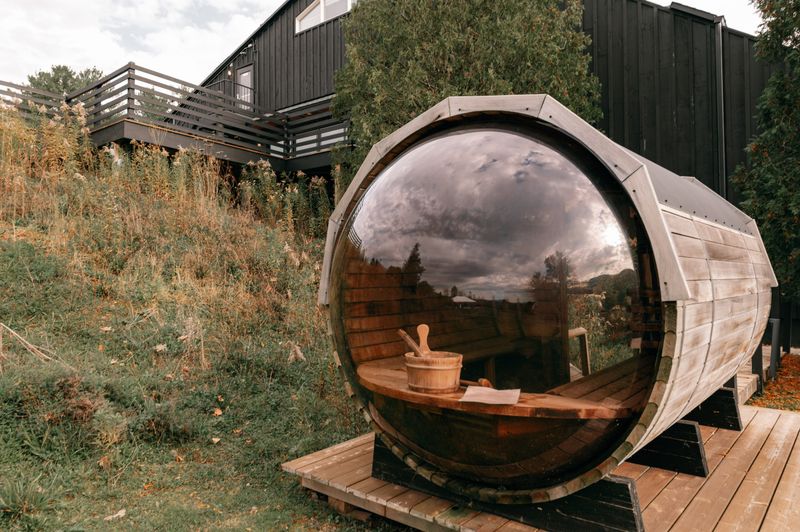
Sauna: Almost Heaven barrel sauna, 2-person (~$2,200–2,800). Wood-fired or electric. Traditional Finnish-style, gets to 190°F. The authentic experience. Permanent outdoor installation, but will last 15–20+ years with basic maintenance.
Cold plunge: Ice Barrel 400 (~$1,200). Upright barrel design that fits most body types, insulated to hold cold longer, uses ice. No electricity required — a major advantage for outdoor installs where running power to a chiller isn't practical.
Best for: Homeowners who want a genuine outdoor contrast therapy setup without a chiller's maintenance complexity. The Almost Heaven + Ice Barrel combination is a top-value pairing. See our full barrel sauna guide for specific model comparisons.
Under $8,000 — Serious Setup
Sauna: Dundalk LeisureCraft barrel sauna, 4-person (~$3,500–5,000). Canadian-made, premium cedar, built for serious use. Handles temperature cycling better than cheaper models, which matters when you're using it daily.
Cold plunge: Plunge Original with chiller (~$4,990). The chiller eliminates the ice entirely — set a target temperature, it holds it. The Plunge Original maintains 39–105°F without any ice input. Running cost is approximately $1–3/month in electricity depending on ambient temperature. See our best cold plunge tubs guide for detailed chiller comparisons.
Best for: Anyone doing contrast therapy 4+ days per week. The ice cost elimination pays back the chiller premium within 12–18 months at typical usage.
Premium — The Full Build
Sauna: Sun Home Luminar infrared sauna (~$5,000–7,000). Full-spectrum infrared with low EMF, chromotherapy lighting, Bluetooth audio. The luxury tier. Infrared saunas heat differently than traditional — core temperature rises without ambient temperature being as high, which some users find more comfortable for longer sessions. Read our detailed infrared sauna guide to understand the tradeoffs vs. traditional.
Cold plunge: Plunge Pro (~$8,990). Commercial-grade chiller, ozone filtration, app control, and larger tub capacity than the Plunge Original. Designed for serious daily use.
Best for: Home wellness studios, dedicated recovery rooms, or anyone for whom the premium experience is part of the value — not just the physiology.
Equipment Resources
Space Planning & Electrical Requirements
This is the detail most buyers skip — then regret. A sauna and cold plunge together take up more space and more electrical capacity than most people anticipate.
Minimum Square Footage
| Setup Size | Sauna Footprint | Cold Plunge Footprint | Movement Space | Total Minimum |
|---|---|---|---|---|
| 1-person | 4×4 ft (16 sq ft) | 4×2 ft (8 sq ft) | 6–8 sq ft | 30–35 sq ft |
| 2-person | 4×6 ft (24 sq ft) | 5×3 ft (15 sq ft) | 10–12 sq ft | 50–55 sq ft |
| 4-person | 6×8 ft (48 sq ft) | 6×3 ft (18 sq ft) | 15–20 sq ft | 80–90 sq ft |
Indoor vs. outdoor: Outdoor setups benefit from ventilation (no moisture management issues from sauna steam), but require weatherproofing for both units and frost protection for any chiller. Indoor setups need proper vapor barrier construction, adequate ventilation (minimum 1 CFM per square foot of sauna floor space), and floor drainage for the cold plunge. A dedicated room with a floor drain is the cleanest indoor solution.
Electrical Requirements
| Equipment | Voltage | Amperage | Dedicated Circuit Required? |
|---|---|---|---|
| Traditional sauna (6kW) | 240V | 30A | Yes |
| Traditional sauna (9kW) | 240V | 40A | Yes |
| Infrared sauna (1-person) | 120V | 15A | Yes (standard) |
| Infrared sauna (2-person) | 240V | 20–30A | Yes |
| Cold plunge chiller (1/4 HP) | 120V | 15A | Recommended |
| Cold plunge chiller (1/2 HP) | 240V | 20A | Yes |
| Ice-based cold plunge | N/A | N/A | N/A — no electrical needed |
Key point: If you're running a traditional sauna (240V/30–40A) and a chiller (120–240V/15–20A) simultaneously, plan for 50–60A of additional electrical capacity at your panel. Many older homes will need a panel upgrade — budget $1,500–3,000 for that in addition to the equipment cost. Get an electrician's assessment before purchasing.
Safety Considerations
Contrast therapy is physiologically more intense than either sauna or cold plunge used independently. The cardiovascular demands are additive — and for certain populations, they're contraindicated.
Who Should NOT Do Contrast Therapy
- Diagnosed cardiovascular conditions: Uncontrolled hypertension, arrhythmias, recent MI or stroke, severe heart failure. The rapid heart rate changes and blood pressure swings of contrast therapy are contraindicated. Consult a cardiologist before attempting any hot-cold protocol.
- Pregnancy: Core temperature elevation above 102°F is a teratogenic risk in the first trimester. Both sauna and cold plunge are generally contraindicated during pregnancy.
- Raynaud's disease or severe cold sensitivity: Cold plunge can trigger vascular spasms. Modified protocols (warmer cold water, shorter exposure) may be possible but require medical guidance.
- Recent surgery or open wounds: Wait until fully healed — both heat and cold can disrupt healing tissue.
Essential Safety Practices
- Hydrate before and during. Sauna produces significant sweat loss — up to 0.5–1L per session in a traditional sauna. Add the physiological demand of cold plunge and you need 500mL of water before the session, and water available between rounds. Dehydration accelerates orthostatic hypotension risk during transitions.
- Don't do your first session alone. First-time contrast therapy — especially with very cold water — can cause fainting in some individuals due to the vasovagal response triggered by cold shock. Have someone present until you know how your body responds.
- Zero alcohol. Alcohol causes vasodilation that compounds the sauna effect and masks early heat illness symptoms. A single drink before contrast therapy significantly elevates cardiac risk.
- 30–60 second transition pause. Never sprint from a 185°F sauna directly into 50°F water. The compound cardiovascular stress of elevated heart rate + sudden vasoconstriction is the highest-risk moment in the protocol. Walk slowly, take a breath, then enter the cold.
- Exit the cold plunge immediately if you experience chest pain, severe dizziness, or shortness of breath. These are not "pushing through discomfort" situations.
Frequently Asked Questions
Do I need both a sauna and cold plunge for contrast therapy?
Ideally yes — a genuine sauna and a cold plunge tub deliver the full vasodilation-vasoconstriction cycle. However, you can approximate contrast therapy with a very hot shower followed by a cold shower; it's less effective because water conducts heat away 25x faster than air (making a hot shower harder to sustain at high skin temperature), but the neurochemical response still occurs. The more complete the temperature differential and the more thorough the body coverage, the more pronounced the effect. A full immersion cold plunge is meaningfully superior to a cold shower for the same reason: full-body immersion maximizes the cold shock response.
Can I use a hot shower instead of a sauna?
As a substitute, yes — a 10-minute hot shower at maximum temperature will raise skin temperature enough to trigger some vasodilation and early endorphin release. But it's meaningfully less effective than a proper sauna. A Finnish sauna at 175–185°F raises core temperature by 1–2°C over 15–20 minutes, a response that takes far longer to achieve in a shower, if it occurs at all. Most of the cardiovascular benefits documented in research — including the Laukkanen et al. 20-year Finnish study — were from traditional Finnish saunas. Hot tubs (102–104°F) are a more effective sauna substitute than showers, as they provide full-body heat immersion.
How long should I stay in the cold plunge during contrast therapy?
2–4 minutes per round is the research-supported range. Beginners should start with 60–90 seconds. In contrast therapy specifically, you're doing multiple rounds — total cold exposure volume across the session matters more than any single round duration. Going beyond 4–5 minutes per round in 50–55°F water adds cardiovascular risk and discomfort without proportional additional benefit. The norepinephrine surge occurs within the first 30–60 seconds of cold immersion; the remaining time maintains the vasoconstriction phase. Your goal is controlled, repeatable exposure — not maximum endurance.
Is contrast therapy safe every day?
Daily contrast therapy is practiced widely in Nordic countries and by professional athletes during recovery blocks, and it's generally safe for healthy individuals without cardiovascular risk factors. The main limitation is not cardiovascular — it's the potential to blunt muscle adaptation if you're training for hypertrophy (see below). For general health, mood, and recovery: 4–7 sessions per week is reasonable for experienced practitioners. Start with 3 sessions per week to assess your body's response, and build from there.
Does contrast therapy blunt muscle growth?
Cold water immersion after resistance training does attenuate hypertrophy — this is well-supported by current research. A 2024 systematic review and meta-analysis by Piñero et al. in the European Journal of Sport Science confirmed that post-exercise CWI blunts anabolic signaling and reduces muscle fiber growth with resistance training over time. The mechanism: cold suppresses mTOR signaling and inflammatory cytokines that are necessary triggers for hypertrophic adaptation.
The practical workaround: time contrast therapy at least 4–6 hours after resistance training, or reserve it for cardio/endurance recovery days entirely. For athletes prioritizing strength or hypertrophy, contrast therapy before lifting (or the evening after morning training) provides the recovery and mood benefits without the adaptation blunting. If performance is the goal, don't do contrast therapy immediately post-workout.
What temperature should the sauna be for contrast therapy?
150–185°F (65–85°C) is the effective range for contrast therapy. Below 150°F, core temperature elevation is minimal and the vasodilation effect is reduced. Above 185°F, the cardiovascular strain increases without proportional additional benefit, and heat illness risk rises — particularly problematic when you're about to also do cold plunge. Traditional Finnish saunas typically run 175–185°F; infrared saunas typically run 120–150°F (and compensate through longer session times, since the heating mechanism is different).
Get weekly guides from PlungeHQ
No spam. Unsubscribe anytime.