⚡ Quick Answer
The Sun Home Nova ($11,099) is the best traditional sauna for 2026 — a 3-person indoor sauna with a HUUM DROP Wi-Fi electric heater, Canadian cedar interior, and a hand-laid Estonian carbonized tile wall that delivers a genuinely premium löyly experience. For an authentic outdoor barrel option, the Dundalk Georgian Barrel (dealer pricing) pairs real Canadian red cedar with a Harvia heater at a fraction of the price. Budget pick: the Almost Heaven Pinnacle (~$5,302) is the most affordable real traditional sauna that doesn't cut corners on the heater.
How We Researched This Guide
Disclosure: PlungeHQ has not physically tested all products on this page. This guide is an editorially researched comparison based on manufacturer specifications, warranty documentation, published third-party test data, and competitive analysis — all verified against official product pages as of August 6, 2026. Products marked "specification-researched" were not physically tested by PlungeHQ. Our recommendations are never influenced by affiliate commission rates.
Verification sources: Sun Home Nova product page | Nova 3 spec sheet (PDF) | Sun Home warranty | Sun Home safety testing | Dundalk Leisurecraft | Almost Heaven Saunas
What Makes a Sauna "Traditional"?
A traditional sauna — sometimes called a Finnish sauna — heats the air in the room to 150–230°F using an electric heater or wood-burning stove topped with volcanic stones. You sit in that hot air, and periodically someone ladles water onto the hot stones, releasing a burst of steam called löyly. The humidity spike is instant and intense, and it's the defining sensory signature of a real sauna session — something no infrared panel can replicate.
This is fundamentally different from an infrared sauna, which heats your body directly using infrared light panels at much lower air temperatures (120–150°F). Both deliver real health benefits and a genuine sweat, but they're different technologies with different installation requirements, different price points, and — for a lot of buyers — a different feel entirely. If you've never experienced löyly, it's worth knowing what you're buying into: traditional sauna is hotter, more humid at intervals, and generally considered the more intense, more authentic experience.
Traditional saunas come in two broad installation categories. Indoor cabin saunas (like the Sun Home Nova) are built for a spare room, basement, or garage, with insulated walls and a vapor barrier to manage the humidity spike. Outdoor saunas — barrel-shaped or box-shaped — are built to handle weather exposure year-round and are typically installed on a deck, patio, or dedicated pad in the backyard.
Both configurations need a heater — electric or wood-burning — and both need real wood construction (usually cedar or hemlock) that can withstand repeated heating and cooling cycles without warping. We cover both categories below, since "traditional" describes the heating method, not a single form factor.
For the deeper comparison between traditional and infrared technology — sweat output, health research, running cost, and which one is right for your goals — read our full Infrared Sauna vs. Traditional Sauna breakdown.
How We Scored Each Traditional Sauna
Every traditional sauna in this guide was evaluated against the same criteria. Traditional saunas are judged differently than infrared — the heater, rock quality, and ventilation matter more than wavelength coverage.
| Ranking Factor | Weight | What We Evaluated |
|---|---|---|
| Heater quality & performance | 30% | Heater type (electric vs wood-burning), kW rating, rock capacity, heat-up time, maximum temperature |
| Construction & materials | 25% | Wood species, wall thickness, insulation, bench construction, door seal quality |
| Ventilation & steam quality | 15% | Fresh air intake, exhaust placement, loyly quality, heat stratification |
| Installation & electrical | 10% | Circuit requirements, foundation needs, assembly complexity, permits |
| Warranty & service | 10% | Heater warranty, cabinetry coverage, labor, service network |
| Comfort & capacity | 5% | Bench layout, ceiling height, realistic capacity, changing room |
| Price-adjusted value | 5% | Heater power and build quality per dollar |
Important: This is an editorial weighting model based on manufacturer specifications verified against official product pages as of August 6, 2026. PlungeHQ has not physically tested all products on this page.
Best Traditional Saunas 2026: Quick Comparison
| Model | Price | Capacity | Heater | Wood | Install Type | Verdict |
|---|---|---|---|---|---|---|
| Sun Home Nova | $11,099 | 3 | HUUM DROP electric, 6kW, Wi-Fi | Canadian cedar | Indoor | Best overall |
| Dundalk Georgian Barrel | dealer pricing | 4 | Harvia electric | Canadian red cedar | Outdoor (barrel) | Best barrel traditional |
| Almost Heaven Pinnacle | ~$5,302 | 2 | Electric, 6kW | Hemlock | Outdoor (barrel) | Best budget traditional |
Best Overall: Sun Home Nova
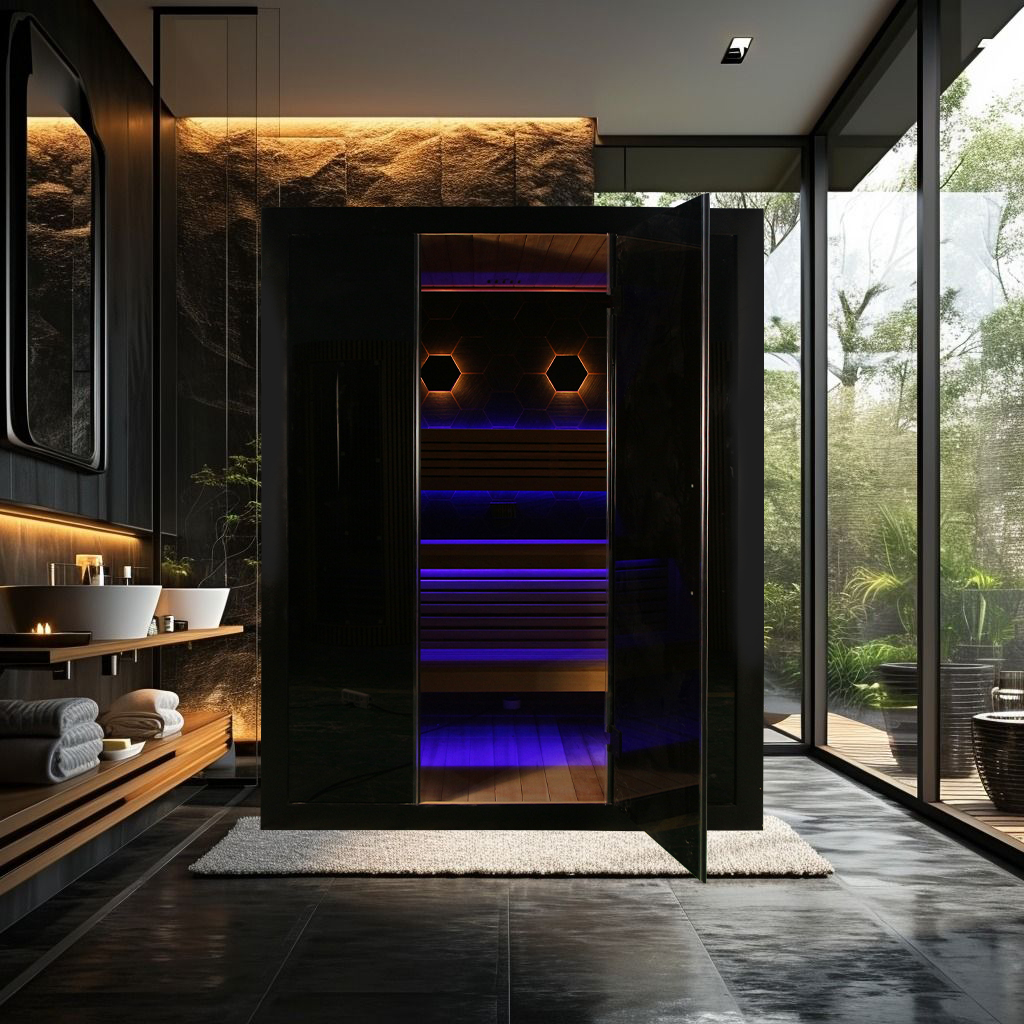
Sun Home Nova 3-Person Indoor Traditional Sauna
- HUUM DROP Wi-Fi electric heater — 6kW, reaches up to 230°F, controlled from the HUUM app
- Hand-laid Estonian carbonized tile wall behind the heater — a genuinely premium visual and functional detail
- Canadian cedar interior throughout — classic sauna aroma, naturally rot- and moisture-resistant
- Double-stacked benches — sit lower for gentler heat or higher for the most intense zone in the room
- Built-in electronic ventilation — manages humidity and airflow automatically, no manual vents to fuss with
- App control via HUUM — preheat remotely, adjust temperature from your phone, schedule sessions
- Limited lifetime warranty — Sun Home stands behind the build for as long as you own it
The Sun Home Nova is our top pick for 2026 because it takes the traditional sauna experience seriously in every detail that matters. The HUUM DROP heater is a genuine step up from the generic electric heaters bundled with most cabin saunas — it's a Wi-Fi-connected 6kW unit capable of reaching 230°F, controlled through the HUUM app so you can preheat from your phone before you even get home. HUUM is an Estonian brand with a strong reputation among sauna purists, and pairing it with a hand-laid carbonized tile accent wall gives the Nova a build quality that photographs and feels more like a boutique spa installation than a big-box sauna kit.
The Canadian cedar interior delivers the aroma and moisture handling that traditional sauna fans expect, and the double-stacked bench layout means you can dial in your own intensity — lower bench for a gentler introduction, upper bench for the full blast of heat that rises to the ceiling. Built-in electronic ventilation takes the guesswork out of humidity management, which matters more indoors than outdoors since there's no open-air dissipation.
The catch, and it's a real one: the Nova requires a dedicated 240V/30A circuit — this is non-negotiable for a 6kW heater, and if you don't already have the electrical capacity near your installation spot, budget for an electrician (see the Electrical Requirements section below). At $11,099 (on sale from $12,499), it's a serious investment. But for a 3-person indoor sauna with app control, premium tile work, and a limited lifetime warranty, it's the traditional sauna we'd point most buyers toward if budget isn't the primary constraint.
Specification-researched. Specs verified against manufacturer product page, official spec sheet (PDF), and warranty documentation, August 6, 2026.
Best for: Buyers who want an authentic Finnish sauna experience with electric or wood-burning heat. The Nova uses premium Western Red Cedar, a 6kW or 8kW heater, and spacious bench seating. Good for 3-5 people.
Not ideal for: Anyone wanting infrared — this is a traditional hot-rock sauna operating at 180-210°F. Budget buyers — at its price point, the Nova is positioned as a premium traditional sauna. Requires 240V electrical and a proper foundation.
Why it won: The Nova combines Sun Home's build quality (marine-grade hardware, premium cedar) with a properly specced heater and rock capacity for genuine loyly. Most traditional saunas at this size compromise on either the heater or the wood.
Closest alternative: The Dundalk Georgian Barrel offers similar traditional heat in a barrel format at a lower price — a good alternative if you prefer the barrel aesthetic or have space constraints.
Best Barrel Traditional: Dundalk Georgian Barrel
Dundalk Georgian Barrel Sauna
- Real Canadian red cedar — superior rot resistance and the classic cedar aroma
- Harvia heater — the Finnish industry standard, reliable and widely serviced
- Curved barrel shape sheds rain and snow naturally — built for permanent outdoor installation
- Clear cedar benches and interior finishing, no knots to burn against
- Dundalk has decades of experience building outdoor sauna structures in Canada
If you want the authentic traditional experience but your budget or your outdoor space points you toward a backyard build instead of an indoor cabin, the Dundalk Georgian Barrel is the pick. Barrel saunas have a genuine functional edge outdoors — the curved roof sheds precipitation without any flat surfaces to pool water, and the cylindrical shape heats more evenly than a comparable box structure. Dundalk pairs their cedar construction with a Harvia electric heater, which is the same brand trusted throughout Finland's sauna industry, so you're not compromising on heat quality to save money on the structure.
At around $7,702 for a 4-person barrel with cedar and a name-brand heater, this sits well below the Sun Home Nova while still delivering a genuinely authentic traditional löyly experience — just outdoors, and with the maintenance responsibilities that come with any exterior wood structure (annual oiling, drain plug management). For readers who want the full breakdown on barrel sauna wood types, heater options, assembly reality, and weatherproofing, see our dedicated Best Barrel Saunas 2026 guide.
Specification-researched. Specs verified against manufacturer product documentation, August 6, 2026.
Best for: Buyers who want a traditional sauna in the barrel form factor with Canadian cedar construction. The Georgian Barrel seats 4-6 and is available with electric or wood-burning heat. Dundalk's cedar is a step above mass-market barrel sauna wood.
Not ideal for: Anyone wanting infrared — this is traditional heat. Barrel saunas have the same ergonomic tradeoff as all barrels: heat rises to the top, benches sit below the midline, and your feet may be cooler than your head.
Why it won: Dundalk Leisurecraft uses thicker cedar and better joinery than most competitors in the barrel category. The Georgian is their most popular model for good reason — it delivers the traditional sauna experience with Canadian build quality.
Closest alternative: The Almost Heaven Pinnacle (~$5,300) offers similar capacity and heater specs with US-based support — the primary difference is wood grade and origin.
Best Budget Traditional: Almost Heaven Pinnacle
Almost Heaven Pinnacle Barrel Sauna
- Lowest price point that still includes a real 6kW electric heater — no separate purchase needed
- Canadian hemlock — durable, minimal aroma, no strong odor if you're sensitive to cedar
- Panelized barrel assembly, ships pre-fit for a one-day build with a helper
- Almost Heaven is a U.S.-based company with an established customer service track record
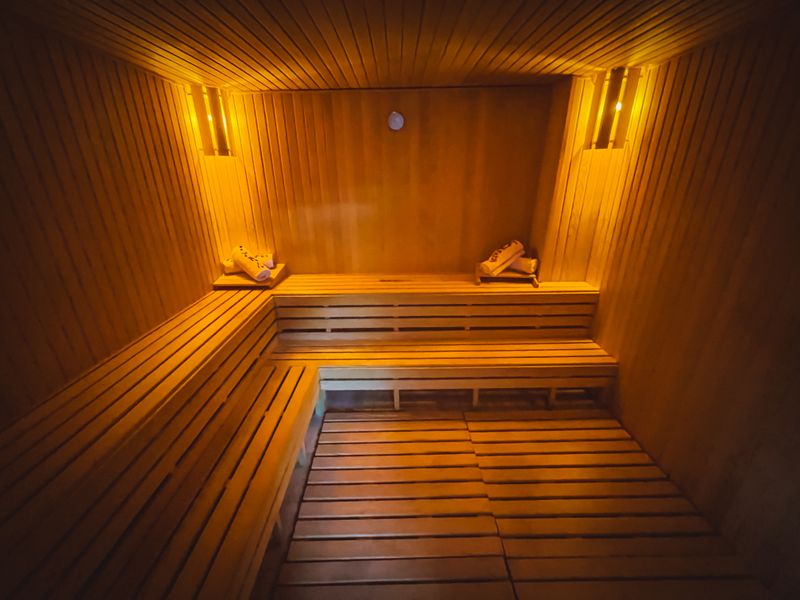
The Almost Heaven Pinnacle is proof you don't need to spend four figures to get a real traditional sauna experience. At roughly $5,302 with the 6kW electric heater included, this is the most affordable option on our list that doesn't cut the corner that actually matters — the heater. A lot of budget saunas skimp on heater quality or require you to buy one separately, which quietly adds $400–800 to the "budget" price. The Pinnacle avoids that trap. Hemlock construction holds up well outdoors and doesn't carry cedar's strong aroma, which some buyers actually prefer. For a 2-person entry point into traditional sauna ownership, this is where we'd start.
Specification-researched. Specs verified against manufacturer product documentation, August 6, 2026.
Best for: Buyers who want a traditional electric sauna at the entry-level price point. The Almost Heaven Pinnacle at ~$4,500 is a 4-person barrel sauna with a Harvia heater included — the lowest price for a complete traditional sauna from a major brand.
Not ideal for: Anyone wanting cabin-style (not barrel) traditional heat — the Pinnacle is a barrel. Users in extreme cold climates may find barrel insulation insufficient. The smaller 4-person capacity may not work for families.
Why it won: Almost Heaven bundles a Harvia heater (the gold standard in traditional sauna heaters) with a well-reviewed barrel kit at a price point that's hard to beat. Harvia heaters have parts availability and electrician familiarity that off-brand heaters don't.
Closest alternative: The Aleko BETA4 is even cheaper but uses a less established heater brand and thinner wood — the Pinnacle is the better value if you can stretch the budget.
Electric vs. Wood-Burning Heaters
Every traditional sauna, indoor or outdoor, needs a heater — and the choice between electric and wood-burning shapes your entire ownership experience.
Electric Heaters
Electric is the default for indoor saunas and increasingly common outdoors, for good reason: no chimney flue, no wood storage, no fire management during your session, and precise, repeatable temperature control. Most residential heaters run 4–9kW:
- 4–6kW: Adequate for 1–2 person saunas up to roughly 180 cu ft of interior volume
- 6–9kW: Needed for 3–4 person saunas, like the Sun Home Nova's 6kW HUUM DROP
- 9kW+: Commercial-grade, rarely necessary for home use
Trusted electric heater brands include HUUM (Estonian, known for elegant design and app connectivity), Harvia (Finnish, the long-standing industry standard), and Tylo (Swedish, premium). All electric heaters above roughly 4kW require a dedicated 240V circuit — see the section below.
Wood-Burning Stoves
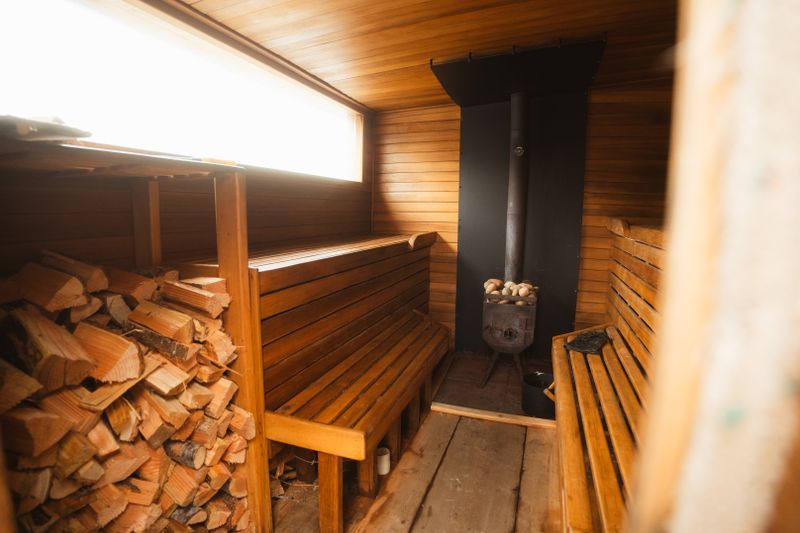
Wood-burning is almost exclusively an outdoor option (indoor installations require a roof-penetrating chimney flue, which isn't practical in most homes) and delivers what many consider the most authentic version of löyly — bigger stone mass, more dramatic steam, and higher achievable temperatures (up to 210°F with an aggressively managed fire). The trade-offs: 45–70 minutes to heat up, continuous fire tending during the session, a dry hardwood supply, and — in some municipalities — permitting restrictions on open-fire installations. For buyers who want the full ritual and don't mind the extra work, wood-burning is genuinely the more immersive choice. For buyers who want to push a button and be sweating in 30–45 minutes, electric wins.
Electrical Requirements
This is the most common surprise cost with a traditional sauna purchase, and it applies whether you're buying an indoor cabin like the Nova or an outdoor barrel.
Electric heaters above roughly 4kW require a dedicated 240V circuit — the same voltage as a clothes dryer or electric oven, not a standard 120V household outlet. A 6kW heater like the one in the Sun Home Nova needs a 240V/30A dedicated circuit at minimum. You'll need an open breaker slot in your panel and a licensed electrician to run the wiring to the sauna's location.
Typical electrician cost: $300–800, depending on the distance from your panel to the sauna and local labor rates. Budget on the higher end for outdoor installations that require underground conduit, or if your panel is already near capacity and needs an upgrade.
Requirements to expect on the electrician's scope of work:
- 10/2 or 8/2 wire gauge depending on amperage (check your specific heater's spec sheet)
- GFCI protection at the disconnect, required by code for wet-location equipment
- A weatherproof disconnect switch within sight of the sauna for outdoor installs
- Outdoor-rated conduit for any exposed exterior wiring runs
Don't attempt this as a DIY project even if you're electrically inclined — sauna heaters combine high voltage with a hot, humid environment, and improper wiring is a genuine fire and shock hazard. Most jurisdictions also require a permit and inspection for new 240V circuits. If you want to skip the electrical work entirely, a wood-burning outdoor sauna is the only traditional option that avoids it.
Traditional vs. Infrared: Quick Summary
Traditional saunas heat the room's air to 150–230°F and deliver heat to your body through convection and, periodically, a burst of löyly steam. Infrared saunas skip the hot-air step entirely and use infrared panels to warm your body directly at a much lower ambient temperature (120–150°F). Traditional wins on authenticity and delivers the steam experience central to Finnish sauna culture — and most of the landmark cardiovascular research (the Laukkanen studies out of Finland) was conducted using traditional saunas specifically. Infrared wins on convenience: faster and cheaper installation in many cases, lower running cost, and often no 240V requirement for 1-person units.
For the complete side-by-side — including sweat output, install cost, running cost, and which one fits your specific goals — read our full Infrared Sauna vs. Traditional Sauna comparison.
What the Research Says
Traditional Finnish-style saunas carry the deepest and most rigorous body of sauna health research available. The landmark study, Laukkanen et al. (2015) in JAMA Internal Medicine, followed 2,315 Finnish men for a median of 20.7 years and found that sauna use 4–7 times per week was associated with approximately 50 percent lower fatal cardiovascular disease mortality and 40 percent lower all-cause mortality compared with once-weekly sauna use. A follow-up study, Laukkanen et al. (2017) in Age and Ageing, found frequent sauna bathing was associated with a significantly reduced risk of dementia and Alzheimer's disease over the same long-term cohort.
These findings are among the most cited in the entire sauna wellness literature, and they specifically used traditional dry-heat saunas — not infrared. If cardiovascular and longevity benefits are your primary motivation for buying a sauna, the strongest available evidence points toward traditional sauna use at meaningful frequency (multiple sessions per week), which is worth weighing against the higher up-front investment and electrical requirements covered above.
Frequently Asked Questions
Sources & Further Reading
- Laukkanen JA, et al. (2015). Association between sauna bathing and fatal cardiovascular and all-cause mortality events. JAMA Internal Medicine.
- Laukkanen T, et al. (2017). Sauna bathing is inversely associated with dementia and Alzheimer's disease. Age and Ageing, 46.
- Hussain J & Cohen M. (2018). Clinical effects of regular dry sauna bathing: a systematic review. Evidence-Based Complementary and Alternative Medicine.
- PubMed — sauna and heat therapy research
Get weekly guides from PlungeHQ
No spam. Unsubscribe anytime.