⚡ Quick Answer
Under $500 you can get inflatable tubs, stock tanks, foldable tubs, and DIY chest freezer conversions — but not a chiller. The best value is a chest freezer conversion ($150–$300), which eliminates ice costs entirely. The best packaged option is the Cold Pod (~$100–160). All deliver identical cold therapy benefits to $5,000 tubs — you're just managing the cooling yourself.

What $500 Actually Gets You (Setting Real Expectations)
The $500 price ceiling is a hard filter. Here's what falls inside it — and what doesn't.
What you CAN get under $500:
- Inflatable tubs designed for cold plunging (Cold Pod, similar brands)
- Foldable/collapsible portable tubs
- Agricultural stock tanks (Tractor Supply, Rural King)
- A complete DIY chest freezer conversion
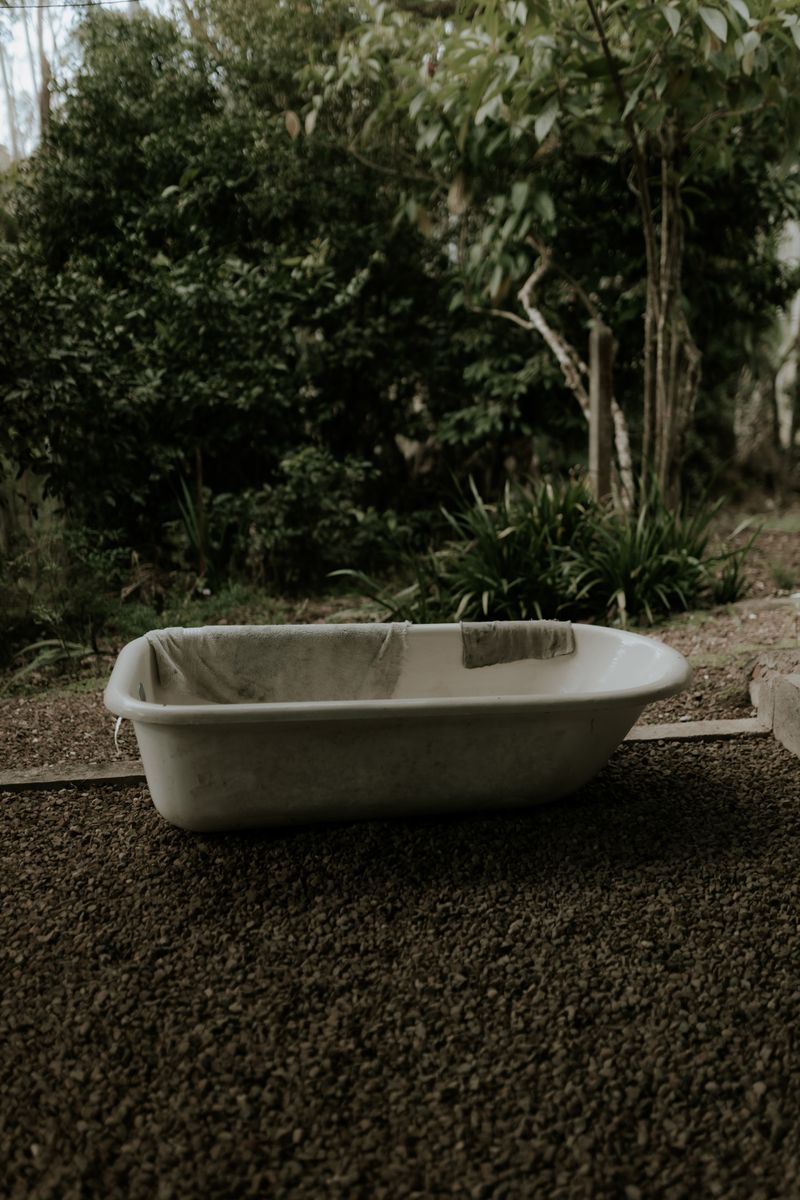
- A used bathtub or barrel repurposed as a cold plunge
What you CANNOT get under $500:
- A built-in chiller. Purpose-built chillers start at $600 and go up from there.
- Automatic filtration. Budget tubs require manual water changes.
- App control, UV sanitation, or ozone systems.
- Branded cold plunge tubs like the Plunge, Polar Recovery Tub, or Ice Barrel 300 (currently $1,149).
The critical implication: every option under $500 (except chest freezer conversions) requires ice to get cold. That matters enormously to your actual cost of ownership — more on that below.
What you're NOT sacrificing is the health benefit itself. Cold water at 50–59°F (10–15°C) triggers the same physiological responses regardless of the container. Norepinephrine spikes, brown fat activation, reduced inflammation, improved mood — these don't care whether you're in a $200 stock tank or a $5,000 Plunge Pro.

Quick Comparison: 5 Budget Cold Plunge Options
| Option | Price | Capacity | Temp Control | Footprint | Verdict |
|---|---|---|---|---|---|
| Chest Freezer Conversion | $150–300 total | ~40–55 gal (7 cu ft) | ✅ Electric — no ice | Garage/basement required | Best overall value. Pays for itself quickly. |
| Cold Pod Inflatable | ~$100–160 | ~80 gal | ❌ Ice only | Folds flat, stores anywhere | Best packaged option. Upright design works well. |
| Stock Tank (70 gal) | ~$80–150 | 70–150 gal | ❌ Ice or outdoor cold | Permanent outdoor install | Underrated. Built to last decades. |
| Foldable Tubs (generic) | ~$80–150 | ~50–80 gal | ❌ Ice only | Portable, collapses to bag-size | Best for travel or testing the habit. |
| Edge Theory Labs Ground Tub | ~$200–250 | ~100 gal | ❌ Ice only | Low-profile, fits in most spaces | Premium feel for the budget category. |
The Ice Math (Most Buyer Guides Skip This)
Here's the calculation nobody puts in their roundup: if you're using ice to keep your tub cold, that ice costs real money every single session.
Let's run the numbers. A 70-gallon stock tank needs roughly 40–60 lbs of ice to drop from room-temperature tap water (~60–65°F) to the therapeutic range (~50°F). That's 2–3 standard 20-lb bags. At $5–8 per bag, you're spending:
- 3x per week: $30–45/week → $120–180/month → $1,440–2,160/year
- 5x per week: $50–75/week → $200–300/month → $2,400–3,600/year
- Daily plungers: $70–100/week → $280–400/month → $3,360–4,800/year
Let that sink in. A daily ice user spends more on ice per year than a premium cold plunge tub costs upfront.
The chest freezer conversion changes everything. A 7 cu ft chest freezer costs $150–200 new (or $50–100 used). Running it 24/7 costs roughly $15–25/month in electricity. That's it. No ice runs, no temperature surprises, no guessing how many bags you need.
The payback math for someone plunging 3x/week:
- Ice approach: $120–180/month
- Chest freezer approach: $15–25/month (electricity) + $200 upfront
- Payback period: 1–2 months
Even for people who only plunge 2–3x per week, the chest freezer conversion pays for itself in under 3 months. After that, you're saving $100–150 every month compared to buying ice.
The implication: if you're going to stick with cold plunging, a chest freezer conversion isn't just the cheapest option — it's the most economical option over any time horizon longer than 90 days.
1. Chest Freezer Conversion — Best Overall Budget Pick
DIY Chest Freezer Cold Plunge
- Temperature-controlled without ice — set it and forget it
- Cheapest long-term option for regular plungers
- A 7 cu ft freezer comfortably fits most adults
- Holds 45–55°F consistently
- Pairs well with a basic submersible pump for circulation
A chest freezer conversion is the open secret of the cold plunge world. What professional athletes and biohackers figured out years before branded tubs existed: a standard chest freezer holds enough water to submerge an adult to the shoulders, and it maintains cold temperatures better than any passive tub can.
What you need:
- 7 cu ft chest freezer (Walmart, Home Depot, Costco): $150–200 new, $50–100 used from Facebook Marketplace
- Small submersible pump (keeps water moving, prevents stagnation): ~$15–25
- GFCI outlet nearby (essential for water safety): ~$15–20 if you don't have one
- Water sanitizer (hydrogen peroxide or ozone tablets): ~$10–15
- Thermometer: ~$10
- Optional: a pool liner or food-grade liner inside the freezer for easier cleaning: ~$20–40
Total setup cost: $200–280. That's it.
How it works: Fill the freezer with water, plug it in, set the thermostat to its coldest setting (most models go to about 0°F air temperature, which keeps water around 38–45°F — you can moderate this by adjusting the dial). Add your submersible pump for circulation and a cap of hydrogen peroxide for sanitation. Your first plunge is ready 24 hours after filling.
Key specs:
- Internal dimensions of a 7 cu ft freezer: roughly 42" L × 22" W × 22" D — plenty of space for anyone up to 6'2" in a seated position
- Water capacity: approximately 40–50 gallons
- Temperature range: you'll naturally stabilize around 45–55°F, which is ideal
- Power draw: ~100–150 watts, costing ~$15–25/month at average US electricity rates
Limitations: You need a garage, basement, or covered outdoor space. The freezer's exterior can sweat if in a humid area. You'll need to sanitize the water and drain/refill every 2–4 weeks. And it's not exactly Instagram-worthy — though function beats aesthetics for most people actually using it daily.
For the full setup guide including liner options, pump specs, and drainage solutions, see our complete chest freezer conversion guide.
2. Cold Pod Inflatable — Best Packaged Budget Option
Cold Pod Inflatable Cold Plunge Tub
- Dedicated cold plunge design — upright seated position
- Insulated walls significantly slow temperature rise
- Folds flat for storage, sets up in minutes
- Ideal entry-level option before committing further
- Wide enough for full shoulder submersion
The Cold Pod is the most purpose-built budget cold plunge on the market. Unlike generic foldable tubs that are basically soft-sided bathtubs, the Cold Pod is designed specifically for cold therapy — it keeps you in an upright seated position, which is actually better for cold exposure than lying flat (more surface area exposed to air, helping regulate your breathing and mental state).
The insulated walls are a real advantage. Without insulation, a standard inflatable tub warms up in 30–45 minutes. The Cold Pod slows this significantly, giving you more plunge time per batch of ice.
The ice math for Cold Pod users (3x/week):
- Cold Pod capacity: ~80 gallons
- Ice needed to reach 55°F from 65°F tap water: 30–40 lbs (~2 bags)
- Cost per session: $10–15
- Monthly cost: $120–180
The Cold Pod makes sense if you're testing whether cold plunging will stick as a habit, or if you don't have space for a chest freezer. It's also the most portable option in the comparison — you can take it to a vacation rental, a hotel, or a friend's house.
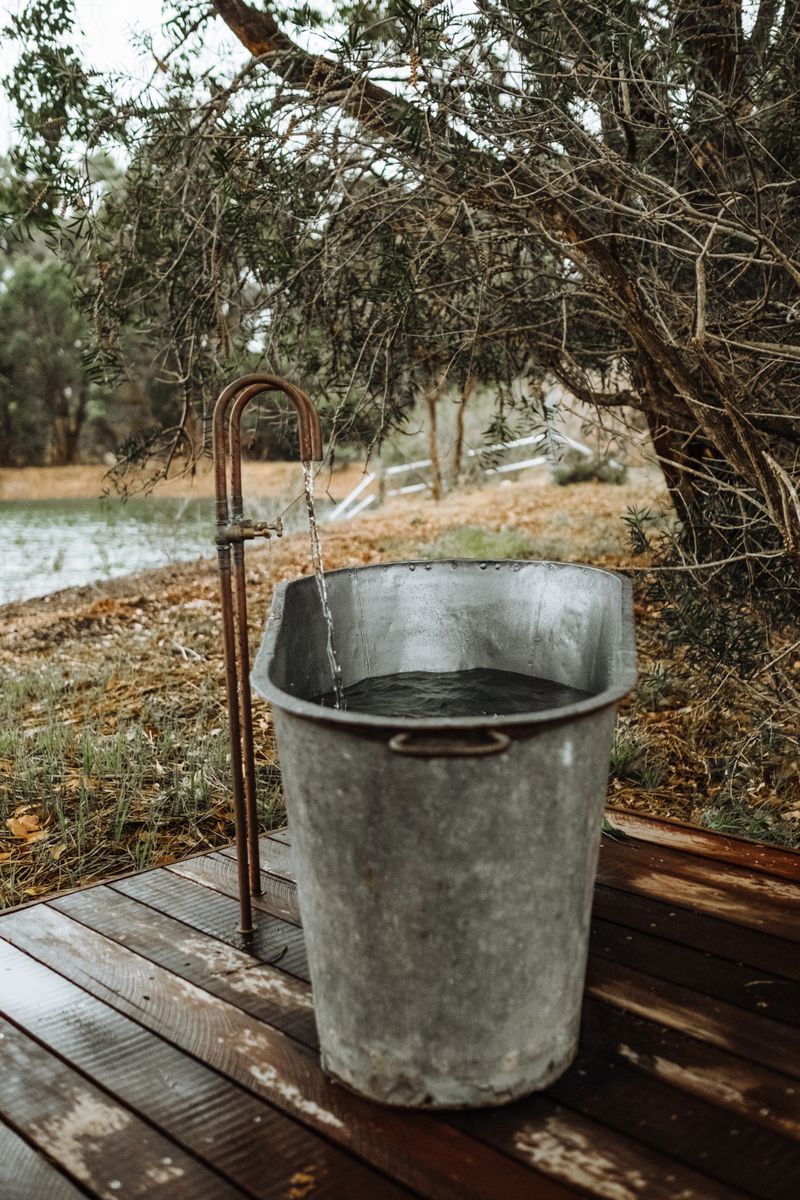
3. Stock Tank — Underrated Outdoor Champion
Galvanized Steel Stock Tank (70–150 gal)
- Agricultural-grade construction — designed to hold animals and water for decades
- Larger capacity than most inflatable options
- In winter climates, outdoor air temperature does the cooling for free
- Easy to add a pump, cover, or even a chiller later
- Rubbermaid and Behlen are the go-to brands
Before $5,000 cold plunge tubs existed, this is what professional sports teams used. The stock tank is a galvanized steel or heavy-duty polyethylene trough originally designed for livestock water. It turns out to be nearly perfect for cold plunging.
Why stock tanks are underrated:
- Durability: A Rubbermaid 150-gallon stock tank will outlast any inflatable tub by 15–20 years. These things are built to survive cattle, horses, and outdoor elements.
- Free cooling in winter: If you're in a climate that drops below 45°F for 4–6 months a year, your stock tank cools itself. Fill it up, set it outside, and the ambient temperature does the work. This effectively makes cold plunging free (beyond the water cost) for half the year.
- Upgrade path: Stock tanks accept standalone chillers, pumps, and filtration systems. Buy a $100 tank now, add a $700 chiller in a year when you're committed — you've got a $800 setup that performs like a $2,000 tub.
- Size options: 70-gallon (about $80–110, fits most people in a bent-knee position), 100-gallon (~$110–140), 150-gallon (~$140–180, full stretch).
Stock tank limitations: No insulation means water temperature fluctuates. In summer or warmer climates, you'll need significant ice. Galvanized steel can develop mineral deposits over time that require scrubbing. And it's large — this is an outdoor-only or large-garage setup.
For year-round use without a chiller, this is the best option for people in cold climates with outdoor space. For summer or warm-climate users, pair it with a chiller or plan on significant ice costs.
4. Generic Foldable Tubs — Best for Portability
Foldable Ice Bath Tubs (Vprocebl, Polar Pod, similar)
- Folds to roughly carry-on luggage size
- Sets up in under 5 minutes
- Most include an insulated cover to slow warming
- Cheapest entry point for testing cold plunging
The generic foldable tub category has exploded in the last two years. Brands like Vprocebl, Polar Pod, and dozens of similar products all follow the same basic design: a soft-sided cylindrical tub with an insulating ring, a cover, and a drain plug. They range from $80 to $150 and are widely available on Amazon.
These are the right choice if you're testing whether cold plunging will stick as a habit, you travel frequently and want to maintain your practice, or you simply don't have space for anything larger. At under $100, they're the lowest-risk way to start.
Be realistic about limitations: foldable tubs have less insulation than the Cold Pod, they're harder to keep clean over time, and the materials vary wildly in quality. Read reviews carefully for your specific model — cheap versions develop leaks within a few months.
5. Edge Theory Labs Ground Tub — Premium Budget Feel
Edge Theory Labs Ground Tub
- Purpose-built cold plunge, not an inflatable repurpose
- Low-profile design — easier to get in and out
- More durable materials than generic foldable options
- Holds ~100 gallons for full-body immersion
The Edge Theory Labs Ground Tub sits at the premium end of the sub-$250 range. It's not inflatable — the shell is more rigid and durable than the soft-sided options. At $200–250, it costs more than the Cold Pod but feels more permanent. The low-profile design is genuinely useful for people with limited mobility who struggle getting in and out of taller tubs.
Like all tubs in this price range, it requires ice for cooling. Consider it the step up for someone who's tested cold plunging with a cheaper tub and wants something that feels more like a real setup without a $1,000+ investment.
Maintenance Without Filtration
Every option under $500 (except the chest freezer, which has no continuous flow issue) lacks automatic filtration. This means you're responsible for keeping the water clean. It's not complicated — here's how:
Option 1: Hydrogen Peroxide (Recommended)
Add 1–2 cups of 3% hydrogen peroxide per 100 gallons of water. Hydrogen peroxide is a safe, effective oxidizing sanitizer that breaks down harmlessly into water and oxygen. It won't irritate skin, doesn't leave a chemical taste, and is safe to dispose of anywhere. Add a fresh dose every 3–5 days and do a full water change every 1–2 weeks.
Option 2: Pool Sanitizer Tablets
A slow-dissolve pool tablet (1-inch trichlor tablet) in a floating dispenser will keep water sanitized for 1–2 weeks. Use ¼ to ½ a tablet per 100 gallons. Test with a pool strip to keep free chlorine between 1–3 ppm. More aggressive than hydrogen peroxide but effective for larger volumes like stock tanks.
Option 3: Ozone Tablets
Ozone tablets (sometimes sold as "pool oxygen" tablets) are a chemical-free alternative that generates ozone on contact with water, killing bacteria and oxidizing contaminants. More expensive per treatment than hydrogen peroxide but very effective and leaves no residue.
Circulation Matters
Stagnant water grows bacteria faster. A small submersible aquarium pump (~$15–20) circulating the water significantly extends the time between changes. This is especially important for chest freezer conversions where the sealed environment can promote growth.
How Often to Change Water?
- With sanitizer + pump: every 2–4 weeks
- Without sanitizer: every 3–5 days
- Chest freezer conversions: every 3–4 weeks (colder water slows bacteria growth)
- After illness: drain and refill immediately
Ice Sourcing Tips
If you're using ice regularly, buying in bulk matters. A 20-lb bag from a gas station runs $3–5. The same 20-lb bag from a grocery store or Walmart is often $2–3. Restaurant supply stores sell 40-lb bags for $4–6. If you have a large standalone freezer, buying bags in bulk and storing them can cut ice costs significantly. Some members of Facebook Marketplace sell bulk ice wholesale — worth checking if you're a frequent plunger.
Who Should NOT Buy Under $500
Be honest with yourself here. A sub-$500 setup makes sense for some people and is genuinely the wrong choice for others.
Skip the budget options if:
- You plan to plunge daily. At daily frequency with ice, you'll spend $200–400/month. A chiller-equipped setup (Plunge, Ice Barrel 300, or a stock tank + standalone chiller) pays for itself within 1–2 years and eliminates the logistical friction of ice management forever.
- You want zero-maintenance convenience. Budget tubs require water changes, sanitizer additions, and ice runs. Premium tubs with filtration and chillers are nearly hands-off.
- You're in a climate where outdoor solutions don't work year-round. A stock tank in Florida requires year-round ice or a chiller. At 3x/week, that ice cost quickly justifies upgrading.
- You care about aesthetics. Chest freezers and stock tanks are functional, not photogenic. If the setup matters to you, the premium tubs are worth it.
If you're in any of these situations, read our full cold plunge buyer's guide for the complete picture at every price point. For a true daily plunger, the lifetime cost math often makes a $3,000 investment smarter than a $200 one.
Shop Budget Cold Plunge Options
Cold Pod Inflatable →Chest Freezer DIY Kit →
Stock Tanks →
Foldable Tubs →
Frequently Asked Questions
Sources & Further Reading
Get weekly guides from PlungeHQ
No spam. Unsubscribe anytime.