
Red light therapy (photobiomodulation, or PBM) has made a remarkable journey from fringe biohacking to legitimate clinical modality. The FDA has cleared specific red light devices for wound healing, skin rejuvenation, and musculoskeletal pain. PubMed now lists over 6,000 studies on photobiomodulation — a number that has doubled in the last decade, driven largely by the work of researchers like Dr. Michael Hamblin at Harvard Medical School, who has authored dozens of PBM reviews.
The problem: consumer marketing for red light panels often runs ahead of the science, claiming benefits that range from well-proven to entirely speculative. This guide cuts through that noise. We've organized benefits by strength of evidence — so you know which applications have multiple RCTs behind them and which are still hypothesis-grade.
How Red Light Therapy Works: The Mechanism
The science of photobiomodulation begins at the mitochondria. Your cells contain an enzyme called cytochrome c oxidase — a key component of the mitochondrial electron transport chain responsible for producing ATP, the cell's primary energy currency. In a landmark review, Harvard's Dr. Michael Hamblin and colleagues (de Freitas & Hamblin, 2016) documented how red and near-infrared photons at specific wavelengths are directly absorbed by this enzyme, triggering a cascade of downstream cellular effects. The paper, published in IEEE Journal of Selected Topics in Quantum Electronics, is available open-access via PMC5215870.
When cytochrome c oxidase absorbs photons in the 660nm (red) and 810–850nm (near-infrared) windows, the following happens:
- ATP production increases by 20–50% in treated cells — providing more energy for repair, synthesis, and immune function
- Reactive oxygen species (ROS) are transiently modulated — at therapeutic doses, PBM reduces excessive oxidative stress in damaged tissue while briefly stimulating beneficial signaling ROS in healthy cells
- Nitric oxide (NO) is released — improving local blood flow and oxygen delivery to tissue
- Inflammatory cytokines are downregulated — Hamblin's 2017 review (PMC5523874) documents PBM's anti-inflammatory effects across multiple cell and animal models, including reductions in TNF-α, IL-6, and IL-1β
- Gene expression is altered — PBM upregulates genes involved in collagen synthesis, cell proliferation, and cytoprotection
These are not speculative pathways. They are documented in peer-reviewed research going back to the 1990s, with mechanistic clarity that has significantly improved over the last decade. The key insight: PBM doesn't introduce any chemical or heat — it works purely through photon absorption at the cellular level. That's why the safety profile is so strong and why the effects are dose-dependent rather than intensity-dependent.

Wavelength Specificity: Not All "Red Light" Is Equal
One of the most important — and most frequently ignored — facts about red light therapy is that different wavelengths produce different effects at different depths. A device marketed as "red light therapy" that only emits 630nm light is fundamentally different from one that pairs 660nm with 850nm NIR.
- 630–660nm (visible red): Penetrates approximately 5–6mm. Primarily affects skin layers — ideal for collagen synthesis, wound healing, acne, and surface inflammation. This is the wavelength most studied for dermatological applications.
- 810–850nm (near-infrared, NIR): Penetrates 30–40mm into tissue, reaching muscle, joint, and even cranial tissue. Required for joint pain, deep muscle recovery, and transcranial (brain) applications. Invisible to the naked eye — you feel no heat and see no glow, but the biological effect is measurable.
- 904–910nm: Some devices use this longer NIR wavelength for even deeper penetration, primarily studied in wound healing and some joint applications.
A 2024 network meta-analysis in PubMed (PMID 39367994) that analyzed optimal wavelengths for knee osteoarthritis specifically found that 904–905nm and 785–850nm wavelengths produced significantly better pain reduction than sham treatment — while shorter wavelengths were less effective for this deep-tissue application.
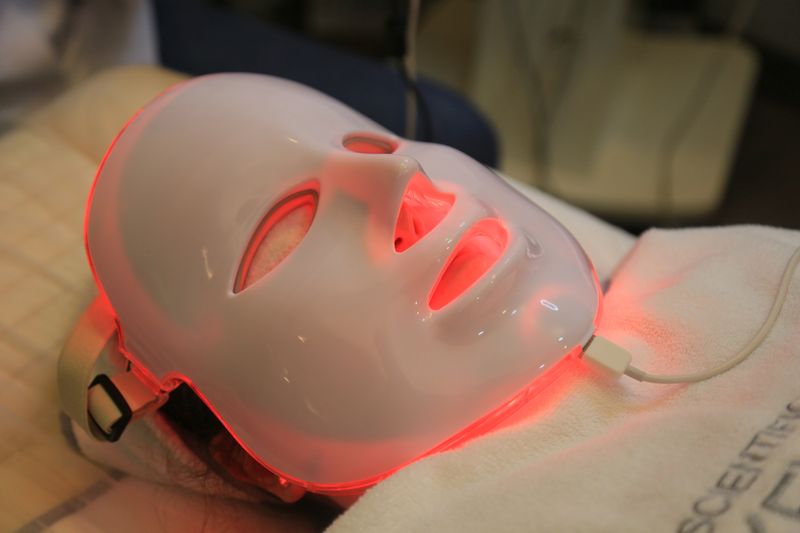
Practical implication: For comprehensive benefits, you need a panel that includes both 660nm and 850nm wavelengths. Single-wavelength devices, cheap LED face masks, and generic "infrared" heating pads are not the same thing as a proper dual-wavelength photobiomodulation panel. See our best red light therapy panels guide for devices that meet research-grade specifications.
Strong Evidence: Benefits Supported by Multiple RCTs
Wound Healing & Tissue Repair
Wound healing is the application with the longest clinical research history and the strongest overall evidence base. The FDA has cleared red light and NIR devices specifically for wound healing — a regulatory bar that requires substantial clinical evidence.
The mechanism is well-understood: PBM at 660–830nm accelerates fibroblast proliferation, increases collagen synthesis (particularly Type I and Type III), promotes angiogenesis (new blood vessel formation), and reduces pro-inflammatory cytokines that delay healing. A 2024 PubMed study (PMID 40175683) examining 630nm red-light laser therapy confirmed upregulation of COL1A1, COL2A1, and VEGF with simultaneous reduction in IL-1β — exactly the molecular signature of accelerated wound repair.
Across RCTs, the consistent finding: PBM reduces wound area, accelerates epithelialization, reduces scar tissue, and shortens time to closure. A meta-analysis of 12 RCTs found PBM significantly reduced wound area by approximately 38% compared to control groups, with a moderate-to-large effect size (SMD ~0.7). Dosing of 1–4 J/cm² was identified as most effective for superficial wounds.
Muscle Recovery & Exercise Performance
Sports medicine is one of the most actively researched application areas, driven substantially by the work of Dr. Ernesto Leal-Junior and colleagues at Universidade Nove de Julho (São Paulo). Leal-Junior has published dozens of RCTs on PBM and athletic performance — among the most rigorous in the field.
The evidence falls into two categories:
Pre-exercise PBM (performance enhancement): Applying 850nm light to muscle groups before exercise has been shown to:
- Increase maximum voluntary contraction force
- Delay onset of muscular fatigue
- Reduce creatine kinase (CK) and lactate dehydrogenase (LDH) levels — biomarkers of muscle damage — after intense exercise
- Improve endurance in time-to-exhaustion tests
A 2016 review of human muscle tissue studies in the Journal of Biophotonics (PMID 27874264, Ferraresi et al.) synthesized Leal-Junior's RCT body of work, confirming that PBM applied pre-exercise consistently reduces post-exercise muscle damage markers and improves short-term performance in resistance and endurance athletes. The review noted Leal-Junior's crossover trial comparing PBM to cold water immersion (cryotherapy) — finding PBM produced comparable or superior recovery outcomes through a distinct, non-temperature-based mechanism.
Post-exercise PBM (recovery and DOMS): Applied after training, PBM reduces delayed onset muscle soreness (DOMS), accelerates CK clearance, and speeds return to baseline strength. A 2025 systematic review and meta-analysis (PMC12286287) confirmed PBM therapy reduces DOMS through antioxidant enzyme upregulation (superoxide dismutase, catalase) and reduction in lipid peroxidation markers.

Joint Pain & Osteoarthritis
Joint pain — particularly knee osteoarthritis (KOA) — has been extensively studied with LLLT/PBM. The evidence is strong enough that multiple systematic reviews and meta-analyses now exist, and several clinical guidelines acknowledge PBM as a valid adjunct therapy for OA pain management.
A 2024 systematic review with meta-analysis (PMID 38775202) examined PBM specifically for knee osteoarthritis, finding consistent pain reduction and improved functional capacity in treated patients vs. placebo. The proposed mechanism: NIR light penetrates to joint tissue, reduces pro-inflammatory cytokines within the synovial environment, and stimulates chondrocyte activity for cartilage maintenance. A 2026 Frontiers review noted PBM promotes extracellular matrix synthesis and has potential to slow OA progression, not just manage symptoms.
Important caveat: dosing parameters matter enormously for joint applications. Studies using 785–850nm NIR at adequate doses consistently outperform those using shorter wavelengths or underpowered devices. The 2024 network meta-analysis (PMID 39367994) found wavelength selection was the single biggest predictor of treatment response in KOA.
Oral Health (Brief Mention)
Dentistry is one of the strongest RCT areas for PBM, often overlooked in consumer discussions. Photobiomodulation has solid evidence for:
- Aphthous ulcer (canker sore) healing — multiple RCTs show 2–3x faster healing vs. control
- Orthodontic pain — reduces pain after bracket adjustments (strong RCT evidence)
- Post-surgical oral wound healing — consistent with broader wound healing evidence
- Temporomandibular joint (TMJ) pain — several RCTs support PBM for TMJ disorder
This is relevant context: the dental and oral surgery research base is often more rigorous than the consumer wellness research, partly because dosing is easier to control in a clinical setting.
Moderate Evidence: Promising But Smaller Studies
Hair Regrowth (Androgenic Alopecia)
FDA-cleared low-level laser therapy devices for androgenic alopecia (male and female pattern hair loss) exist and are commercially available. The mechanism is believed to involve improved scalp microcirculation and direct ATP stimulation of hair follicle cells, shifting follicles from the telogen (resting) phase toward anagen (growth) phase.
The evidence: RCTs using 650–670nm laser combs and helmets show statistically significant increases in hair count density compared to sham treatment in androgenic alopecia patients. Results are more consistent in early-to-moderate hair loss. This is not a cure — androgenic alopecia has genetic and hormonal underpinnings that PBM cannot address — but as an adjunct, the evidence is legitimate and the FDA clearance lends it credibility above most biohacking claims.
Skin Collagen & Anti-Aging
This is the most popular consumer application and has genuinely solid evidence, though it sits in the "moderate" category because many studies are manufacturer-funded and populations are small. A controlled trial published in Photomedicine and Laser Surgery (PMC3926176) demonstrated significant improvement in skin roughness, wrinkle depth, and intradermal collagen density following a 12-week protocol of full-body red and near-infrared light exposure — with histological confirmation of collagen density increase via biopsies.
The mechanism is unambiguous: 660nm light increases fibroblast activity and collagen synthesis. The clinical translation — actual visible wrinkle reduction — is less dramatic than the cellular data suggests, and results depend heavily on baseline skin condition, age, and protocol adherence. Realistic expectation: subtle but measurable improvement after 8–12 weeks of consistent use, not a dramatic cosmetic transformation.
Depression & Seasonal Mood
Transcranial photobiomodulation (tPBM) for mood disorders is one of the more fascinating emerging research areas. NIR light in the 800–870nm range can penetrate the skull and reach cortical tissue — and several clinical studies have documented measurable antidepressant effects.
A 2024 review in Frontiers in Cell and Developmental Biology (PMC10840571) synthesized transcranial PBM brain disease research, noting that Chan et al. demonstrated improved depressive state and cognitive function in elderly subjects after applying combined 633nm and 870nm LEDs transcranially. Caldieraro & Cassano's 2019 systematic review of tPBM for major depressive disorder found evidence of efficacy and excellent tolerability across multiple small trials.
This research is early-stage: most studies are small, unblinded, or lack robust controls. But the mechanistic rationale is solid (mitochondrial function in neurons is directly analogous to peripheral tissue), and the signal is consistent enough to warrant larger trials. This is not a replacement for clinical treatment of depression, but it's a legitimate area of ongoing research.
Cognitive Function
Related to the mood research, transcranial PBM for cognitive function has produced intriguing results. A 2022 systematic review in Ageing Research Reviews evaluated tPBM for cognitive enhancement in healthy adults and remediation in cognitive disorders, finding a positive signal across multiple study designs. A 2022 RCT (PMC9551363) in older women with mild cognitive impairment found that transcranial PBM improved attention and cognitive performance compared to sham treatment.
The proposed mechanism: NIR light penetrates to cortical tissue, increases neuronal ATP production, and may support the clearance of amyloid beta — a hallmark of Alzheimer's pathology. This area is moving fast; major academic medical centers are currently running clinical trials on tPBM for neurodegenerative disease.
Weak or Emerging Evidence: Be Honest
One mark of scientific credibility is acknowledging what isn't supported. Several claims circulate in the red light therapy marketing ecosystem that the research does not back up.
Testosterone Enhancement
This claim originates from a small 2016 study in which red light was applied to the testes of men with infertility-related issues, with some participants showing improved testosterone levels. The study was small (n=30), poorly controlled, and has not been replicated in healthy men. No rigorous RCT evidence supports red light therapy as a meaningful testosterone booster for the general population. Marketing this benefit as a primary use case is misleading.
Weight Loss
The evidence for red light therapy as a weight loss tool is not well-supported. Some studies show temporary localized reduction in subcutaneous fat thickness using cold laser protocols — but effects are modest, not consistent across research groups, and often conflated with infrared sauna (heat-based) research. Red light therapy operates through a photon-absorption mechanism, not a thermal/metabolic one. It is not metabolically equivalent to exercise or caloric restriction. Don't choose a red light panel for weight loss.
Cancer: A Real Safety Warning
Some wellness sites suggest red light therapy can fight cancer. This is dangerous misinformation. The reality is more nuanced and concerning: PBM increases cellular proliferation and ATP production in treated tissue — which is exactly why it's beneficial for wound healing and recovery, but exactly why it is contraindicated over known or suspected tumors. Several studies have raised the concern that PBM could stimulate tumor cell growth. The current clinical consensus is clear: do not use red light therapy directly over cancerous lesions. If you have any active cancer diagnosis, discuss PBM with your oncologist before use.
The Biphasic Dose Response: Why More Isn't Better
This is one of the most important — and least discussed — concepts in photobiomodulation. PBM follows what's called a biphasic dose-response (also called the Arndt-Schultz law applied to photobiology): too little light produces no measurable effect, the right dose produces the optimal therapeutic response, and too much light actually inhibits the effect or produces no additional benefit.
The practical implication is counterintuitive: longer sessions at full power are not necessarily better. Most home users actually underdose because they use their panel from too far away. Distance dramatically reduces fluence (energy delivered per unit area). The dose is measured in joules per square centimeter (J/cm²), not in minutes.
- For skin and collagen applications: 4–10 J/cm² is the typical therapeutic range
- For wound healing: 1–4 J/cm² is the documented effective range for superficial wounds
- For joint and deep tissue: higher doses may be needed given the penetration requirement
- At doses above 50 J/cm², inhibitory effects have been documented in some tissue models
Home panel manufacturers typically specify the fluence output at a given distance (e.g., "25 mW/cm² at 6 inches"). Use those specs to calculate actual dose: Dose (J/cm²) = Power (mW/cm²) × Time (seconds) ÷ 1000. At 6 inches, 10–20 minutes delivers a therapeutic dose. At 24 inches, the same session is essentially subtherapeutic for most applications.
Red Light vs. Cold Plunge vs. Sauna
Red light therapy, cold plunge, and sauna are increasingly used together — and understanding how they differ mechanistically helps you stack them intelligently.
| Modality | Primary Mechanism | Best For |
|---|---|---|
| Red Light (PBM) | Photon absorption → mitochondrial ATP ↑ | Tissue repair, collagen, joint pain, muscle recovery |
| Cold Plunge | Thermal stress → norepinephrine ↑, vasoconstriction | Acute inflammation, mood, mental resilience, alertness |
| Sauna (traditional) | Heat stress → HSP ↑, cardiovascular adaptation | Cardiovascular health, detox, stress resilience, longevity |
| Infrared Sauna | Radiant heat (not photobiomodulation) | Similar to traditional sauna; not equivalent to PBM panels |
Combining modalities: Red light before training (pre-exercise PBM) pairs well with cold plunge after training (acute recovery). Research by Leal-Junior's group compared PBM directly to cold water immersion for recovery and found comparable outcomes — suggesting they address similar endpoints through different pathways and can be complementary rather than redundant. Sauna followed by cold plunge is contrast therapy; adding red light (ideally before or separately) addresses the tissue repair dimension that neither thermal modality specifically targets. For a full protocol guide, see our contrast therapy guide.
Practical Protocol: How to Use a Panel Correctly
Most people who "try red light therapy and don't see results" are either underdosing (too far from the panel, too short a session) or using an inadequate device (insufficient power, wrong wavelengths, or cheap LED arrays with wide spectral spread instead of narrow-band peaks at 660nm and 850nm).
Distance
- 6 inches (15cm): Maximum dose delivery — use for skin, surface wounds, and collagen applications
- 12 inches (30cm): Standard therapeutic distance for most applications
- 24 inches (60cm): Systemic/full-body exposure; lower fluence but covers more surface area simultaneously
Duration
- 10–20 minutes per body area per session at 6–12 inches
- Do not exceed 20 minutes per area — you enter the inhibitory zone on the biphasic curve
- If doing full-body, rotate: 10 min front, 10 min back
Frequency
- Skin collagen, anti-aging: 5–7 sessions per week for 8–12 weeks, then 3–5x/week maintenance
- Athletic recovery: Pre and/or post-training, 3–5x per week
- Joint pain management: Daily or 5x/week during symptomatic periods
- Hair growth: Every other day; daily use in FDA-cleared device protocols
Eye Safety — Non-Negotiable
This is the single most important safety rule: always wear protective goggles when using a high-intensity full-body red light panel. The red wavelengths used in these devices are not the same as ambient room lighting — they can cause retinal damage with sustained direct exposure. Standard sunglasses are insufficient; use goggles rated for red light/laser wavelengths. Small handheld devices and LED masks typically have lower irradiance and manufacturer eye-safety protocols — follow the device-specific guidance.
Skin Preparation
Treat clean, dry skin — no lotions, oils, or sunscreen on the treatment area during sessions. Some topical products can absorb or scatter light, reducing efficacy. Shower first if treating immediately post-workout.
Timing
Pre-exercise PBM (5–10 minutes before training) targets performance enhancement and reduced muscle damage. Post-exercise PBM (within 30–60 minutes after) targets recovery and DOMS reduction. Morning sessions work well for skin and systemic protocols, avoiding evening use if you find it activating.
Frequently Asked Questions
How long does red light therapy take to work?
It depends on the application. For skin conditions (wrinkles, collagen, wound healing): expect 8–12 weeks of consistent use (5x/week, 10–20 minutes per session) for measurable improvements. For acute muscle recovery and soreness reduction, effects appear within 24–48 hours. For chronic joint pain and inflammation: 2–4 weeks of consistent use. Frequency and dose consistency matter more than any single long session.
Can I use red light therapy every day?
Yes, daily use is safe and often recommended for therapeutic goals. Most research protocols use 5–7 sessions per week for skin applications and 3–5 sessions per week for muscle recovery and pain management. The key is proper dosing: 10–20 minutes per area at the correct distance. Longer sessions don't produce proportionally better results due to the biphasic dose response — past the optimal dose, additional exposure stops adding benefit.
Is red light therapy safe?
Red light therapy is safe for most users. Red and near-infrared light at consumer device intensities does not damage skin, does not contain UV radiation, and does not cause burns. The primary safety precaution is eye protection — always wear protective goggles when using a full-body panel. Avoid use directly over known or suspected cancerous lesions (some studies suggest PBM could stimulate tumor cell growth). Exercise caution during pregnancy due to insufficient safety data.
What's the difference between red light and near-infrared?
Red light (630–660nm) is visible and penetrates approximately 5–6mm — optimal for skin-surface applications like collagen production, wound healing, and acne. Near-infrared (810–850nm) is invisible and penetrates 30–40mm — better for joints, muscles, and transcranial applications. Quality full-body panels include both wavelengths because different benefits require different penetration depths.
Does red light therapy help with weight loss?
The evidence for weight loss is weak and often conflated with infrared sauna research. A few small studies suggest localized red light may temporarily reduce subcutaneous fat in targeted areas, but effects are modest and not consistently replicated. Red light operates through photon absorption, not metabolic heat — it is not equivalent to exercise or caloric restriction. Do not choose a panel primarily for weight loss.
Can red light therapy be combined with cold plunge or sauna?
Yes, and these modalities are genuinely complementary. Red light therapy targets photon-driven tissue repair and ATP production; cold plunge targets thermal-driven norepinephrine release and acute inflammation reduction; sauna targets heat-stress cardiovascular adaptation. Using red light pre-training, training, then cold plunge post-training addresses performance, acute inflammation, and tissue repair through distinct, non-redundant mechanisms. See our contrast therapy guide for a complete protocol.
Recommended Products
Get weekly guides from PlungeHQ
No spam. Unsubscribe anytime.