⚡ Quick Answer
The research-backed minimum effective dose is 2–4 sessions per week (approximately 11 minutes total). Daily is fine — and preferred by most advanced practitioners. For mood and mental health: daily. For muscle recovery: 2–3x/week, timed carefully. For metabolic and fat-loss benefits: 4–5x/week minimum. Critical rule: never cold plunge immediately after strength training — wait at least 4–6 hours if hypertrophy is a goal.
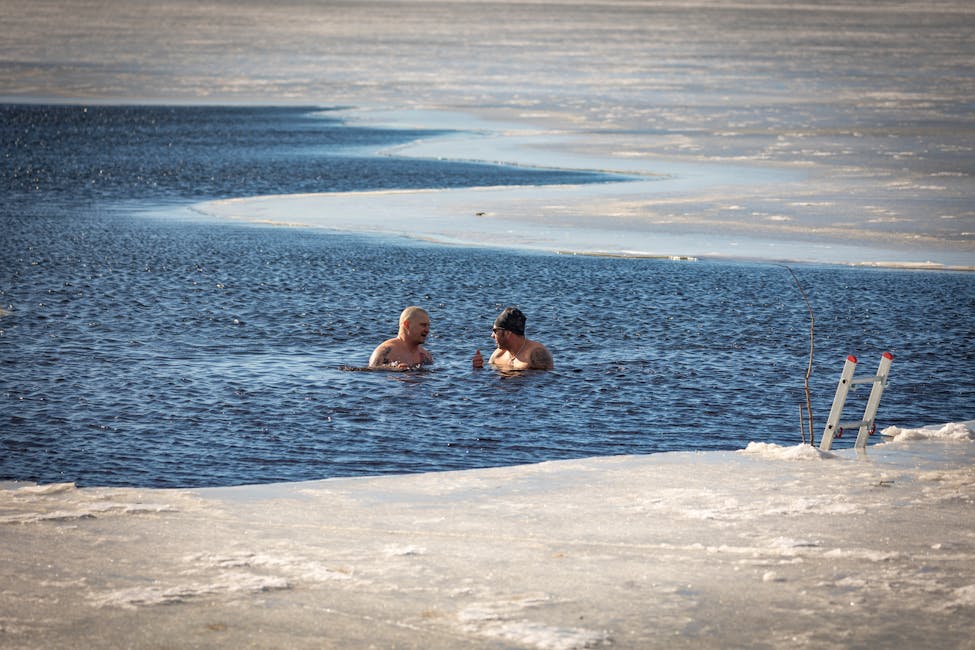
The Real Answer: What Research Actually Says
If you search "how often should you cold plunge," you'll find a wide range of opinions — from Wim Hof disciples who say daily is the only way, to cautious sports scientists who warn about overdoing it. The truth is more nuanced, and more useful.
The most important piece of published research comes from Søberg et al. (2021), published in Cell Reports Medicine. That study examined metabolic effects in regular winter swimmers — people who cold-plunged multiple times per week throughout the year. The key finding: cold water exposure drove measurable metabolic adaptation, including increased brown adipose tissue (BAT) activity and improved insulin sensitivity. When Andrew Huberman synthesized this study alongside the broader cold immersion literature, he landed on 11 minutes per week total as the minimum effective dose — split across 2–4 sessions, never all at once.
That 11-minute figure is Huberman's synthesis, not a direct output of Søberg's paper. It's a useful heuristic, but it's a floor, not a ceiling. Here's what "minimum effective dose" actually means in practice:
- Below the threshold (once a week, ~3 minutes): Acute neurochemical benefits per session, but no lasting metabolic or cold-adaptation effects.
- At the threshold (2–4x/week, 11 min total): Measurable catecholamine elevation, early BAT activation, mood regulation improvement over weeks.
- Above the threshold (5–7x/week): Better cold adaptation, stronger long-term neurochemical baseline, compounding habit benefits.
The catecholamine surge — the norepinephrine and dopamine spike that makes cold plunging feel transformative — was documented as early as Šrámek et al. (2000) in the European Journal of Applied Physiology. That study measured a 300% increase in norepinephrine and 250% increase in dopamine after 1 hour of cold water immersion at 14°C (57°F). Shorter, colder sessions produce similar relative surges in less time. Each cold plunge session produces an independent catecholamine hit — which is why consistent frequency matters more than session duration for mood benefits.
| Factor | Recommendation |
|---|---|
| Weekly minimum (MED) | ~11 minutes total, 2–4 sessions |
| Session length | 2–10 minutes per session |
| Water temperature | 50–59°F (10–15°C) |
| Optimal frequency | 4–7 sessions/week for most goals |
| Daily cold plunging | Safe and effective; no established upper limit for healthy adults |
| Best timing | Morning for alertness; avoid immediately post-strength training |
| Strength training caveat | Wait 4–6 hours after lifting before plunging |
Frequency by Goal — Dialing In Your Protocol
One of the biggest mistakes people make is treating cold plunging as a single-purpose tool. Your optimal frequency depends heavily on why you're doing it. The neurochemical goal requires different dosing than the metabolic goal, which is different again from the athletic recovery goal.
For Mood & Mental Health: Daily Preferred
The acute dopamine and norepinephrine benefits of cold exposure reset with each session — there's no "tolerance" buildup where your brain stops responding. Each plunge is a fresh neurochemical hit. Because the benefits are acute and relatively short-lived (2–4 hours of elevated focus and mood post-plunge), the more sessions per week, the more total benefit.
For people dealing with low-grade depression, anxiety, or simply wanting sharper daily focus: daily cold plunging has the strongest case. You're essentially stacking a natural mood boost into every morning. Huberman specifically recommends this use case as the strongest argument for daily frequency.
Protocol: Daily, 3–5 minutes, morning timing. Water at 50–55°F (10–13°C). The morning timing matters — the catecholamine surge creates alertness, and you want that working for you, not disrupting evening sleep.
For Muscle Recovery: 2–3x/Week, Timed Carefully
Cold water immersion is one of the most effective acute recovery tools available. It reduces muscle soreness, controls acute inflammation, and clears metabolic waste. For athletes doing high-volume endurance work — runners, cyclists, swimmers — cold plunging 2–3x/week post-training is straightforward and beneficial.
The nuance: timing relative to strength training matters enormously (see the hypertrophy exception below). If you're doing mixed training (some strength, some cardio), the rule is simple: plunge after cardio sessions freely; plunge before strength sessions or wait 4–6 hours after them.
Protocol: 2–3x/week, timed 30–60 minutes post-endurance training. 3–5 minutes at 50–55°F.
For Metabolic & Fat Loss Benefits: 4–5x/Week Minimum
Brown adipose tissue (BAT) is the metabolically active fat that cold exposure stimulates. Unlike white fat, BAT burns calories to generate heat — this is thermogenesis. Søberg et al. (2021) found that winter swimmers who cold-exposed regularly had significantly higher BAT activity and better glucose handling than control subjects.
But BAT adaptation takes time and consistent stimulus. Occasional cold plunging doesn't meaningfully upregulate BAT. You need at least 4–5 sessions per week for several weeks before the metabolic machinery genuinely shifts. This is the goal that benefits most from near-daily frequency.
Temperature also matters here: colder water (50–55°F / 10–13°C) is more effective for BAT activation than warmer (58–60°F / 14–15°C). Shivering — the involuntary thermogenic response — drives much of the metabolic benefit, and you need genuinely cold water to trigger it consistently.
Protocol: 4–5x/week minimum, 5–10 minutes per session, 50–55°F. Morning or post-cardio timing works equally well for metabolic goals.
For Cold Adaptation & Tolerance: Daily for the First 2–4 Weeks
Cold shock response — the involuntary gasp, elevated heart rate, and breathing dysregulation you feel at first contact with cold water — is a significant safety and compliance barrier. The good news: it habituates rapidly. Tipton et al. (1999), published in the Journal of Physiology, demonstrated that the cold shock response decreases significantly within just 5 sessions of cold water immersion. With daily practice, most people normalize their cold shock response within 2–3 weeks.
If your main goal is building cold tolerance — whether for winter swimming, cold weather sports, or simply proving to yourself that you can handle discomfort — daily sessions in the first month produce the fastest adaptation. After 4 weeks, you can reduce to 4–5x/week for maintenance.
Protocol: Daily for weeks 1–4, starting at 58–60°F and working down 2°F each week. Once comfortable at 52–55°F, shift to maintenance frequency (4–5x/week).
For Sleep Quality: Morning Timing, 3–5x/Week
Cold plunging improves sleep for most people — but timing matters. The catecholamine surge creates 2–4 hours of enhanced alertness. Evening cold plunging, for some people, pushes their cortisol and norepinephrine into the night, disrupting sleep onset. Morning is the safer window: you get the alertness benefit when you want it, and by bedtime the effect has naturally dissipated.
For sleep specifically, 3–5x/week morning cold plunging improves sleep architecture over time — partly through the stress inoculation effect (better stress tolerance generally = better sleep) and partly through the daytime cortisol normalization that follows consistent cold practice.
Protocol: 3–5x/week, morning, 3–5 minutes. If evening plunging disrupts your sleep, eliminate it or switch to a cold shower instead (less systemic stimulus).
The Hypertrophy Exception: The One Rule You Can't Ignore
If you lift weights and you're serious about building muscle, this section is the most important thing you'll read about cold plunging.
Roberts et al. (2015), published in the Journal of Physiology, conducted a 12-week controlled trial comparing cold water immersion (10°C / 50°F for 10 minutes) to active recovery after resistance training. The results were stark: the cold water immersion group had significantly less muscle hypertrophy than the active recovery group at the end of the 12 weeks. The cold-plunging athletes were also found to have reduced satellite cell activity and blunted IGF-1 signaling in muscle tissue — two of the primary biochemical drivers of muscle growth.
The mechanism is exactly what you'd expect: muscle hypertrophy is driven by a precisely calibrated inflammatory response. Microtears in muscle fibers trigger inflammation, which recruits satellite cells, which fuse to muscle fibers and add contractile tissue. Cold water immersion suppresses that inflammatory response so efficiently that it prevents the adaptation you're trying to create. It's the ultimate double-edged tool — great for recovery, destructive for growth when timed incorrectly.
This is not a fringe finding. Multiple subsequent studies have confirmed that cold water immersion blunts the anabolic signaling cascade following resistance exercise. The practical implications are clear:
- Do not cold plunge immediately after strength training if muscle hypertrophy is your primary goal.
- The safe window: Wait at least 4–6 hours after your last strength exercise before cold plunging.
- Preferred workaround: Cold plunge in the morning, do strength training in the afternoon or evening.
- Exception: If you're in-season, prioritizing recovery over growth (e.g., playing sports or doing very high-volume competition prep), then post-training cold plunging is acceptable — the recovery benefit may outweigh the hypertrophy cost.
- Endurance training: The hypertrophy caveat does not apply. Cold plunging after running, cycling, rowing, or any aerobic session is beneficial without the muscle-growth tradeoff.
A practical note on frequency: if you train strength 4 days per week, this timing rule means you need to be intentional about your plunge schedule. The easiest system is: plunge every morning before breakfast, train strength in the afternoon or evening. That way you always have the minimum 4-hour buffer, and your plunge habit doesn't get disrupted by training decisions.
Can You Do Too Much? The Heat Shock Protein Question
One concern that circulates in biohacking communities: daily cold plunging might blunt the heat shock protein (HSP) response that drives cellular repair and longevity signaling. The concern is that cold and heat are opposing hormetic stressors, and doing too much of one might interfere with the other.
The short answer: this is probably not a practical concern for recreational cold plungers.
HSPs are primarily stimulated by heat stress (sauna, hot baths, fever). Cold exposure generates a different set of stress proteins and doesn't appear to meaningfully suppress HSP expression at typical recreational doses. The research literature does not support the idea that daily cold plunging at 2–10 minutes per session suppresses the heat shock response in any clinically meaningful way.
Where the concern becomes more relevant: extreme cold protocols (multiple hours per day, ice-cold water at near-freezing temperatures) used by elite cold-adaptation athletes. These are not the doses most people are discussing when they ask about daily cold plunging. For the vast majority of users — 3–10 minutes at 50–59°F, once per day — there is no evidence of harm from daily frequency.
The more practical "too much" concern is systemic stress load. Cold plunging is a hormetic stressor — a beneficial short-term stress that drives adaptation. Like any stressor, it can overload a system that's already taxed. Signs you might be overdoing the frequency include:
- Feeling worse, not better, in the hours after plunging (beyond the first few sessions)
- Disrupted sleep that appears correlated with your plunge timing
- Chronic elevated resting heart rate or HRV decline
- No mood improvement despite consistent practice
If you notice these signs, pull back from daily to 4–5x/week and reassess. For most people, they never encounter this ceiling.
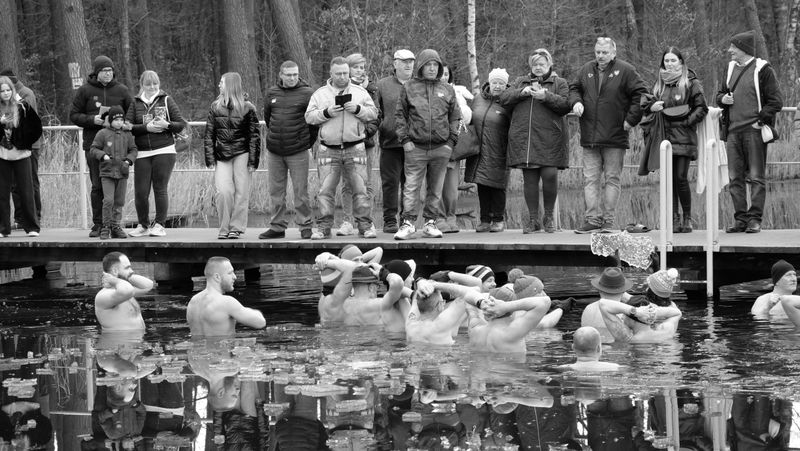
Weekly Schedule Templates: Beginner, Intermediate, Advanced
Frequency recommendations are useful. Actual schedules are more useful. Here are three weekly templates based on real-world cold plunge practice.
Beginner: 3x/Week (Weeks 1–4)
The goal in your first month is not duration or cold temperature — it's showing up and building the habit. Your nervous system needs repeated exposure to normalize the cold shock response. Three sessions per week is enough to drive adaptation without overwhelming someone new to the practice.
| Day | Protocol | Duration | Temperature |
|---|---|---|---|
| Monday | Morning plunge | 60–90 sec (week 1); 2 min (week 2+) | 58–60°F |
| Wednesday | Morning plunge | Same as Monday | 58–60°F |
| Saturday | Morning plunge | Same, or +30 sec if comfortable | 56–58°F |
Week-by-week progression:
- Week 1: 60–90 seconds at 58–60°F. Focus on controlled breathing. Don't fight the cold — breathe slowly through it.
- Week 2: 2 minutes at 57–59°F. You should notice the breathing gets easier faster now.
- Week 3: 2.5–3 minutes at 55–57°F. Add a 4th session if you feel ready.
- Week 4: 3–4 minutes at 53–55°F. If you've hit this, you're ready to graduate to intermediate.
What to expect: The first session will feel genuinely difficult — involuntary gasping, heart rate spike, strong desire to get out. By session 3–5, the breathing begins to normalize. By week 3, most people describe it as "uncomfortable but manageable." This progression is exactly what the Tipton et al. (1999) research predicted — cold shock habituation happens fast when you show up consistently.
Intermediate: 5x/Week with Strength Training
This template assumes you're strength training 3–4 days per week and want cold plunging as a daily habit without compromising hypertrophy. The key is the morning-plunge / afternoon-lift split.
| Day | Morning | Afternoon/Evening |
|---|---|---|
| Monday | Cold plunge (4–5 min, 52–55°F) | Strength training (upper) |
| Tuesday | Cold plunge (4–5 min) | Rest or light cardio |
| Wednesday | Cold plunge (4–5 min, 52–55°F) | Strength training (lower) |
| Thursday | Rest day (no plunge) | Active recovery / walk |
| Friday | Cold plunge (4–5 min) | Strength training (full body) |
| Saturday | Cold plunge (5–6 min, longer session) | Cardio or recreation |
| Sunday | Rest | Rest |
The morning plunge creates 6–10+ hours of buffer before any afternoon strength session — well above the 4–6 hour minimum. This way you get the neurochemical and metabolic benefits of daily cold without sacrificing muscle growth.
Advanced: Daily Plunge + Sauna Contrast Routine
Contrast therapy — alternating between heat (sauna) and cold — is the practice that Nordic cultures have refined over centuries. The physiological logic: hot/cold alternation drives more extreme vascular pumping (vasoconstriction/vasodilation), which may enhance circulation and recovery beyond either modality alone.
| Day | Protocol | Details |
|---|---|---|
| Monday–Friday | Morning cold plunge | 5–10 min at 50–54°F |
| Monday, Wednesday, Friday | Evening sauna | 15–20 min at 180–195°F, followed by 3–5 min cold plunge |
| Saturday | Long contrast session | 3 rounds: 15 min sauna → 5 min cold plunge. Rest 5 min between rounds. |
| Sunday | Optional morning plunge only | 5 min, recovery pace |
For the contrast sessions: always end on cold. The cold finishes the vascular pump and leaves you in the calm, focused state rather than heat-flushed. Most experienced contrast practitioners report ending on cold produces better sleep and clearer afternoon focus than ending on heat.
Signs You're Doing Too Much — or Too Little
No protocol template survives contact with individual biology. Here are the qualitative markers to watch for as you dial in your personal frequency.
Signs You Might Be Doing Too Much
- Persistent fatigue that doesn't respond to rest: If you're still exhausted on your non-plunge days and sleep isn't recovering you, total stress load (training + cold + life) may be too high.
- Sleep onset problems or fragmented sleep: If you've recently increased plunge frequency and your sleep has degraded, consider shifting to morning-only timing and/or reducing frequency by 1–2 sessions per week.
- No mood lift from sessions: The acute norepinephrine and dopamine surge should be noticeable within minutes of your plunge. If you feel nothing or feel worse, your system may be overtaxed.
- Worsening HRV trend: If you track HRV, a sustained downward trend alongside increased cold plunge frequency is a signal to back off.
- Dread, not challenge: Cold plunging should feel hard but manageable — a genuine test that you complete and feel proud of. If it has shifted to pure dread with no reward, you're either overtaxed or the temperature is unsustainably cold.
Signs You Might Be Doing Too Little
- No lasting mood improvement: One session per week gives you an acute hit but no cumulative baseline shift. If your mood or energy isn't trending better over 3–4 weeks, you likely need more frequency.
- Cold shock still severe at session 6+: By your 6th session, the involuntary gasp and breathing dysregulation should be diminishing. If it isn't, you're spacing sessions too far apart for habituation to take hold.
- No tolerance increase over 4 weeks: If you're still starting each session at 60°F after a month and it still feels as hard as day one, you're under-dosed on frequency. More sessions = faster adaptation.
- Skipping sessions without consequence: A well-built habit has a psychological pull — you notice when you miss it. If missing sessions feels irrelevant, the practice hasn't become habitual, which usually means frequency is too low to build a groove.
Frequently Asked Questions
Sources & Further Reading
- Søberg S, Löfgren J, et al. "Altered Brown Fat Thermoregulation and Enhanced Cold-Induced Thermogenesis in Young, Healthy, Winter-Swimming Men." Cell Reports Medicine, 2021. PubMed
- Roberts LA, Raastad T, et al. "Post-exercise cold water immersion attenuates acute anabolic signalling and long-term adaptations in muscle to strength training." The Journal of Physiology, 2015. PubMed
- Šrámek P, Šimečková M, et al. "Human physiological responses to immersion into water of different temperatures." European Journal of Applied Physiology, 2000. PubMed
- Tipton MJ, Stubbs DA, et al. "Human initial responses to immersion in cold water at three temperatures and after hyperventilation." Journal of Applied Physiology, 1999. PubMed
Recommended Products
Get weekly guides from PlungeHQ
No spam. Unsubscribe anytime.