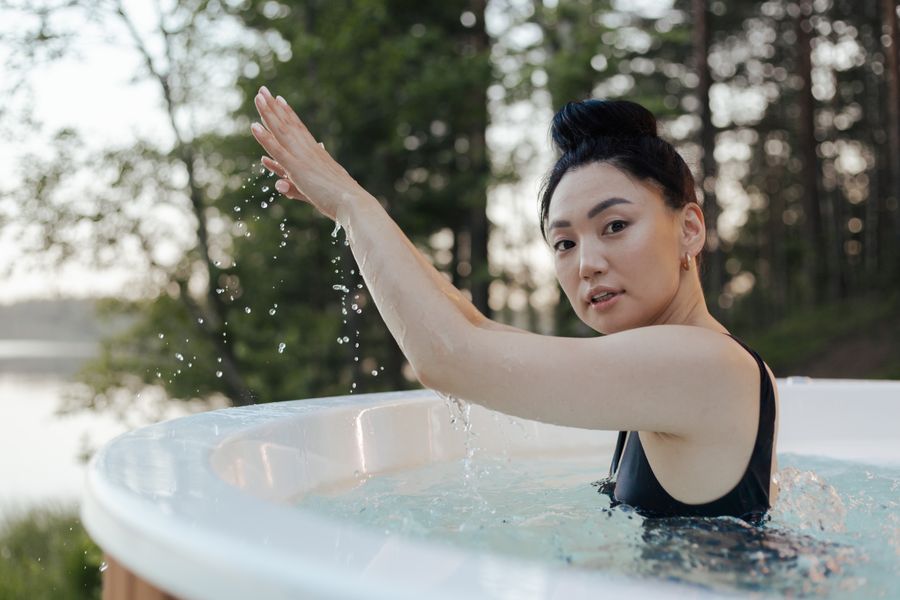
Commercial cold plunge tubs now cost anywhere from $2,500 for a basic insulated barrel to $15,000+ for a filtered, chilled unit with app control. The underlying principle — cold water held at a precise temperature — requires nothing remotely that expensive. A used chest freezer, a $35 temperature controller, and a weekend afternoon gets you 95% of the same result for a fraction of the cost.
This guide covers the full build: sourcing a freezer, the exact parts you need (and ones you can skip), wiring the temperature controller, setting up circulation, sanitation, and the safety details that actually matter. After this, you'll have a functional cold plunge that holds 50–59°F indefinitely and costs less than a single month's gym membership.
Why Build vs. Buy a Cold Plunge?
The cold plunge market has exploded since 2021, and so have prices. Here's the honest breakdown of what you're paying for in commercial units — and what you can replicate yourself:
| Feature | Commercial ($3K–$15K) | DIY Freezer ($120–$350) |
|---|---|---|
| Holds target temp | ✅ | ✅ |
| Filtration system | ✅ (on higher-end) | Manual (water changes) |
| App control | Some models | Optional add-on (~$15) |
| Aesthetic / looks | Clean, polished | Industrial (chest freezer) |
| Actual cold water recovery | ✅ | ✅ |
The physiological benefits — norepinephrine spike, reduced inflammation, improved mood — come from cold water at the right temperature, not from a polished tub with a logo. Research from the University of Portsmouth (2021) confirmed that immersion at 50–59°F (10–15°C) for 2–5 minutes produces the same hormonal response regardless of the vessel used. The DIY path makes complete sense for anyone not running a wellness studio.
That said, commercial cold plunge tubs do offer advantages for convenience, filtration, and aesthetics. If you want a polished ready-to-use unit with built-in filtration, review the top picks — but if you're optimizing for function per dollar, the DIY route is hard to beat.
Full Parts List with Specs and Prices
This list represents the complete build. Items marked "optional" improve the experience but aren't required for a functional setup.
The Core Build (~$120–$280)
- Chest freezer, 7–15 cu ft — $50–$150 (Facebook Marketplace, Craigslist). Look for units with working compressors and intact seals. Avoid units with cracked liners. A 9–10 cu ft model fits most adults seated comfortably.
- Temperature controller (Inkbird ITC-308 or equivalent) — $28–$45. This is the core of the build. It plugs into your wall outlet, the freezer plugs into its cooling port, and it cuts power to the compressor once your target temp is reached. Required — don't skip this.
- Submersible pump, 250–400 GPH — $20–$40 (Uniclife or similar). Creates water circulation so you don't have dead cold spots near the coils and warm pockets near your body.
- Waterproof temperature probe — Usually included with the ITC-308. Verify the probe is waterproof (look for IP67 rating), not just splash-resistant.
- 3% hydrogen peroxide, food-grade, 1 gallon — $15–$25. Your primary sanitizer. Add 1–2 cups per 50 gallons after each use to suppress bacterial growth.
Recommended Additions (~$30–$70)
- GFCI outlet adapter — $15–$25. Non-negotiable for safety. Ground fault protection prevents electrocution if any component fails near water.
- Digital floating thermometer — $10–$15. Independent confirmation of your water temp, separate from the controller probe.
- Drain port kit (¾" brass bulkhead fitting) — $8–$15. Drill a hole near the base, thread the fitting through, and attach a garden hose for draining. Saves 30 minutes every water change.
- Liner (optional, for older freezers) — $20–$50. A vinyl pond liner or a food-grade barrel liner creates a clean surface if the original freezer interior is scratched or has rust spots.
Step-by-Step Build Guide
Step 1: Source and Test Your Freezer
Search Facebook Marketplace, Craigslist, or local thrift stores. Search for "chest freezer" within 25 miles. Budget $50–$150; you can often find working units for $60–$80 from people replacing them with newer models. When you inspect the unit:
- Plug it in and confirm the compressor runs (you'll hear it cycling)
- Check the gasket seal — run your hand around the lid while running; you shouldn't feel cold air escaping
- Inspect the interior liner for cracks or significant rust. Minor scratches are fine; deep cracks need a liner
- Measure the interior dimensions: you need at least 48" L × 20" W × 22" D for a comfortable seated position
Step 2: Clean the Interior
Wipe the entire interior with a diluted bleach solution (1 tablespoon bleach per gallon of water), then rinse thoroughly with clean water. Let it air out for 24 hours before filling. If there are any rust spots, sand them lightly and seal with food-safe epoxy paint before proceeding.
Step 3: Install the Drain Port (Recommended)
Drill a ¾" hole near the base of the freezer — about 2 inches up from the floor to avoid drilling through the insulation layer on the very bottom. Thread a ¾" brass bulkhead fitting through the hole, apply plumber's tape to the threads, and tighten the lock nut on the interior side. Attach a short section of garden hose and a ball valve. Test for leaks before filling completely.
Step 4: Wire the Temperature Controller
The Inkbird ITC-308 (and most equivalent controllers) work as follows:
- The controller plugs into your wall outlet (120V)
- The freezer plugs into the controller's COOL outlet (labeled "cooling")
- The temperature probe sits in the water (zip-tie it to the side of the interior so it stays submerged)
- Set your target temperature (e.g., 55°F) and a differential of 1–2°F
When water temperature rises above 57°F (55°F target + 2°F differential), the controller powers the freezer. When it drops back to 55°F, it cuts power. This is how you run a freezer at refrigerator temperatures without freezing your water. No electrical wiring is required — everything uses standard 120V plug-in connections.
Step 5: Install the Circulation Pump
Place the submersible pump on the floor of the freezer interior, angled toward the corner opposite where you'll be sitting. This creates a gentle circular current that equalizes temperature throughout the water column. Run the power cord out through a small gap in the lid gasket — the cord is thin enough that it doesn't meaningfully compromise the seal.
Step 6: Fill and Set Temperature
Fill with cold tap water. Set your controller target to 55°F (13°C) to start — this is the sweet spot for optimal cold plunge temperature for most beginners. Allow 6–18 hours to reach temperature before your first use. As ambient temperature rises in summer, cooling time may extend slightly.
Step 7: Initial Sanitization
Once filled and cooled, add 2 cups of 3% food-grade hydrogen peroxide per 50 gallons of water. Run the pump for 30 minutes to distribute. Your plunge is ready.
Temperature and Thermostat Control
The ITC-308 is the industry standard for this build, but any PID or on/off controller that handles 120V and a temperature range of 40–70°F works. Key settings to configure:
- Target temperature (SV): Set between 50–59°F (10–15°C). Research from Tipton et al. (2017) in the journal Extreme Physiology & Medicine identified this range as producing maximal norepinephrine response without dangerous cold shock risk for healthy adults.
- Differential (Hysteresis): Set to 1–2°F. Too tight (0.5°F) causes the compressor to short-cycle, reducing its lifespan. Too wide (5°F) means larger temperature swings during your plunge.
- High temperature alarm: Set at 65°F. If power fails or the probe disconnects, you'll know the water has warmed to an unsafe bacterial growth range.
In summer months with ambient temperatures above 80°F, expect the compressor to run more frequently. This is normal and the unit can handle it. In winter or in a cold garage, the system barely needs to run at all — the ambient environment does the work.
For those who want programmable control from a phone, the Inkbird IBS-TH2 Plus wireless sensor ($25) pairs with a free app and logs temperature history. This isn't necessary, but it's useful if you're dialing in exact protocols or tracking beginner cold plunge protocols.
Sanitation Protocol
Water sanitation is the most neglected aspect of DIY cold plunge builds. Cold water slows bacterial growth but doesn't stop it. Without intervention, biofilm forms on the freezer walls within 1–2 weeks of regular use.
Primary Method: Hydrogen Peroxide
Food-grade 3% hydrogen peroxide (available at most pharmacies and online in gallon sizes) is the safest, easiest sanitizer for personal cold plunge use. Add 1–2 cups per 50 gallons after each use. It breaks down into water and oxygen, leaves no residue, and is safe for skin. The EPA has classified hydrogen peroxide as a food-contact sanitizer at appropriate concentrations.
Water Change Schedule
- Solo use, 3–5x/week with H₂O₂: Change water every 3–4 weeks
- Solo use, daily with H₂O₂: Change every 2–3 weeks
- Multiple users: Change every 1–2 weeks, add H₂O₂ after each session
- No sanitizer: Change weekly minimum
Optional: Ozone Generator
An aquarium-grade ozone generator ($40–$80) dramatically extends water life to 4–8 weeks. Ozone (O₃) is a powerful oxidizing agent that destroys bacteria, viruses, and organic matter more effectively than chlorine at the same concentration, with no chemical residue. Run it for 30 minutes after each session. Studies from the Water Quality Association have confirmed ozone's effectiveness at maintaining recreational water safety at concentrations of 0.4–0.8 ppm.
Safety Considerations
Cold plunging is safe for healthy adults, but a DIY setup introduces electrical components near water. Take these precautions seriously:
- GFCI protection is mandatory. Use a GFCI outlet or a GFCI adapter plug. If any current leaks from the pump or controller, the GFCI trips in milliseconds, preventing electrocution. This is not optional.
- Keep all connections away from water. The pump's power cord should exit the freezer through the lid gasket, not through any hole you drill in the sides below water level. The temperature controller stays on a dry surface outside the freezer entirely.
- Don't plunge alone as a beginner. Cold shock response — involuntary gasping and rapid breathing — occurs in the first 30–60 seconds of immersion. Have someone present for your first several sessions. The beginner cold plunge protocol covers safe entry techniques in detail.
- Know your limits. People with cardiovascular conditions, hypertension, Raynaud's disease, or cold urticaria should consult a physician before building or using this setup. The cold pressor response raises blood pressure acutely.
- Install the drain port. In the unlikely event you feel dizzy or unwell, you need to exit quickly and easily. A drain port isn't just for convenience — it's an exit path if something goes wrong.
Optional Upgrades Worth Considering
Drain Port ($8–$15)
Already covered in the build steps, but worth emphasizing: the brass bulkhead fitting is the single best $10 upgrade. Draining a 7–10 cu ft freezer without it means tipping (messy, heavy) or using a wet/dry vac (slow). With a drain port, you open a valve, connect a garden hose, and the water empties in 10–15 minutes.
Ozone Generator ($40–$80)
Extends water change intervals from 2–4 weeks to 4–8 weeks. If you're plunging daily, this pays for itself quickly in saved time and water.
Insulated Lid Cover ($20–$40 DIY)
The standard chest freezer lid has some insulation, but adding a 1-inch foam board layer to the top reduces thermal load by 15–25% — meaning the compressor runs less and your electricity bill shrinks slightly. Cut rigid foam insulation to the interior lid dimensions, cover with adhesive vinyl for waterproofing, and press it in place. It floats on the water when you plunge.
Step Stool / Entry Platform
Getting into a chest freezer gracefully requires either a step stool (a $20 hardware store unit works fine) or a wooden platform built to height. Don't skip this — attempting to swing a leg over a chest freezer from the floor is awkward and is a falling hazard.
Comparing DIY to Budget Commercial Options
Once you're comfortable with cold plunging and want to compare the experience to entry-level commercial units, our guide to the best cold plunge tubs under $500 covers inflatable and stock tank options that bridge the gap between this DIY build and high-end equipment. For those who want to understand how frequently to use their setup once built, see how often you should cold plunge.
Frequently Asked Questions
Can I use a regular chest freezer for a cold plunge?
Yes. A standard 7–15 cubic foot chest freezer works well. You'll run it in refrigerator mode using a temperature controller (like an Inkbird ITC-308) set to 50–59°F rather than below freezing. The compressor cycles on and off to maintain your target temperature without freezing the water.
How much does a DIY chest freezer cold plunge cost?
Total build cost is typically $120–$350. A used chest freezer from Facebook Marketplace or Craigslist runs $50–$150. A temperature controller is $30–$50, a submersible pump $20–$40, sanitizer supplies $20–$30, and a thermometer $10–$20. Brand-new commercial cold plunges start at $2,500–$15,000, making this DIY option 10–100x cheaper.
How often do I need to change the water?
Change the water every 2–4 weeks depending on usage frequency and sanitation protocol. Between changes, add 1–2 cups of 3% hydrogen peroxide per 50 gallons to suppress bacteria. Daily plungers using no sanitizer should change water weekly; those using an ozone generator can extend to 4–6 weeks.
Is a chest freezer cold plunge safe?
Yes, when built correctly. Key safety steps: use a GFCI-protected outlet, keep all electrical components away from water, use a temperature controller so you can't accidentally freeze the water, and never plunge alone — especially as a beginner. Install a drain port so you can exit quickly if needed.
What size chest freezer do I need for a cold plunge?
A 7 cubic foot freezer fits most people seated but is cramped. A 9–10 cubic foot model is the sweet spot — it holds an average adult comfortably without requiring a massive footprint. 15 cubic feet or larger allows two people or full submersion for taller individuals. Check the internal depth: you want at least 24 inches.
Do I need a pump in a chest freezer cold plunge?
A pump isn't strictly required, but it's highly recommended. Without circulation, cold spots form near the freezer walls and warm pockets develop in the center where your body is. A small submersible pump (250–400 GPH) keeps the temperature uniform and also helps distribute sanitizer chemicals evenly.
How long does it take a chest freezer cold plunge to reach temperature?
Expect 6–18 hours to cool from tap temperature (~60°F in most climates) down to your target 50–55°F, depending on ambient temperature and freezer size. Fill with the coldest tap water available to speed this up. Once at temperature, the freezer maintains it efficiently, cycling only occasionally.
📧 Get Weekly Cold Therapy Tips
Join thousands optimizing recovery and resilience with cold exposure.
Subscribe Free →🛒 Top Picks: Cold Plunge Gear
Our readers' most-bought cold plunge products this month.
As an Amazon Associate we earn from qualifying purchases.