⚡ Quick Answer
Wim Hof breathing consists of 30 deep power breaths → exhale and hold → recovery breath and hold → repeat 3–4 rounds. It works by lowering CO2 levels (creating alkalosis), which triggers a sympathetic nervous system cascade — reducing inflammation, increasing adrenaline, and giving you voluntary control over physiological responses. Never do the retention phase in water or while driving.
Who Is Wim Hof?
Wim Hof — nicknamed "The Iceman" — is a Dutch extreme athlete who holds 26 Guinness World Records, most related to cold exposure. He's climbed to near the summit of Mt. Everest in shorts, run a half marathon above the Arctic Circle barefoot, and submerged in ice for nearly two hours. What makes him remarkable isn't the feats themselves, but the fact that he's trained others to replicate them using his teachable method.
Hof developed his method following the death of his wife in 1995, turning to cold water and meditation as a way to cope. What he discovered — almost by accident — was a set of techniques that gave him measurable control over physiological processes once thought to be entirely involuntary: his immune response, body temperature regulation, and autonomic nervous system.
The scientific establishment was skeptical until 2014, when a landmark study from Radboud University Medical Center validated what Hof had been claiming. We'll cover that study in detail below.
The Three Pillars of the Wim Hof Method
The full Wim Hof Method is built on three interconnected practices. Most people focus on the breathing, but Hof himself emphasizes that all three work synergistically:
- Breathing: The controlled hyperventilation and breath retention technique described in this guide. Creates alkalosis, sympathetic activation, and voluntary immune modulation.
- Cold Exposure: Systematic cold training — cold showers progressing to cold water immersion. Builds cold tolerance, norepinephrine, and brown adipose tissue activation. See our beginner cold plunge protocol for where to start.
- Commitment (Mindset): Hof's framework for mental focus during discomfort. The breathing and cold work to train willpower and presence — but only if you approach them with intention, not as a physical challenge to grit through.
The three pillars are designed to train your relationship with stress. Each session is practice at staying calm and in control when your body wants to panic — a skill that transfers to every area of life.
The Breathing Technique: Step-by-Step
Here's the complete protocol. Read through once before starting:
Before You Begin
- Sit in a comfortable chair or lie flat on your back on a firm surface
- NEVER do this in water, a bath, a pool, or while driving
- Give yourself 15–20 minutes of uninterrupted time
- Do on an empty or light stomach (morning is ideal)
- Wear loose, comfortable clothing
Round 1 (and each subsequent round):
Phase 1: 30 Power Breaths
Take 30 deep, rhythmic breaths. Inhale fully through the mouth or nose — fill your lungs completely from the belly up through the chest. Then exhale without forcing — just release the breath, don't push it all the way out. The rhythm is about one breath every 1–2 seconds. It will feel like controlled hyperventilation. You may notice tingling in your hands, feet, or face — this is normal (see the science section below).
Count your breaths. 30 breaths per round, not "about 30."
Phase 2: Retention (Exhale Hold)
After your 30th power breath, exhale fully and hold. Don't force the last air out — just a comfortable exhale, then stop breathing. Hold for as long as feels manageable. Beginners: 30–60 seconds. Don't fight it. When you feel a strong urge to breathe (the "gulp reflex"), you're ready for Phase 3.
Phase 3: Recovery Breath
When you need to breathe, take a deep inhale and hold it for 15 seconds — this is the "recovery breath." Press the air gently into your chest (don't strain). After 15 seconds, exhale slowly and begin your next round.
Repeat for 3–4 Rounds
Three rounds is the standard protocol. More advanced practitioners do 4–6 rounds. Each round typically produces a progressively deeper state of relaxation and clarity. After your final round, spend a few minutes lying still, breathing naturally.

The Science: What's Actually Happening
CO2 / O2 Balance and Respiratory Alkalosis
Normal breathing maintains a precise balance of oxygen (O2) and carbon dioxide (CO2) in the blood. CO2 is not just a waste gas — it's the primary trigger for the urge to breathe. When you perform 30 rapid power breaths, you exhale CO2 faster than your body produces it, creating a state called respiratory alkalosis — a temporary rise in blood pH.
This alkalosis has several cascading effects:
- Tingling/paresthesia: Lower CO2 causes blood vessels to constrict and changes nerve membrane electrical potential
- Extended breath hold: With less CO2, the urge to breathe is delayed — this is why you can hold your breath for 2–4 minutes after power breathing even though blood oxygen is actually lower than usual
- Altered consciousness: The combination of alkalosis and slight hypoxia produces the characteristic light, spacious mental state during retention
Sympathetic Nervous System Activation
The power breathing phase activates the sympathetic nervous system — triggering adrenaline (epinephrine) and norepinephrine release. Research published in PNAS (2014) demonstrated that trained subjects showed significantly higher adrenaline levels (comparable to those seen in first-time bungee jumpers) before injection with bacterial endotoxin, which correlated with reduced cytokine production.
This is the mechanism behind the immune modulation: adrenaline has potent anti-inflammatory effects, and the breathing technique gives you voluntary control over adrenaline release.
Vagus Nerve & Parasympathetic Recovery
The retention phase and the deliberate slow recovery breathing activate the vagus nerve — the main highway of the parasympathetic (rest-and-digest) nervous system. This is why many practitioners report profound calm following the retention phases. You're deliberately alternating between sympathetic activation (power breathing) and parasympathetic recovery (retention) — training nervous system flexibility.
Inflammation Reduction
The adrenaline surge from power breathing suppresses pro-inflammatory cytokines including TNF-α, IL-6, and IL-8. In the Kox et al. (2014) study, trained subjects produced 50–70% fewer inflammatory cytokines than untrained controls. This is not a subtle effect — it's a dramatic, measurable difference in immune response produced entirely by breathing and mental focus.
Key Research Studies
The Landmark Study: Kox et al., 2014 (Radboud University)
Published in Proceedings of the National Academy of Sciences (PNAS), this study injected Wim Hof and 12 people he'd trained with bacterial endotoxin (E. coli lipopolysaccharide). Normally, this causes 4–6 hours of flu-like symptoms — fever, chills, headache, nausea.
The Wim Hof trained group reported significantly milder symptoms, produced far fewer inflammatory cytokines, and showed measurable voluntary sympathetic nervous system activation. The control group (untrained) responded normally to the endotoxin. This was the first study to demonstrate that humans could voluntarily influence their innate immune response.
Read the full Kox et al. 2014 study →
Additional Research
- Pickkers et al. (2012) — Voluntary activation of the sympathetic nervous system and attenuation of the innate immune response
- Zwaag et al. (2022) — Effects of Wim Hof Method on cytokine responses in healthy male volunteers
- A growing body of research at Radboud University Medical Center is examining the technique's application in inflammatory conditions including rheumatoid arthritis and Crohn's disease
Safety Warnings
This technique is genuinely powerful and carries real risks if misused:
- In water, near water, in a bathtub, or a pool — even shallow water
- While driving or operating machinery
- Standing up (risk of fainting)
- Without informing someone nearby if you're new
Who Should Consult a Doctor First
- Pregnant women: Avoid. CO2/O2 fluctuations are not safe during pregnancy
- Epilepsy: Hyperventilation is a known seizure trigger
- Cardiovascular conditions: The technique produces significant heart rate and blood pressure changes
- History of fainting: The alkalosis and hypoxia can cause syncope
- Raynaud's syndrome: Cold exposure component can trigger episodes
Normal Side Effects (Not Dangerous)
- Tingling in hands, feet, face
- Light-headedness during power breathing
- Muscle tetany (cramping) from CO2 reduction — release the tension, don't fight it
- Vivid visuals during retention — normal, harmless
Combining Wim Hof Breathing With Cold Plunging
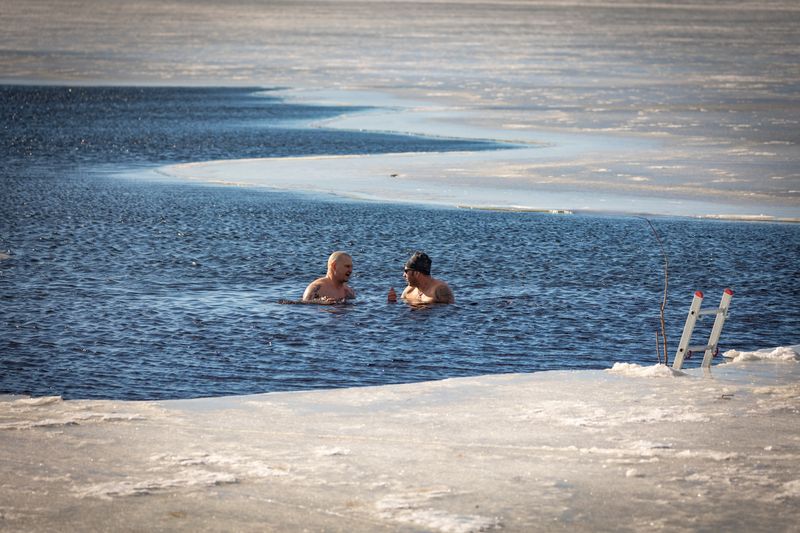
The two practices complement each other powerfully. The breathing primes your nervous system; the cold provides the stress stimulus your newly primed system can handle more gracefully.
The Recommended Sequence
- Do 3 rounds of Wim Hof breathing on dry land — sitting or lying down
- After your final recovery breath, sit quietly and breathe normally for 2–3 minutes
- Enter the cold water. You'll notice the initial cold shock response is measurably milder
- During the plunge, focus on slow, controlled breathing (box breathing: 4-4-4-4 works well)
- Exit when you choose — not when you're forced to
The norepinephrine surge from the breathing (which begins about 5–10 minutes before your plunge) partially primes the catecholamine response, so the cold exposure builds on an already elevated baseline. Many practitioners find they can stay in significantly longer and feel more in control when they add the breathing protocol. See our cold plunge beginner protocol for safe duration guidelines.
For the science on what cold water immersion does to your body, read our deep-dive on cold plunge benefits from the research.
Apps & Resources
The guided breathing experience matters. Trying to count breaths in your head while hyperventilating is hard. These apps help:
- Wim Hof Method App: The official app. Guided breathing sessions with audio cues, breath hold timer, and progress tracking. Available iOS and Android. Free tier available; premium unlocks more courses.
- Othership: A broader breathwork app with Wim Hof-style sessions alongside other modalities (box breathing, holotropic, etc.). High production quality, strong community.
- Oak: Simple, clean breathwork app with customizable rounds and hold timers. Free.
For beginners, the official Wim Hof app is the best starting point — the guided sessions make the timing and pacing easier to follow.
Frequently Asked Questions
Sources & Further Reading
Ready to Add Cold Exposure?
The breathing technique is most powerful when combined with systematic cold exposure. Here's where to start: