⚡ Quick Answer
The Sun Home Eclipse ($9,999) is the best red light sauna for 2026 — it's the only mainstream sauna that fully integrates 360 medical-grade LEDs (630nm red + 850nm near-infrared) across dual 900W panels with full-spectrum infrared heat in one cabin. If you don't want a full sauna and just want the photobiomodulation benefits, a standalone panel like the Joovv Solo 3.0 delivers higher close-range irradiance for a fraction of the price. Budget red light option: a smaller standalone panel or wrap under $300.
How We Researched This Guide
Disclosure: PlungeHQ has not physically tested all products on this page. This guide is an editorially researched comparison based on manufacturer specifications, warranty documentation, published third-party test data, and competitive analysis — all verified against official product pages as of August 6, 2026. Products marked "specification-researched" were not physically tested by PlungeHQ. Our recommendations are never influenced by affiliate commission rates.
Verification sources: Sun Home Eclipse product page | Eclipse 2 spec sheet (PDF) | Sun Home warranty | Sun Home safety testing | JNH Lifestyles | PlatinumLED
What Is a Red Light Sauna? (And How It Differs from a Regular Infrared Sauna)
A standard infrared sauna heats your body using near, mid, or far infrared wavelengths delivered through heater panels — the goal is core temperature elevation, sweating, and the cardiovascular benefits that come with heat exposure. A red light sauna does all of that, but also integrates a separate array of medical-grade LEDs tuned to specific wavelengths — typically 630–660nm (red) and 810–850nm (near-infrared) — for photobiomodulation, a distinct cellular-level mechanism unrelated to heat.
This distinction matters because the two technologies are doing genuinely different things. Infrared heater panels warm tissue through radiant heat absorption — you feel it as warmth, and the primary outputs are sweat and cardiovascular strain response. LED red light panels don't meaningfully raise skin temperature at therapeutic doses; instead, specific wavelengths are absorbed directly by mitochondria, triggering a biochemical cascade that supports cellular energy production, reduces inflammation, and promotes tissue repair. A sauna marketed as "red light" without a real LED array — just colored ambient mood lighting (chromotherapy) — is not the same thing. Chromotherapy uses visible colored light for ambiance; genuine red light therapy uses specific, higher-powered wavelengths engineered for a documented biological effect.
Very few mainstream saunas combine both systems properly. Most brands offer one or the other, or bolt a token LED strip onto an infrared cabin as a marketing feature. The Sun Home Eclipse is one of the only sauna products on the market that treats the LED array as a co-equal, independently engineered system rather than an afterthought.
The Science: What Photobiomodulation Actually Does
Photobiomodulation (PBM) — the mechanism behind red light therapy — is grounded in real, peer-reviewed research, not wellness marketing. One leading proposed mechanism: specific wavelengths of red and near-infrared light are absorbed by cytochrome c oxidase (CCO), an enzyme in the mitochondrial electron transport chain. This absorption releases inhibitory nitric oxide from the enzyme, allowing it to function more efficiently — increasing ATP (cellular energy) production, reducing oxidative stress, and triggering downstream signaling that supports tissue repair and reduces inflammation. The mitochondrial pathway is central to the PBM literature, but the underlying biology involves multiple signaling pathways and should not be read as conclusively settled.
The foundational research comes from Dr. Michael Hamblin at Harvard Medical School, whose 2018 review in Photochemistry and Photobiology — "Mechanisms and Mitochondrial Redox Signaling in Photobiomodulation" — remains one of the most cited papers describing this dual-pathway mechanism.
Where the evidence is strongest:
- Skin health and collagen: Multiple randomized controlled trials report improvements in skin texture and collagen-related outcomes with red light in the 630–660nm range. Specific studies support improved collagen density, smoother texture, and accelerated wound healing with 8–12 weeks of consistent use.
- Muscle recovery: A 2024 meta-analysis (Li et al., Lasers in Medical Science) found pre-exercise PBM improved several endurance and recovery measures, though results varied by activity level and study quality.
- Inflammation and joint pain: Near-infrared (810–850nm) reaches deeper tissue than red wavelengths — far enough to target muscle, fascia, and joint capsules — and multiple studies associate it with reduced arthritic pain and stiffness. Depth of penetration varies significantly by tissue type, wavelength, irradiance, and measurement method, so a single penetration figure is not a reliable universal claim.
Where the evidence is thin or overstated: systemic detoxification, cancer treatment, and dramatic fat loss claims. Localized panel treatment does not meaningfully affect distant organs, and no consumer red light device is a substitute for medical treatment. Stick to the well-supported applications — skin, muscle recovery, and localized inflammation — and you're on solid scientific ground.
One important nuance for sauna buyers specifically: heat and red light are complementary but separate mechanisms. The heat from infrared panels does not amplify or substitute for the photobiomodulation effect of LED wavelengths, and vice versa. A red light sauna gives you both benefits in the same session, but you're not getting a "combined" or synergistic super-effect — you're getting two independently validated benefits stacked into one piece of furniture.
What to Look For in a Red Light Sauna
1. LED Count and Wattage
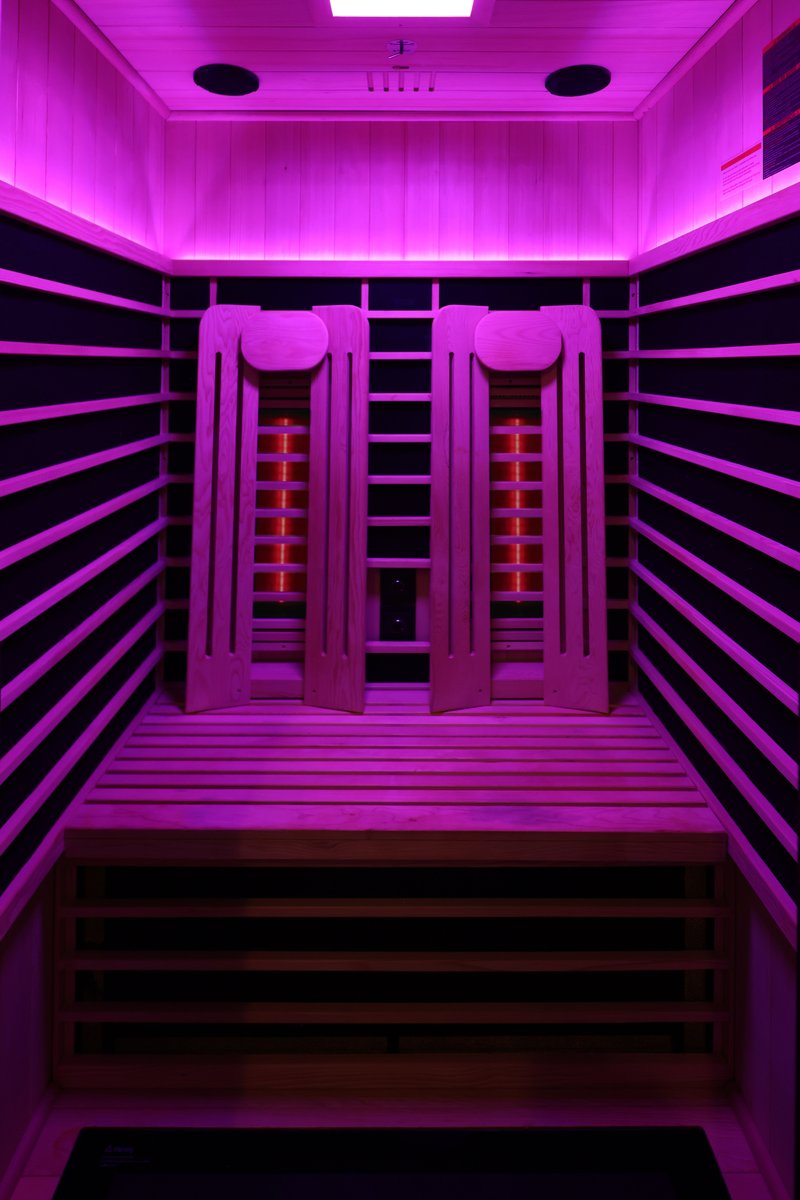
The number of actual diodes and total panel wattage is the clearest signal of whether the red light feature is a real therapeutic array or a marketing add-on. Look for panels rated in the hundreds of watts with LED counts in the hundreds, not a 20-diode strip glued to the back wall. The Sun Home Eclipse's 360 LEDs across dual 900W panels is toward the high end of what's available in an integrated sauna.
2. Confirmed Wavelengths
The clinically relevant wavelengths are 630–660nm (red) and 810–850nm (near-infrared). If a product page doesn't specify exact wavelengths, assume it's using cheaper, less-targeted diodes or is emphasizing ambiance over therapeutic dose. Full-spectrum infrared (separate from the LED array) — near, mid, and far — is also a meaningful differentiator for the heat side of the equation.
3. EMF Shielding
Both the heater panels and the LED driver electronics generate electromagnetic fields. Reputable brands publish third-party EMF test results; the Eclipse uses patented EMF shielding on top of the heater design most premium infrared brands already use. If EMF is a concern for you, ask for documented milligauss readings rather than trusting a "low EMF" label with no data behind it.
4. Build Quality and Wood
Canadian hemlock remains the gold standard for home sauna wood — tight grain, low resin content, resistant to warping under repeated heat cycling. Avoid unspecified "wood" or pine, which off-gases at sauna temperatures and warps faster.
5. Controls and App Integration
At this price tier, expect app control for preheating, session scheduling, and independent control of the heat and LED systems (you may want light without heat, or vice versa). Guided breathwork programs and Bluetooth audio are increasingly standard premium features.
6. Warranty
Heater and LED panel components should carry a long warranty — a lifetime warranty on the full unit, as Sun Home offers, is the best-in-class benchmark. Short warranties (3–5 years) on a five-figure purchase are a red flag.
How We Scored Each Red Light Sauna & Panel
Every red light sauna and panel in this guide was evaluated against the same criteria. Red light therapy effectiveness depends on wavelength specificity, irradiance (power density), and treatment coverage — not just price or brand recognition.
| Ranking Factor | Weight | What We Evaluated |
|---|---|---|
| Wavelength range & specificity | 30% | Specific wavelengths delivered (630nm, 660nm, 850nm etc.), bandwidth, whether the device uses clinically studied wavelengths |
| Irradiance (power density) | 25% | mW/cm² at treatment distance, total power output, whether irradiance claims are independently verified |
| Treatment coverage | 15% | Treatment area size, panel configuration, 360° vs single-wall coverage, number of LEDs |
| Construction & safety | 10% | Build quality, EMF shielding, FDA clearance status, cooling system, electrical safety |
| Warranty & service | 10% | Warranty duration by component, LED lifespan rating, return policy |
| Controls & features | 5% | Timer, pulsing modes, app connectivity, preset programs |
| Price-adjusted value | 5% | Irradiance and coverage per dollar |
Important: This is an editorial weighting model based on manufacturer specifications verified against official product pages as of August 6, 2026. PlungeHQ has not physically tested all products on this page. Red light therapy claims should be evaluated against published clinical evidence — we distinguish between demonstrated physiological effects and manufacturer marketing claims throughout this guide.
Best Red Light Saunas & Panels 2026: Quick Comparison
| Model | Price | Heater Type | EMF Rating | Wood | Warranty | Verdict |
|---|---|---|---|---|---|---|
| Sun Home Eclipse | $9,999 | Full spectrum + 360 LED array | Ultra-low (3rd-party certified) | Canadian hemlock | Lifetime | Best overall |
| JNH Arki Solo | $7,999 | Full spectrum + 360° RLT | Ultra-low (0.32 mG avg) | Canadian hemlock | Lifetime | Best 360° coverage |
| Clearlight Sanctuary 2 + RLT | ~$9,598 | Full spectrum + add-on RLT tower | Low EMF (independently tested) | Canadian cedar | Lifetime | Best clinical heritage |
Best Overall: Sun Home Eclipse
Sun Home Eclipse 2-Person Red Light Infrared Sauna
- 360 medical-grade LEDs across dual 900W panels — 630nm red + 850nm near-infrared
- Full-spectrum infrared: near, mid, and far IR heat combined
- Patented EMF shielding with independently tested ultra-low readings
- Native Sun Home app — remote preheat, guided breathwork, session scheduling
- Bluetooth surround sound, chromotherapy, 165°F max
- Also available in 4-person ($13,999)
The Sun Home Eclipse is our top pick for 2026 because it's one of the only saunas on the market that treats red light therapy as a co-equal, independently engineered system rather than a marketing afterthought. The dual 900W LED panels — 360 medical-grade diodes emitting at the clinically relevant 630nm and 850nm wavelengths — are factory-integrated into the cabin walls for simultaneous front-and-back coverage during a full-spectrum infrared session. This isn't a sauna with a couple LED strips glued on; it's a purpose-built dual-therapy device.
At $9,999 (on sale from $10,599), the Eclipse sits at the premium end of the market — but you're getting a genuine full-spectrum infrared sauna AND a medical-grade red light therapy array in one unit, where most competitors sell RLT as a $2,000+ add-on or skip it entirely. The native Sun Home app adds guided breathwork sessions and remote preheating, which is genuinely useful if you want to walk into a ready sauna. If you want the convenience of both therapies in one device with full app control, the Eclipse is the clear winner.
Specification-researched. Specs verified against manufacturer product page, official spec sheet (PDF), and warranty documentation, August 6, 2026.
Best for: Buyers who want a red light therapy sauna with 360° LED coverage and clinical-grade wavelengths. The Eclipse surrounds you with red and near-infrared LEDs on all four walls plus the floor — more complete coverage than single-panel saunas that only treat one side of the body.
Not ideal for: Budget buyers — the Eclipse is priced as a premium red light sauna. Anyone who already owns a sauna and only needs an add-on panel — a standalone panel like the MitoMIN is cheaper if you already have a heat source.
Why it won: The Eclipse is one of the few red light saunas that delivers 360° coverage with clinically studied wavelengths (660nm and 850nm) from a brand that publishes third-party EMF testing. Most competitors use single-wall panels and don't publish irradiance data.
Closest alternative: The Clearlight Sanctuary 2 + RLT offers full-spectrum infrared with integrated red light in a larger 2-person cabin — more expensive but adds traditional sauna heat on top of red light therapy.
Best 360° Coverage: JNH Arki Solo
JNH Lifestyles Arki Solo 1-Person Red Light Sauna
- True 360° red light — emitters distributed around entire cabin, not just front/back
- Medical-grade wavelengths spanning 630–850nm
- Ultra-low EMF/ELF averaging 0.32 mG — independently tested
- Full-spectrum infrared: near, mid, and far IR combined
- 170°F max — hotter than most infrared competitors
- Also available in Duo (2P, $9,995) and Trio (3P, $14,999)
The JNH Arki takes a fundamentally different design approach than the Eclipse — instead of concentrating red light in dual tower panels, it distributes emitters around the entire cabin for true 360° coverage. The result is red light hitting your body from every angle rather than primarily front-and-back. The Arki Solo at $7,999 is the most affordable entry point, and it delivers full-spectrum infrared plus 360° red light with JNH's independently verified ultra-low EMF (0.32 mG). If red light coverage from every direction matters more to you than app control and guided programs, the Arki's approach has real merit.
Specification-researched. Specs verified against manufacturer product documentation, August 6, 2026.
Best for: Buyers who want 360° red light coverage at a mid-range price. The JNH Arki Solo is a 1-person enclosed sauna with red and near-infrared LEDs surrounding the user — better coverage than single-panel setups that only treat the front of the body.
Not ideal for: Anyone who wants full-spectrum infrared heat alongside red light — the Arki Solo is primarily a red light therapy device, not a full infrared sauna. Users over 6' may find the 1-person enclosure tight. Buyers who want app connectivity or preset programs.
Why it won: 360° coverage at this price is rare — most competitors offer single-wall panels at $1,500-2,000 that require you to rotate during treatment. The Arki Solo's enclosed design treats all sides simultaneously.
Closest alternative: The PlatinumLED BioMax panels offer higher irradiance (power density) in a modular panel format — better if you want raw power and don't mind treating one side at a time.
Best Clinical Heritage: Clearlight Sanctuary 2 + RLT
Clearlight Sanctuary 2 + Red Light Therapy Tower
- TrueWave full-spectrum infrared — independently tested near, mid, and far IR
- Optional Red Light Therapy Tower ($2,199) — medical-grade 660nm + 850nm
- Low EMF design with published third-party test results
- Canadian cedar — premium wood with natural aroma, no off-gassing
- Lifetime warranty — one of the best programs in the industry
- Available in 1-person (~$4,299) through 5-person ($10,000+)
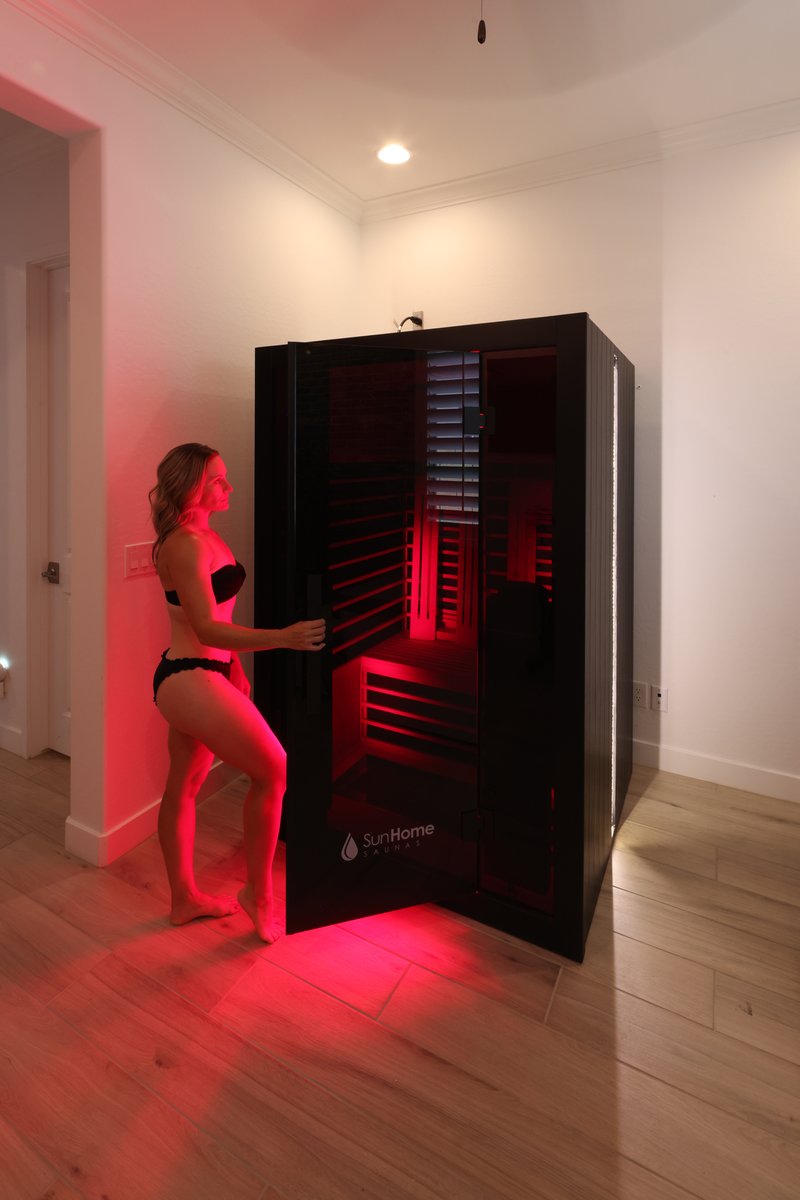
Clearlight is one of the longest-established names in the premium infrared sauna market, and the Sanctuary series benefits from years of independent testing and refinement. Unlike the Eclipse or Arki which have red light built in, Clearlight sells it as a separate add-on tower ($2,199) — which means you can buy the sauna now and add red light later. A Sanctuary 2 with the RLT tower comes to roughly $9,598, comparable to the Eclipse. Clearlight's TrueWave heaters deliver genuine full-spectrum output, and the Canadian cedar build quality is excellent. If clinical testing history and brand longevity matter to you, Clearlight has the deepest track record.
Specification-researched. Specs verified against manufacturer product documentation, August 6, 2026.
Best for: Buyers who want the most clinically-validated red light therapy brand integrated into a full sauna. Clearlight has been used in multiple published studies and publishes detailed irradiance data at specific distances — rare transparency in this market.
Not ideal for: Budget buyers — the Sanctuary 2 + RLT is a premium 2-person sauna with red light, priced accordingly. Anyone who only wants red light without a sauna — standalone panels are cheaper. Buyers with space constraints — this is a full 2-person cabin.
Why it won: Clearlight is the most research-cited brand in red light therapy, with published irradiance data at multiple distances and third-party EMF testing. The Sanctuary 2 adds this clinical credibility to a full 2-person infrared sauna.
Closest alternative: The Sun Home Eclipse offers 360° coverage in a more compact format at a lower price — better if you prioritize coverage angle, while Clearlight is better if you prioritize clinical documentation.
Red Light Sauna vs. Standalone Panel: Which Should You Buy?
This is the real decision most buyers are actually making, and it comes down to what you're optimizing for:
- Buy a red light sauna (Sun Home Eclipse) if: You want both heat therapy and photobiomodulation, you have the budget and space for a full sauna cabin, and you'd rather run one device for a combined session than manage two separate routines.
- Buy a standalone panel if: Red light therapy is your primary goal and heat is not a priority, you want higher irradiance at closer range, your budget is under $1,500, or you don't have space/electrical capacity for a sauna install.
- Buy both, separately, if: You already own or plan to buy a standard infrared sauna and want a dedicated standalone panel for closer-range, higher-dose red light sessions outside the sauna. This is a common setup among people who take photobiomodulation seriously as a distinct protocol rather than a sauna add-on.
There's no wrong answer here — it's a genuine tradeoff between convenience (one device, one session) and dose/cost efficiency (a dedicated panel used at close range for a fraction of the price).
Setup Requirements
Electrical
- Sun Home Eclipse (2-person): Runs on a dedicated 120V circuit. Confirm your installation location has a suitable outlet, or budget for an electrician to run one.
- Standalone panels: Plug into any standard household outlet — no special electrical work required.
Space
A 2-person sauna cabin typically needs a footprint in the range of 4' × 4' to 5' × 4', plus clearance for ventilation and at least 7 feet of ceiling height. Standalone panels need only enough wall or floor space to mount or stand the unit 6–24 inches from where you'll be sitting or standing.
Indoor Use Only
Both sauna cabins and standalone LED panels are designed for indoor use in a stable-temperature, low-humidity environment. A finished basement, spare room, or garage (heated/insulated) works well.
What to Avoid: Red Flags When Buying a Red Light Sauna
- "Red light" saunas with no LED specs listed. If a product page markets "red light therapy" but doesn't list LED count, wattage, or wavelengths, it's likely ambient chromotherapy lighting, not a real photobiomodulation array.
- No published wavelengths. The clinically relevant numbers are 630–660nm and 810–850nm. If the listing doesn't specify, assume the diodes aren't tuned for therapeutic effect.
- No EMF data. Both the heater and the LED driver electronics generate EMF. A brand that won't produce third-party test results shouldn't be trusted on this point.
- Short warranties on a 5-figure purchase. Anything under a lifetime or multi-year warranty on the heater and LED components is a red flag at this price tier.
- Vague "full body" claims. Check whether the LED panels actually cover the seating area from multiple angles, not just a single strip on the back wall.
Frequently Asked Questions
Sources & Further Reading
- Hamblin MR. "Mechanisms and Mitochondrial Redox Signaling in Photobiomodulation." Photochemistry and Photobiology. 2018.
- Li et al. (2024). Pre-exercise photobiomodulation and exercise performance. Lasers in Medical Science.
- Laukkanen JA, et al. (2015). Association between sauna bathing and fatal cardiovascular and all-cause mortality events. JAMA Internal Medicine.
- Systematic review and meta-analysis: Photomodulation therapy for DOMS. PMC. 2025.
- PubMed — sauna, infrared, and photobiomodulation research
Get weekly guides from PlungeHQ
No spam. Unsubscribe anytime.