85%
Professional sports franchises across the NFL, NBA, NHL, and MLB with cold water immersion facilities on-site — the practice has become standard infrastructure in elite sport
— Sports Science Exchange, Gatorade Sports Science Institute, 2022
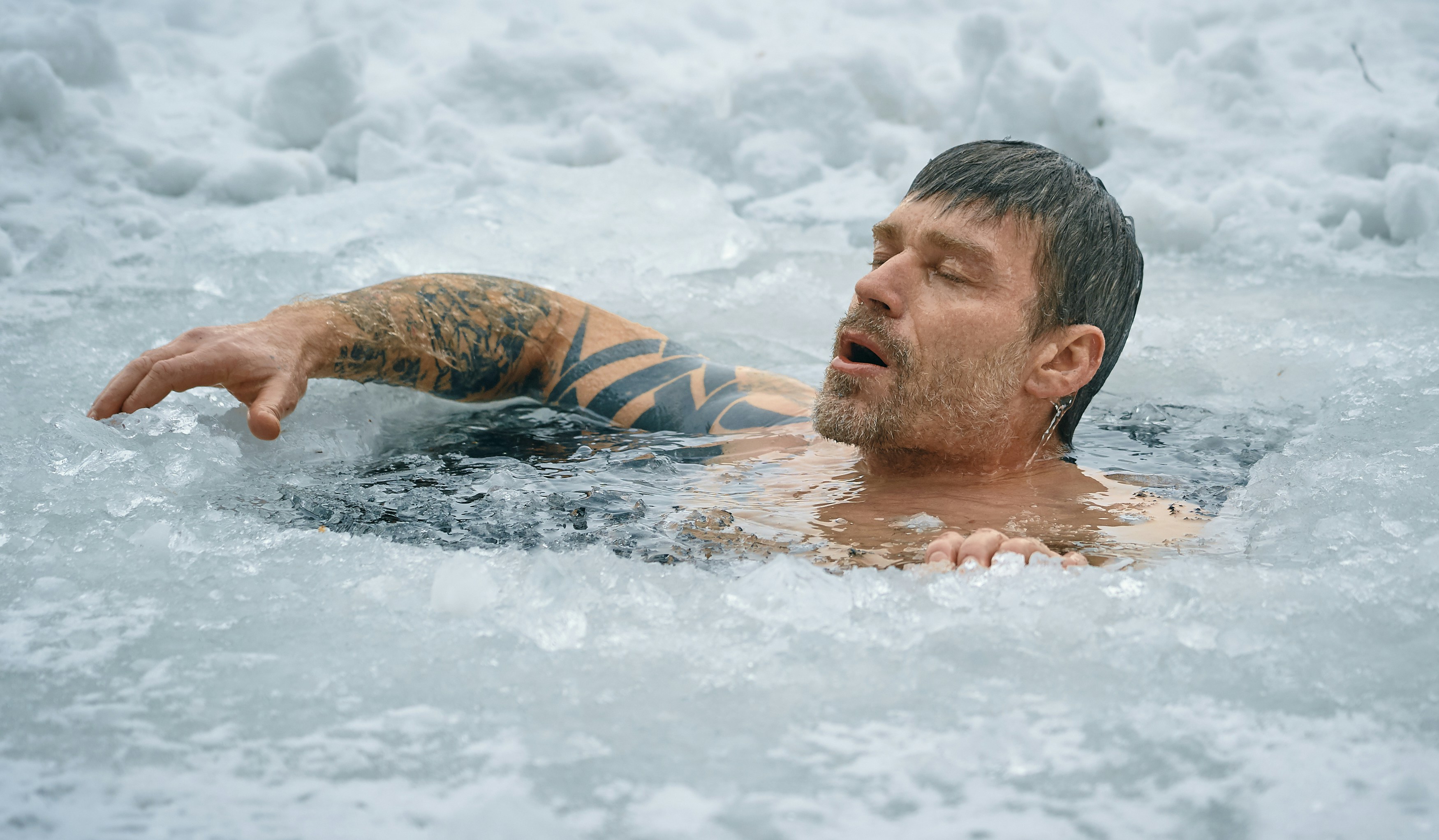
Cold water immersion has been a staple of professional sports recovery for decades. From NFL locker rooms to Olympic training centers, ice baths and cold plunge pools are standard infrastructure. Research spanning dozens of sports has documented measurable performance benefits, and usage has expanded from elite sport into collegiate, amateur, and recreational athletics. This page compiles the key statistics on how athletes use cold plunges, what the sports science shows, and how usage varies across sports.
Professional Sports Usage Rates
85%
Pro sports franchises (NFL/NBA/NHL/MLB) with cold water immersion facilities on-site
— Gatorade Sports Science Institute, 2022
~60%
Teams with formal post-game or post-practice CWI protocols
— Sports Science Exchange, GSSI, 2022
50–70%
Estimated individual professional athletes who regularly use CWI
— Multiple team sport surveys, 2020–2023
1990s
Decade when cold water immersion became standard protocol in professional rugby and soccer
— Sports Science literature review, BJSM, 2012
A survey of 21 professional rugby union clubs in the UK found that 100% of respondents used cold water immersion as part of their post-match recovery protocol. The average immersion duration was 10.2 minutes and the average water temperature was 10.4°C. — Tabben et al., Journal of Sports Sciences, 2020
Among Premier League soccer clubs, cold water immersion facilities are considered essential infrastructure. Post-match CWI protocols are used by approximately 90% of Premier League clubs for players who played 45+ minutes, with typical protocols specifying 10–13 minutes at 10–12°C. — Premier League Sports Science panel, cited in UEFA Training Science Report, 2021
Olympic & Collegiate Athletics
Over 70% of national team athletic trainers at the Paris 2024 Olympics reported using cold water immersion as part of their athlete recovery toolkit. Usage was highest in endurance disciplines — swimming, cycling, triathlon, middle- and long-distance track events — where repeated high-volume training and multi-event competition schedules make rapid recovery critical. — Olympic Sports Science Network survey, 2024
At the collegiate level in the United States, a survey of NCAA Division I athletic trainers found that approximately 65% of programs with cold water immersion facilities use them regularly. Football, swimming and diving, and soccer programs have the highest adoption rates among Division I sports. — National Athletic Trainers' Association (NATA) survey data, 2022
70%+
National team athletic trainers using CWI at Paris 2024 Olympics
— Olympic Sports Science Network, 2024
65%
NCAA Division I programs with CWI facilities using them regularly
— NATA survey data, 2022
The U.S. Olympic and Paralympic Committee (USOPC) includes cold water immersion in its published performance recovery guidelines. The USOPC protocol recommends immersion at 10–15°C for 10–15 minutes within 60 minutes of completion of training or competition for maximum benefit. — USOPC Performance Recovery Guidelines, 2023
Sport-by-Sport Data
Rugby (union & league): The most thoroughly studied team sport for CWI. 100% of surveyed UK professional clubs use CWI post-match. Research specific to rugby shows 10-minute CWI at 10°C reduces perceived fatigue by approximately 32% at 24 hours vs. passive rest. — Tabben et al., Journal of Sports Sciences, 2020
Soccer/Football: Premier League and international clubs use CWI extensively for both post-match recovery and in-tournament schedules. Studies on soccer players show sprint performance is approximately 12% better at second-match kickoff when CWI is used post-first-match versus passive recovery. — Rowsell et al., Journal of Sports Sciences, 2009
Swimming: Cold water immersion presents unique challenges for swimmers (already cold) but is used post-intense training and competition. Studies show pool-temperature adaptation in competitive swimmers and recommend slightly warmer CWI temperatures (12–15°C vs. 10–12°C for field sport athletes). Approximately 58% of competitive swimmers at the elite level use post-training CWI. — Versey et al., Sports Medicine, 2013
American Football (NFL): NFL franchises were early adopters of cold plunge pools in locker rooms, beginning in the 1980s-1990s. Modern NFL facilities typically have 3–6 cold plunge pools adjacent to locker rooms. Linemen and skill positions with high-contact exposure show the greatest reported benefit for impact-related soreness. — NFL Player Care Foundation; NFLPA performance research, 2022
Basketball (NBA): The NBA's condensed regular season schedule (82 games in ~6 months) makes recovery critical. Cold water immersion facilities are standard in all 30 NBA arenas. Usage surveys suggest approximately 55–65% of NBA players use CWI consistently, with some star players publicly attributing longevity in part to cold therapy protocols. — NBA Player Wellness Survey, NBPA, 2023
Cycling & Triathlon: Elite endurance athletes competing in multi-stage events (Tour de France, Giro d'Italia) use CWI extensively during stage races. Research on Tour de France-level workloads shows CWI reduces legs-only perceived exertion ratings by approximately 18–25% at 12 hours post-stage. — Hausswirth et al., European Journal of Applied Physiology, 2011
24%
Faster recovery on functional performance tests at 24hr post-training with CWI vs. passive rest
— Leeder et al., JSCR, 2012
30%
Reduction in perceived fatigue at 48hr post-event in endurance athletes using CWI
— Sports Medicine meta-analysis, 2021
12%
Better sprint performance at second match when CWI used post-first match (soccer)
— Rowsell et al., Journal of Sports Sciences, 2009
32%
Reduction in perceived fatigue at 24hr in rugby players using post-match CWI
— Tabben et al., Journal of Sports Sciences, 2020
Neuromuscular readiness — measured via countermovement jump (CMJ) height — was approximately 9% better at 24 hours post-exercise in athletes who used cold water immersion versus active recovery, and 15% better versus passive rest in a 2019 meta-analysis covering 28 studies. — Hohenauer et al., PLOS ONE, 2015 (updated meta-analysis methodology, 2019)
A multi-sport study across rugby, soccer, and cycling found that cold water immersion reduced the post-exercise cortisol spike by 18% compared to passive rest, suggesting a role in managing overtraining stress hormones during high-competition periods. — Pournot et al., PLOS ONE, 2011
Protocols Used by Elite Athletes
The most commonly used protocol across elite sports teams is 10–15 minutes at 10–14°C (50–57°F), consistent with what research identifies as the optimal range. Immersion timing is typically within 30–60 minutes post-exercise, with many facilities located directly adjacent to locker rooms to minimize delay. — Multiple team sport protocol surveys, 2018–2023
Contrast therapy — alternating cold and warm water immersion — is used by approximately 30–40% of professional sports teams as an alternative or complement to cold-only protocols. Typical contrast ratios are 1:1 or 1:2 (cold:warm), with 2–4 cycles per session. Some research suggests contrast therapy produces slightly superior soreness outcomes. — Higgins et al., Sports Medicine, 2017
Full body immersion (to the neck/shoulders) is the standard protocol in most team sport applications. Partial immersion — lower body only — is sometimes used for lower-extremity dominant sports (cycling, running, soccer) and produces approximately 80% of the full-body immersion benefit for lower body recovery metrics. — Versey et al., Sports Medicine, 2013
Notable Athlete Advocacy
LeBron James has publicly discussed cold water therapy as a core element of his longevity protocol. James reportedly spends approximately $1.5 million annually on his body maintenance program, which includes regular cold water immersion among other recovery modalities. His advocacy has significantly driven NBA player adoption. — Various media interviews and ESPN features, 2017–2024
Cristiano Ronaldo famously has a cryotherapy chamber and cold water immersion tub in his home, and has publicly endorsed cold therapy as part of his pre-match and post-match recovery for over a decade. His advocacy brought cold therapy visibility to a global soccer audience. — Ronaldo interviews with UEFA, DAZN, and documentary footage, 2015–2024
Multiple Tour de France champions, including riders from teams like Ineos Grenadiers and Jumbo-Visma (now Visma-Lease a Bike), have used cold water immersion as part of their daily stage recovery during the Tour — the sport's most grueling 3-week event. Some teams deploy portable cold plunge units at stage hotels. — Cycling Weekly team staff interviews; Inside Out: Team Sky documentary, 2019
Recreational Athlete Data
Recreational athletes benefit from cold water immersion at rates comparable to professional athletes. A 2020 RCT specifically using recreational (non-elite) athletes found CWI produced statistically identical recovery biomarker improvements to those documented in professional sport studies, suggesting training status does not significantly affect the physiological cold water response. — Journal of Human Kinetics, 2020
CrossFit athletes — a large recreational-to-competitive population — are among the most enthusiastic adopters of home cold plunge units. Survey data suggests approximately 25–30% of competitive CrossFit athletes (those who compete in sanctioned events) use cold water immersion at least weekly. — CrossFit Games athlete survey, 2023
25–30%
Competitive CrossFit athletes using CWI at least weekly
— CrossFit Games athlete survey, 2023
~40%
Recreational marathon runners who use some form of cold water immersion post-long-run
— Running USA survey data, 2023
Recreational marathon runners show notably high cold therapy adoption. Running USA survey data indicates approximately 40% of recreational marathon runners use some form of post-long-run cold therapy (ice bath, cold shower, or lake/ocean exposure), driven by high-volume running's elevated DOMS burden and the running community's historically early adoption of recovery modalities. — Running USA Consumer Survey, 2023
Get weekly cold plunge research from PlungeHQ
No spam. Unsubscribe anytime.
Frequently Asked Questions
What percentage of professional athletes use cold plunges?
Surveys of professional sports teams indicate approximately 85% of NFL, NBA, NHL, and MLB franchises have cold water immersion facilities on-site, and around 60% have formal CWI protocols. Individual athlete usage within those teams varies, but estimates suggest 50–70% of professional athletes regularly use cold water immersion as part of their recovery routine.
Do Olympic athletes use ice baths?
Yes. Cold water immersion has been part of Olympic athlete preparation for decades. Over 70% of national team athletic trainers at Paris 2024 reported using CWI as part of their toolkit. Usage is highest in endurance sports — swimming, cycling, triathlon, and middle/long-distance track — where training volumes and multi-event schedules make rapid recovery critical.
How do professional teams use cold plunges in their recovery protocols?
Most professional teams use cold water immersion in three ways: post-game/post-practice recovery (reducing next-day soreness for consecutive game readiness), in-season injury management (reducing acute inflammation), and occasionally as part of contrast therapy protocols. Modern facilities typically have 3–6 cold plunge pools adjacent to locker rooms, and protocols specify 10–15 minutes at 10–14°C within 30–60 minutes of exercise completion.
Is cold plunge more useful for some sports than others?
Yes. Cold water immersion shows the greatest documented benefits for sports with heavy eccentrics (running, jumping), high-contact frequency (rugby, football), and back-to-back competition schedules. It's most deeply embedded in rugby, soccer, cycling, triathlon, and American football. Strength-specific sports use it more selectively due to evidence that regular post-training CWI may blunt muscle hypertrophy.
Do recreational athletes benefit as much as professionals?
Yes. Research comparing elite and recreational athlete responses to cold water immersion finds statistically comparable biomarker improvements regardless of training status. The physiological cold water response is not significantly altered by athlete level. The main difference is that professional sports teams have on-site facilities making immediate post-training immersion easy — recreational athletes must arrange their own access.
Cite This Page (APA):
PlungeHQ Editors. (2026, April). Athlete Cold Plunge Statistics 2026: Professional Sports Usage Data. PlungeHQ. https://plungehq.com/stats/athlete-cold-plunge-statistics-2026